
24/7 Customer Support

Free returns

Same-day & Next-day Delivery

Quality Guaranteed

Unlock Your Welcome Offers: FREE Delivery | Up to 80% OFF | Free 30-day JoyPlus trial
Download the APP
Choosing plastic food storage containers with lids can seem straightforward until the first lid warps, the containers fail to stack or a supposedly suitable tub develops stains and odours. For households, meal-prep users, students, cafés and small catering teams, the right set should make storing, transporting and reheating food easier—not create more washing-up or replacement costs.
Before buying, look beyond capacity and attractive packaging. These are the common purchasing traps to avoid.
A large tub is not automatically useful. A container that is too deep may be awkward for lunch bags, while a wide round tub can waste shelf space. Compare the stated capacity, diameter, depth and shape with the food and storage area you use most.
For example, 1000ml food storage containers are suitable for larger portions, soups, pasta, rice dishes and batch-cooked meals. Smaller 16oz plastic tubs may be more convenient for lunches, fruit, salads and side dishes.
A snap lid can help reduce spills, but no plastic tub should be assumed to be completely leak-proof unless the listing clearly explains its seal design and intended use. Hot food can also create steam and condensation, increasing pressure inside a closed container.
For transport, keep containers upright, avoid overfilling and allow cooked food to cool slightly before sealing. When reheating, loosen or vent the lid rather than heating a fully sealed container.
Even suitable plastic can become cloudy, stained or misshapen if exposed to excessive heat, abrasive scrubbers or direct contact with an oven element. Check whether the product is specifically described as microwave-safe or freezer-safe, and follow the manufacturer’s instructions.
Do not use ordinary plastic tubs in a conventional oven unless the product information explicitly permits it. Food-contact suitability is also different from suitability for high-heat cooking.
Start with how you plan to use the containers:
Rectangular clear food storage tubs generally make efficient use of fridge shelves and cupboards. Round tubs can be easier to mix or serve from, but may leave unused gaps when stacked together. Always compare the external measurements—not just the stated volume.
Look for clear material descriptions such as food-grade plastic and, where stated, BPA-free plastic. “BPA-free” refers specifically to the absence of bisphenol A; it does not by itself confirm that a container is suitable for microwaving, freezing or high temperatures.
For reusable meal prep containers, smooth internal surfaces are helpful because they are easier to wash and less likely to retain food residue. Clear sides also let you identify contents without repeatedly opening the lid, which is useful when organising leftovers or ingredients.
A matching lid should fit the base securely and be easy to remove without excessive force. If you intend to freeze meals, leave room for expansion and avoid filling the container to the brim. For microwaving, vent or loosen the lid to release steam.
A listing that states both microwave-safe food containers and freezer-safe food containers offers more flexibility, but the instructions still matter. Allow frozen food to defrost safely and avoid sudden temperature changes that may stress the plastic.
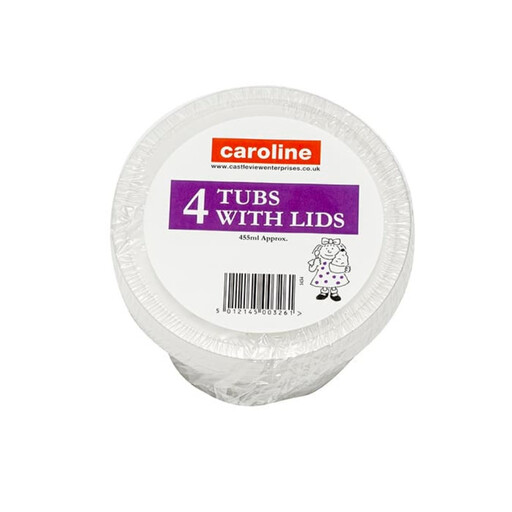
Why This Fits Their Persona: A four-piece set provides a straightforward starting point for lunches, leftovers and smaller meal-prep portions without taking up excessive cupboard space.
Its stated 16oz capacity and 120mm diameter make the intended portion size clearer than a vague “large” label. The clear construction also makes contents visible.
Pack of four; stated microwave-safe and freezer-safe design; matching lids included.
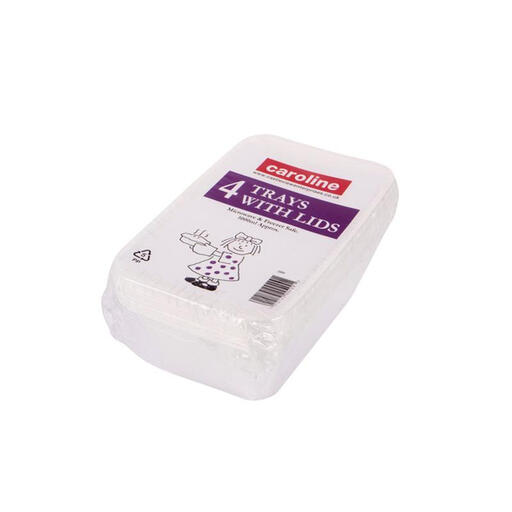
Why This Fits Their Persona: The rectangular format suits organised kitchens, weekly meal preparation, office lunches and food-service workflows where stacking and quick identification matter.
The listing specifies dimensions, capacity, material and lid type, helping shoppers compare practical details rather than relying on promotional wording.
1000ml capacity; food-grade BPA-free plastic stated; rectangular shape; microwave and freezer safe according to the product description.
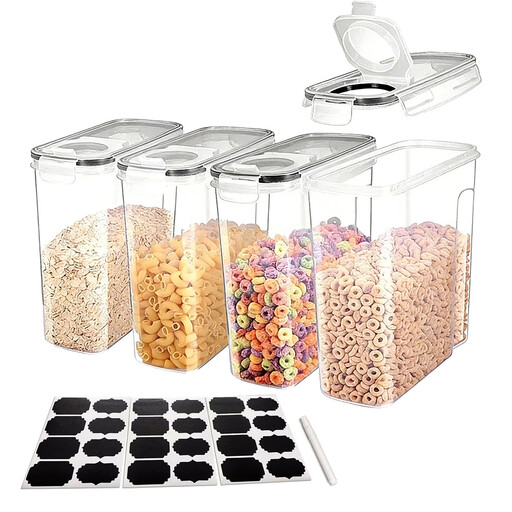
Why This Fits Their Persona: The stated four-piece, 4L format is aimed at shoppers needing larger-volume storage for bulk ingredients, family kitchens or organised food preparation.
The transparent design supports quick content checks, while the stated capacity helps users distinguish bulk storage from individual meal portions.
Four-piece set; transparent construction; stated fresh-keeping and moisture-proof design.
A practical system is easier to maintain when each container has a defined purpose. Use smaller tubs for snacks and lunches, 1000ml tubs for main meals and larger containers for ingredients or bulk portions.
Label the contents and date before refrigerating or freezing. Keep lids paired with their bases, and allow containers to cool and dry fully after washing. Replace any tub that becomes cracked, heavily scratched or difficult to clean, as damaged surfaces can make hygienic washing more difficult.
For cupboards and fridges, stackable food storage tubs with consistent shapes usually make better use of available space. Clear sides are particularly useful for busy households and catering teams because they reduce the need to open each container during food preparation.
We have compiled a complete, real-time list of products that fully satisfy these strict selection criteria and UK safety regulations.
Only use a container when the product information specifically states that it is microwave-safe. Vent or loosen the lid before heating to release steam, and avoid using plastic tubs in a conventional oven unless the instructions expressly allow it.
Lifespan depends on washing, temperature exposure and handling. Regularly inspect the plastic and lids for cracks, warping, deep scratches or persistent odours. Gentle washing, avoiding abrasive pads and following the stated microwave and freezer guidance can help maintain usability.
No. BPA-free describes the material composition relating to bisphenol A; it does not automatically confirm resistance to freezing or heating. Check the listing for separate freezer-safe and microwave-safe information before purchase.