
24/7 Customer Support

Free returns

Same-day & Next-day Delivery

Quality Guaranteed

Unlock Your Welcome Offers: FREE Delivery | Up to 80% OFF | Free 30-day JoyPlus trial
Download the APP
Plastic storage boxes and organisers can make a noticeable difference to cluttered bedrooms, busy home offices, garages and lofts. However, attractive photographs and large capacity figures do not always tell the full story. A box that looks suitable online may be awkward to carry, difficult to stack or too fragile for the items you need to store.
This guide explains the practical details worth checking before buying, then matches several options to different UK household needs.
A box labelled 35L, 60L or 84L may sound spacious, but external dimensions determine whether it will fit beneath a bed, inside a cupboard or through a loft hatch. Large boxes can also become difficult to lift once full.
Before ordering, measure:
A 35L storage box may suit clothing, files or hobby supplies, while an 84L storage box is more appropriate for bulky bedding, tools or seasonal decorations. For very large loads, a wheeled storage trunk can reduce lifting, but it still needs enough clearance to move.
Heavy-duty storage boxes are generally designed for more demanding household, garage or workshop use, but no plastic container should be treated as industrial equipment. Check the manufacturer’s weight guidance, base construction and stacking instructions.
Avoid storing dense items such as books, tools or DIY materials in an oversized box unless the base is reinforced and the load can be distributed evenly. Never use a storage box as a step or seat, and replace any container that becomes cracked, warped or unstable.
Clear storage boxes make it easier to identify contents without opening every lid. They are useful for clothes, files, toys and craft materials. However, transparent plastic may not be the most suitable choice for light-sensitive items or valuables.
For jewellery, documents or personal accessories, an enclosed jewellery organiser or storage basket with lid may offer a tidier and less visible arrangement. Also remember that a clip-on or locking lid can reduce dust exposure, but it should not be assumed to create a completely airtight or waterproof seal.
Polypropylene (PP) is widely used for household storage because it is relatively lightweight, washable and resistant to everyday impacts. Recycled plastic can provide a practical option for garage storage, loft storage and utility areas, while virgin polypropylene is also available for products designed around strength, visibility and repeated handling.
Look for useful structural details rather than vague durability claims:
Stackable storage boxes should sit securely rather than balancing on a narrow lid. Recessed tops, matching box shapes and reinforced bases can help create a more stable vertical arrangement.
Do not stack higher than the product instructions allow. Place heavier boxes at the bottom and leave enough space to access frequently used items. For renters and students, modular boxes or a plastic storage cabinet can be more flexible than permanent shelving.
Use smaller organisers for everyday access and larger containers for seasonal or infrequently used items. A 24L storage basket with lid can suit toys, towels, cables or cleaning products. A 60L container may work better for tools and decorations, while a 145L wheeled trunk is more suitable for large, heavy or awkward contents.
For indoor home organisation, appearance and footprint may matter as much as capacity. In garages, sheds and workshops, a secure lid, lockable points and easy movement may take priority.
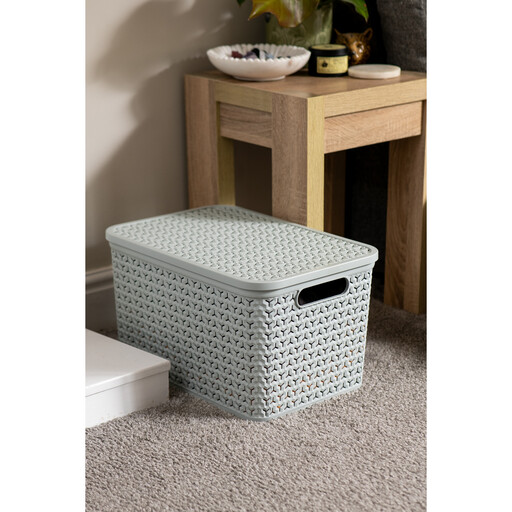
Why This Fits Their Persona: A practical starting point for renters, students and households organising shelves, wardrobes or smaller rooms without committing to bulky containers.
Its 24L capacity is easier to handle than an oversized box, while the lid helps keep contents tidy and reduces everyday dust exposure.
Stackable recycled-plastic construction; woven-effect finish; no assembly required.

Why This Fits Their Persona: Suitable for households, offices and hobbyists who want larger transparent containers and a coordinated storage system for bulky belongings.
The clear walls help prevent forgotten contents, while recessed lids and reinforced bases address common stacking and sagging concerns.
Pack of three 84L boxes; locking handles; impact-resistant polypropylene; stackable design.

Why This Fits Their Persona: Designed for DIY enthusiasts, small businesses and households storing tools, decorations or workshop supplies in garages, sheds and lofts.
Built-in wheels reduce the need to lift a full 145L trunk, while the clip-on lid and lockable holes provide more controlled storage than an open container.
145L capacity; built-in wheels; recycled plastic; padlock or cable-tie points.
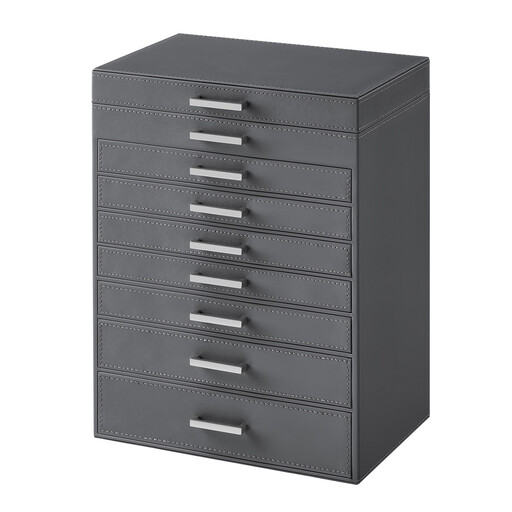
Why This Fits Their Persona: A focused choice for people who need separate compartments for rings, bracelets, watches, sunglasses and other accessories in a bedroom or dressing area.
Multiple enclosed compartments help prevent loose items becoming mixed together, while the soft lining is intended to reduce contact scratches.
Eight tiers; seven drawers; integrated mirror; enclosed design for reduced dust exposure.
Group items by how often they are used rather than simply by room. Keep daily accessories in a nearby jewellery organiser or storage basket with lid. Place seasonal clothing and decorations in labelled clear storage boxes. Reserve lockable heavy-duty storage boxes for tools, documents and equipment that should not be left openly accessible.
For loft storage, leave a safe walkway and avoid placing boxes directly where roof leaks or condensation could affect contents. In a garage or shed, use a dry, stable surface and keep containers away from direct heat, flames and hazardous chemicals.
A simple label on one short side of each box can also save time, particularly when several clear boxes are stacked. Do not overload containers, and distribute weight evenly before securing the lid.
We have compiled a complete, real-time list of products that fully satisfy these strict selection criteria and UK safety regulations.
They can be suitable when kept in a dry, stable location and used within the stated temperature and load limits. Clear walls make contents easy to identify, but they do not automatically protect items from condensation, leaks or sunlight. Use a secure lid, keep boxes off damp floors and check the loft environment before storing fabrics, paperwork or electronics.
Choose based on both capacity and the items’ dimensions. A 24L basket suits smaller household goods, while a 35L storage box is useful for clothing, files, toys and hobby materials. A 60L box offers more room for tools and decorations, and an 84L container suits bulky items such as blankets. Measure the storage location before choosing a larger size.
They can reduce the need for additional shelving by using vertical space, but value depends on how well the boxes fit your room and what you store. Buying a pack may be practical when you need several matching containers, whereas a single wheeled storage trunk may be more appropriate for large items that are difficult to divide. Always compare usable capacity, lid design, portability and the cost of replacing unsuitable boxes.