
24/7 Customer Support

Free returns

Same-day & Next-day Delivery

Quality Guaranteed

Unlock Your Welcome Offers: FREE Delivery | Up to 80% OFF | Free 30-day JoyPlus trial
Download the APP
Plastic storage boxes can make a noticeable difference to cluttered cupboards, busy family homes and compact rented rooms. However, choosing by capacity or low price alone can lead to wasted money. A box may look spacious online but fail to fit your shelving, while a lid advertised as “secure” may be awkward to clip on or unsuitable for heavy stacking.
This guide explains the practical details to check before buying plastic storage boxes, from dimensions and materials to visibility, ventilation and intended use.
A 42L storage box and a 50L storage box may both sound suitable for clothing or toys, but their height, width and length determine whether they fit beneath a bed, inside a wardrobe or on garage shelving. Always compare the external dimensions with your available space, including room for handles and lid overhang.
For example, a box measuring 60cm long may be unsuitable for a narrow cupboard despite having a useful capacity. Large plastic storage boxes are more practical when you already know where they will be placed.
A loose cover can allow dust into stored clothes and paperwork. For garage storage boxes or items being moved between rooms, look for a clip-on or snap-on lid and check whether the box has integrated handles. A fitted lid is useful, but it does not automatically make a container watertight or suitable for outdoor storage.
Clear storage boxes with lids make it easier to identify belongings, reducing the need to open multiple containers. They are useful for seasonal clothing, craft supplies and office paperwork. However, plastic containers should be kept away from open flames, high heat and prolonged direct sunlight. Do not store damp textiles or fresh food in ordinary household boxes unless the product is specifically designed and labelled for that purpose.
Match capacity to the items rather than choosing the largest available box.
Measure the storage location first. For stackable storage boxes, also check the total height of the planned stack and confirm that the base and lid are designed to sit securely together.
Polypropylene (PP) is commonly used for household storage because it is lightweight and can provide useful rigidity. Product descriptions may also mention reinforced corners, ribs or a thickened body. These features can help the container resist everyday knocks, but they do not remove the need to follow the stated load limit.
A 2.5mm thickened body, reinforced base and anti-slip underside are practical details to look for when storing heavier items. Avoid overloading any box, particularly when stacking several containers. Inspect plastic storage boxes before use and stop using any that are cracked, deformed or unstable.
Clear or translucent sides are convenient for home organisation storage, while opaque baskets can look tidier on open shelving. Lids with clips or snap closures help keep contents contained and reduce dust exposure. Built-in handles make fuller boxes easier to move, but a handle is not a guarantee that the container is safe to carry when heavily loaded.
For offices, choose a shape that accommodates A4 folders or paper packs. For craft rooms, low-profile boxes can prevent small items becoming buried beneath larger materials. For utility rooms and garages, prioritise a stable base, secure lid and suitable load capacity.
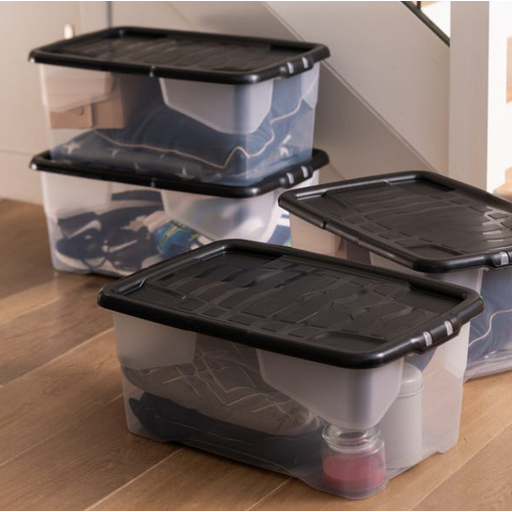
Why This Fits Their Persona: Four matching 42L boxes provide a straightforward starting point for wardrobes, lofts, utility rooms or student accommodation, without mixing different formats.
The clear/translucent body improves visibility, while solid clip-on lids avoid relying on loose covers. The 60 x 40 x 40cm dimensions should still be checked against shelving before purchase.
Pack of four; 42L capacity per box; stackable recycled plastic construction; solid clip-on lids.
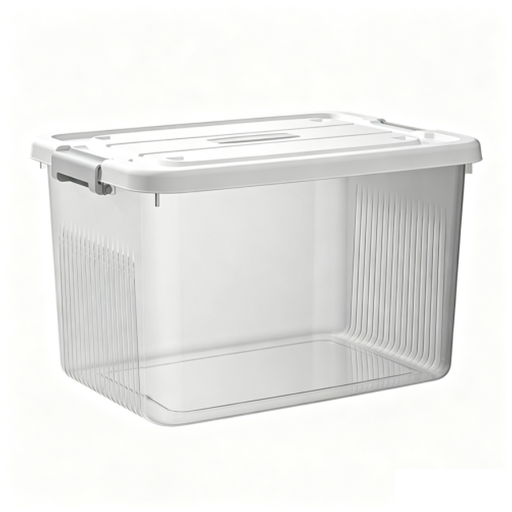
Why This Fits Their Persona: This format suits households wanting sturdier-feeling boxes for cupboards, balconies, offices or car storage, with handles that make lifting more manageable.
The stated 2.5mm PP body, reinforcing ribs, anti-slip bottom and snap-on lid address common concerns about flimsy stacking and sliding.
Thickened PP construction; built-in handles; transparent body; pack of four.
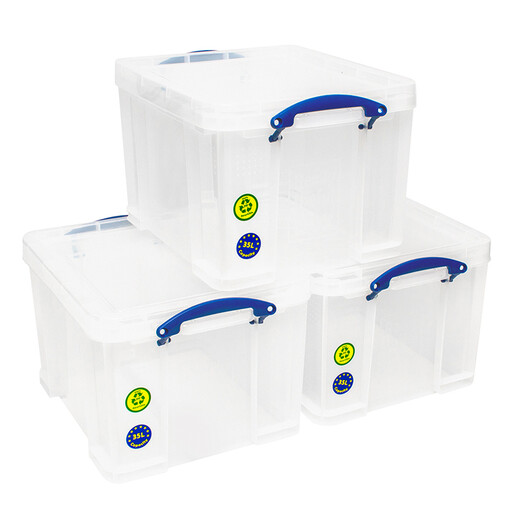
Why This Fits Their Persona: A practical option for garage storage, tools, files, seasonal clothing and toys where a reinforced base and secure closure are useful.
The reinforced base is intended to help limit sagging when loaded, while the lid has integrated bungee cord lock handles. Do not exceed the stated load limit or stack too high.
35L capacity; pack of three; clear polypropylene; stated temperature range of -15°C to +80°C; stackable design.
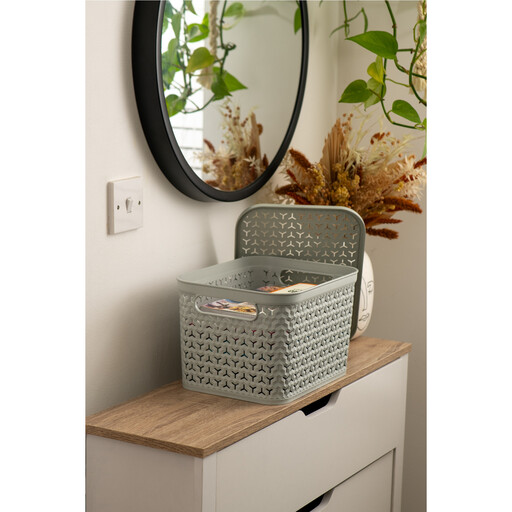
Why This Fits Their Persona: The compact basket format works for renters, students and families organising visible shelves, bathroom cupboards, bedrooms or home offices.
Its 14L capacity discourages overfilling small spaces, while the lid keeps everyday items visually contained instead of relying on decorative appearance alone.
Woven-effect recycled plastic; 14L capacity; stackable format; dimensions of 31 x 24 x 19.5cm.
We have compiled a complete, real-time list of products that fully satisfy these strict selection criteria and UK safety regulations.
They can be suitable for a dry garage when the product’s material, size and load limits match the use. Keep boxes away from open flames, high heat and prolonged direct sunlight. Use a stable shelf, avoid excessive stacking and do not store damp items in enclosed containers.
Place the heaviest box at the bottom and use only boxes designed for stacking. Make sure each lid is fully secured and the stack is stable on a level surface. Avoid placing heavy objects on lids and follow the manufacturer’s guidance on maximum load and stack height.
No. A lid can reduce dust and contain items, but it does not remove moisture. Dry clothing and household goods completely before storage, avoid packing items too tightly and inspect containers periodically. For food, use only storage products specifically labelled for food contact and follow the relevant instructions.