
24/7 Customer Support

Free returns

Same-day & Next-day Delivery

Quality Guaranteed

Unlock Your Welcome Offers: FREE Delivery | Up to 80% OFF | Free 30-day JoyPlus trial
Download the APP
Finding the right plastic storage containers can feel like a simple task, but it often leads to frustration. A cupboard full of mismatched lids, stained boxes and containers that leak can create more clutter than they solve. Many products make bold claims, but fail to deliver on basic functionality, leading to wasted food and money.
As the Joybuy Product Recommendation Officer, my role is to help you navigate the market and identify the features that truly matter. This guide will highlight common purchasing pitfalls and break down the essential criteria for choosing containers that will genuinely improve your home and kitchen organisation.
Before you buy, be aware of these frequent issues that many shoppers overlook:
To ensure you're investing in a durable and practical solution, focus on these three key parameters.
The type of plastic used determines a container's safety, durability and longevity.
The lid is just as important as the box itself. A secure seal is what keeps food fresh and prevents spills. Look for lids with four-sided locking clips that provide firm, even pressure. The most effective designs incorporate a silicone gasket or seal within the lid, which creates a true barrier against air and moisture. This is the difference between a simple box and a reliable food preservation system.
For effective organisation, your containers must work together.
Based on these practical criteria, here are some options tailored to different needs and lifestyles.

Why This Fits Their Persona: Ideal for anyone who prepares meals for the week ahead. The built-in compartments support balanced portions and keep ingredients like sauces and salads separate until it's time to eat.
The clever Nest It system directly solves the inefficient design pitfall, allowing the containers to nest compactly and save significant cupboard space when empty.
Multi-compartment design for portion control. Microwave, dishwasher and freezer safe for ultimate convenience. Nests for compact storage.
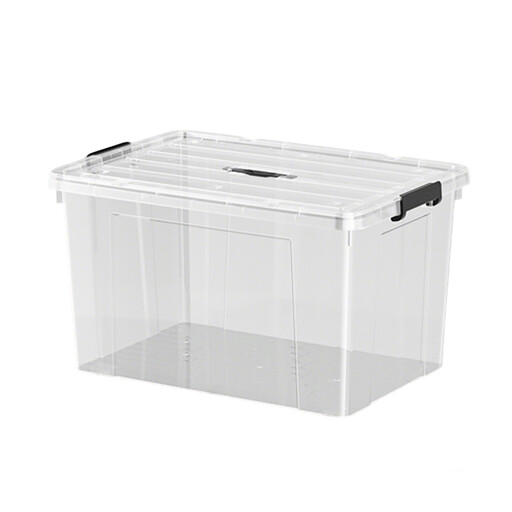
Why This Fits Their Persona: Perfect for those tackling a decluttering project in the loft, garage or wardrobe. These large plastic storage boxes with lids are built for storing bulkier items like seasonal clothing, tools or documents.
The design focuses on structural integrity with a 2.5mm thickened body and reinforcing ribs, avoiding the flimsiness of cheaper boxes. The flat-top lid is made for stable stacking, preventing wasted vertical space.
Robust, load-bearing construction. Secure snap-on lid and a design optimised for stable stacking. Being clear storage boxes, they allow for easy identification of contents.
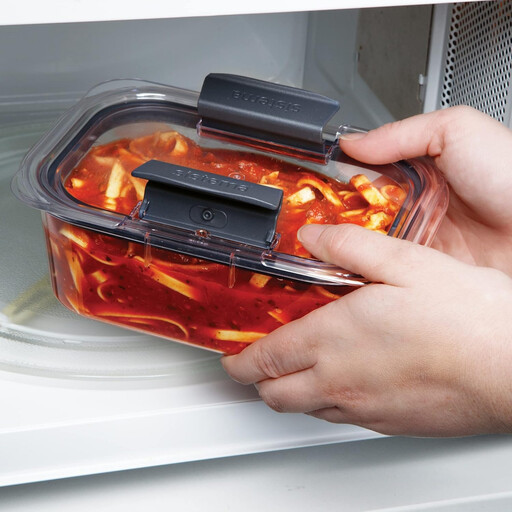
Why This Fits Their Persona: For those who value performance and longevity. This container is perfect for storing leftovers, sauces or single-serve snacks without worrying about leaks or lingering odours.
It is made from high-quality Tritan plastic, which is specifically designed to be stain- and odour-resistant, directly solving that common pitfall. The 100% leak-proof design with strong clips addresses the "airtight" myth.
Crystal-clear, stain-resistant Tritan material. Features built-in microwave vents for convenient, splatter-free reheating. Fully leak-proof and stackable.
We have compiled a complete, real-time list of products that fully satisfy these strict selection criteria and UK safety regulations.
1. Are all BPA-free plastic storage containers safe for microwaves?
Not necessarily. While being BPA-free is a crucial safety standard for food storage containers, microwave safety depends on the specific type of plastic and the container's design. Always check for a microwave-safe symbol (often a box with wavy lines) on the product itself. It is also common practice to remove or vent the lid before heating to allow steam to escape, preventing pressure build-up and potential damage to the container or lid.
2. How can I prevent my plastic food containers from staining?
To minimise staining from foods like curry or tomato-based sauces, it's helpful to rinse the container with cool water immediately after use before washing with hot, soapy water. For stubborn stains, creating a paste from bicarbonate of soda and water, leaving it in the container for a few hours and then washing as normal can be effective. Alternatively, choosing containers made from materials like Tritan plastic, which is known for its high stain resistance, can prevent the issue from occurring.
3. What is the difference between stackable and nesting containers?
These terms describe two distinct space-saving features. Stackable storage refers to how well containers sit on top of each other when they are full and have their lids on. A good stacking design features grooves or rims that lock together for stability in a fridge or on a shelf. Nesting, on the other hand, refers to how containers of the same shape but different sizes fit inside one another when empty, saving valuable cupboard space. Many sets are designed to do both.