
24/7 Customer Support

Free returns

Same-day & Next-day Delivery

Quality Guaranteed

Unlock Your Welcome Offers: FREE Delivery | Up to 80% OFF | Free 30-day JoyPlus trial
Download the APP
From everyday meals to special occasions, the right plates and bowls are the foundation of any dining experience. Yet, choosing new tableware can be surprisingly complex. With a market full of buzzwords like "chip-resistant" and "eco-friendly," it's easy to end up with a cupboard full of items that don't live up to their promises. As a Joybuy Product Recommendation Officer, my role is to help you navigate these choices with practical advice.
Before you buy, let's look at a few common pitfalls that can lead to disappointment and wasted money:
To avoid these issues, focus on a few key parameters that determine quality and suitability. This will ensure your new plates and bowls serve you well for years to come.
The material of your tableware dictates its durability, weight and how you care for it.
Think about how you will use your tableware day-to-day.
Based on these practical criteria, here are a few recommendations matched to different household needs.
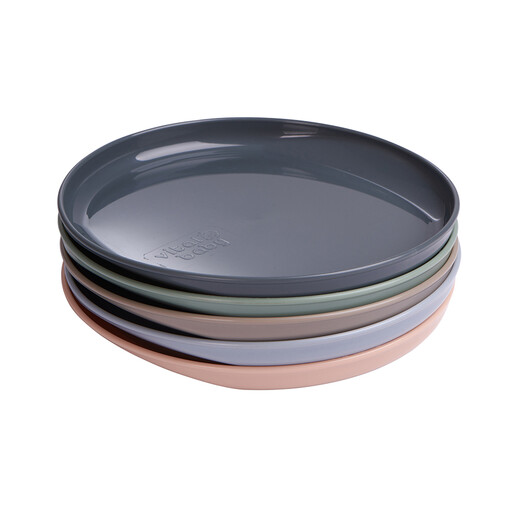
Why This Fits Their Persona: Ideal for UK families navigating the weaning and toddler stages. These plates are designed for daily use, from quick lunches to family dinners and are built to withstand the rigours of toddlerhood.
It directly solves the "child-friendly" design flaw. The high, scooped sides are a simple but effective feature that helps toddlers learn to scoop food, reducing mess and promoting independence.
Made from BPA, latex and phthalate-free materials for safety. They are also stackable for easy storage and are both dishwasher and microwave safe for ultimate convenience.
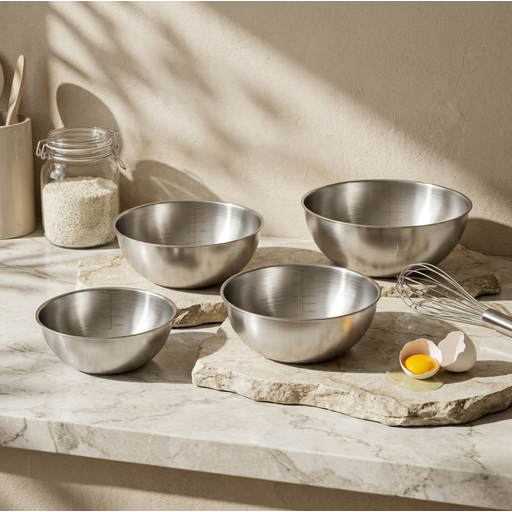
Why This Fits Their Persona: For the person who loves to cook and needs versatile equipment. This 4-piece set works for everything from mixing dough and marinating meat to serving a large salad at a dinner party.
This set avoids the "durable but delicate" trap. Made from food-grade 304 stainless steel, it is resistant to rust, drops and temperature changes. It won't crack, chip or absorb odours like some ceramic bowls.
Extremely versatile 4-piece set for prepping and serving. The bowls are nestable for compact storage and are fully dishwasher safe, making cleanup after a big meal straightforward.
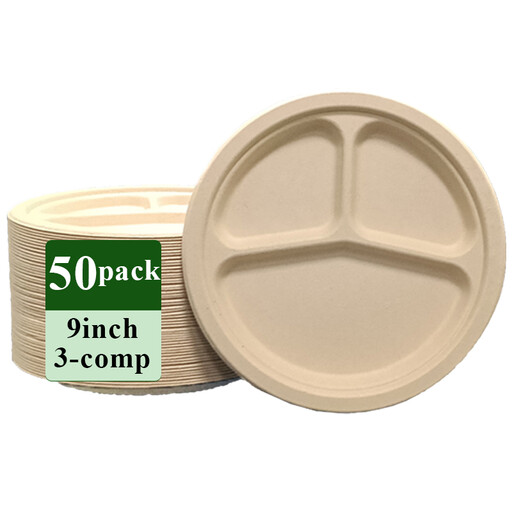
Why This Fits Their Persona: Perfect for summer barbecues, children's birthday parties or any large gathering where washing up is not an option. It provides a sturdy, convenient solution for serving food to guests.
This sidesteps the "eco-disposable" myth by being transparent about its material. Made from bamboo fibre, a known renewable resource, it's a clear and practical step up from traditional single-use plastic or flimsy paper plates.
These plates are strong and rigid, so they won't buckle under the weight of food. The 3-compartment design is great for keeping different food items separate, which is especially useful for buffets and picky eaters.
We have compiled a complete, real-time list of products that fully satisfy these strict selection criteria and UK safety regulations.
Not always. While most modern porcelain is designed for convenience, lower-quality items can be susceptible to thermal shock. This can cause fine cracks in the glaze (crazing) or even full breakage. To be safe, always check the manufacturer's specifications on the product page or packaging. If it doesn't explicitly state "dishwasher and microwave safe," it's better to wash it by hand and avoid the microwave.
For toddlers and young children, durability is key. Plates made from high-quality, BPA-free plastics or silicone are excellent choices as they are virtually unbreakable when dropped. Stainless steel is another robust option, though it cannot be used in the microwave. While bamboo fibre plates are strong, they can crack if dropped from a height onto a hard floor, so they are often better suited for slightly older children.
Look for specifics. Vague terms like "green" or "earth-friendly" can be misleading. Check for plates made from specific, rapidly renewable materials like bamboo fibre or bagasse (sugarcane pulp). These are generally better than petroleum-based plastics. Also, consider the product's end-of-life—if it states "compostable," check if it requires an industrial facility or if it can be composted at home. Choosing products made from recognisable plant sources is a good first step.