Choose a lever stick if practising physical arcade-style movement is your aim and your platformer accepts digital directions. An all-button controller offers directional buttons instead of a lever, while a D-pad remains a sensible choice if it already gives you consistent control. Before changing layouts, check the game’s input requirements, the controller’s compatibility with your PC or console, and the space available on your desk.
Who each layout suits
Traditional arcade-control practisers
If practising with a physical lever and arcade buttons is the point, a traditional stick gives you that layout at a desk or on your lap. Check the exact model’s console setup before assuming it will work on a newer system.
Players with limited desk or storage space
An all-button controller keeps directional inputs and arcade-style action buttons without a lever. Compare its dimensions with your available space, and make sure button-based movement is a technique you want to practise.
Platformer players considering a switch from a D-pad
If you already make reliable direction changes on a D-pad, weigh the time needed to learn a lever or all-button layout against what you want from arcade-style practice. How-To Geek notes that traditional arcade sticks also use digital directional input, rather than analogue movement.
What matters when choosing
Traditional lever stick
Choose it when: You want to practise physical lever movements and your game accepts digital directional input.
Trade-off: A lever takes space and is not an analogue joystick; some console setups also require extra hardware.
All-button controller
Choose it when: You prefer directional buttons to a lever and want an arcade-button layout.
Trade-off: It changes the movement technique, and console compatibility may depend on an additional controller or adapter.
D-pad controller
Choose it when: Your familiar D-pad already gives you repeatable directions in the platformers you play.
Trade-off: It does not provide an arcade panel or physical lever practice.
For platformer practice in a home office, settle the game’s movement requirements and your preferred layout before comparing platform support, desk fit and configuration options.
| Concern | What to check | Who it matters to |
|---|
| Directional-input fit |
Check whether the game accepts digital directions and whether its controls can be remapped for your intended practice. |
If I am changing from a D-pad, I want the new layout to work with the game’s movement controls before learning it. Around 33% of consumers put directional-input fit first. |
| PC or console compatibility |
Match the exact model and connection mode to your system; check any controller pass-through or adapter requirement. |
When moving between a PC and a console, I need to know the controller will operate on the system I plan to use. For around 25% of consumers, compatibility comes first. |
| Desk fit and layout comfort |
Compare the controller’s dimensions with your play and storage space, including room for its cable where applicable. |
My work area has to accommodate practice without displacing the equipment I use between sessions. Desk fit is the primary concern for around 25% of consumers. |
| Configuration and components |
Check the exact model’s button configuration, software and parts options if you intend to adjust the controls. |
If I expect to refine the layout over time, I care about the controls I can configure or change. Around 17% of consumers prioritise those options. |
Mistakes to avoid
-
Assuming console compatibility means a direct connection
Mayflash distinguishes PC operation from console setups that need additional steps. A controller may be listed for a system without working through the connection you expected.
Check the exact model, console and game against the manufacturer’s setup instructions before buying.
Some Mayflash console setups need a wired authentication controller or converter.
-
Treating a lever stick as an analogue joystick
Traditional arcade-stick directions are digital, so a platformer that depends on analogue movement may not suit this control method.
Check the game’s movement and remapping options; keep a D-pad option if you are unsure about switching techniques.
-
Choosing a full-size panel without measuring the desk
A larger stick needs a usable play surface and somewhere to go between work sessions. A thinner all-button controller changes the space requirement, but also the movement layout.
Compare the exact model’s published dimensions with both your playing position and storage space.
-
Taking fighting-game features as proof of platformer performance
Named components and configurable buttons describe the controller, not how well a particular player will perform in a platformer.
Check the game’s input requirements and choose configuration features only if you expect to use them.
Brands to consider
Mayflash
Mayflash offers both the traditional-lever F500 Elite and the all-button F500 FLAT Elite for players comparing movement layouts.
- Mayflash lists PC XInput and DInput modes and Sanwa components for the F500 Elite.
- Check the exact console setup: some uses require a wired controller or adapter, and the F500 FLAT Elite has additional PS5 game-type restrictions when used through certain adapters.
8BitDo
8BitDo has Xbox-focused lever and all-button options for players whose intended system matches those models.
- 8BitDo specifies Xbox Series X|S, Xbox One and Windows support, with 2.4G wireless or wired operation, for its Arcade Stick for Xbox.
- Its Xbox-focused specifications should not be taken as PlayStation or Switch compatibility; check the exact model before changing platforms.
Nacon
Nacon’s PlayStation-version Daija is a traditional lever option for PS5, PS4 and PC players interested in configuring controls.
- Nacon specifies Sanwa stick and action-button components and button configuration through its PC and Mac software.
- Nacon positions the Daija for fighting games; check your platformer’s input handling and whether a lever feels suitable for its movement.
Joybuy lever-stick options
These two HORI models are traditional lever-stick options for players who want physical arcade-control practice. Their names identify different console versions: choose against your intended system, then check the particular platformer’s digital-input requirements.
 No image available
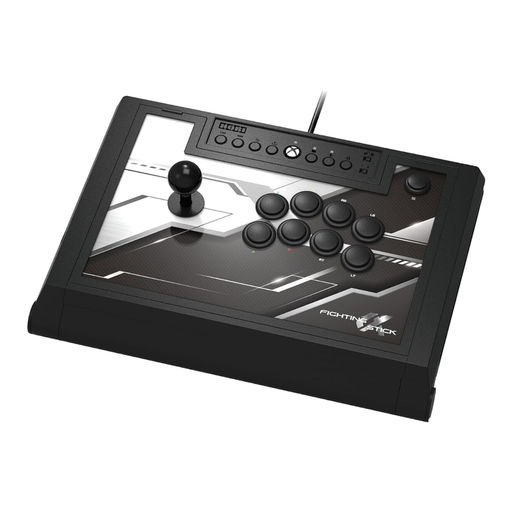
HORI SERIES X Fighting Stick Alpha (Xbox Series X/S)
Consider this lever-stick layout if physical arcade-style movement is what you want to practise. The named variant is for Xbox Series X/S; confirm compatibility with your intended system and whether your platformer accepts the directional input you need.
View on Joybuy
 No image available
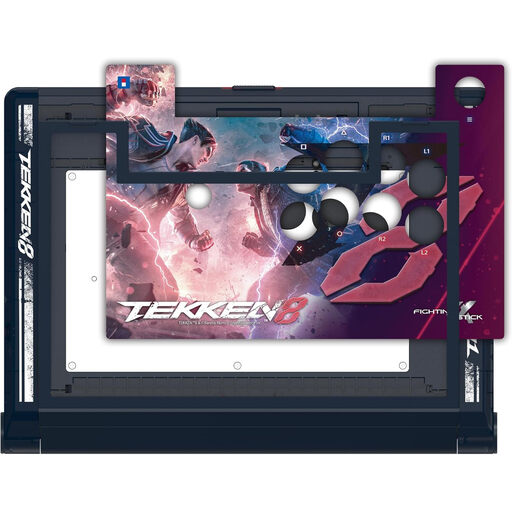
HORI PS5 Fighting Stick Alpha Tekken 8 Edition
Consider this lever-stick layout if you want physical arcade-control practice on an intended system that supports this version. The product is identified as the PS5 Tekken 8 Edition; confirm your platformer’s directional-input needs and the model’s compatibility with your setup.
View on Joybuy
Common questions
Will a lever arcade stick work well for every 2D platformer?
No: a traditional arcade stick uses digital directions, so its suitability depends on the game’s movement and controller settings. Check whether the game accepts or lets you remap those directions; a familiar D-pad may remain easier for you to use consistently.
Can one arcade stick cover PC, PlayStation, Xbox and Switch?
Do not assume it can. Mayflash lists several systems for the F500 Elite but gives additional setup requirements for certain newer consoles; 8BitDo specifies Xbox Series X|S, Xbox One and Windows for its Xbox stick, while Nacon specifies PS5, PS4 and PC for the PlayStation-version Daija. Match the precise model and setup to your system.
Is an all-button controller more practical than a lever stick at a desk?
It may be if storage space and directional buttons matter more to you than practising with a lever. 8BitDo describes its Xbox all-button controller as nearly A4-sized and 1.6 cm thick; compare the exact model’s dimensions and platform support with your workspace before choosing.
What should I check about electrical markings and disposal in Great Britain?
Check the markings applicable to the controller you are buying and the retailer’s arrangements for taking back an old electrical device. The UK Department for Business and Trade says businesses can use UKCA or CE marking for goods placed on the Great Britain market under the applicable framework; GOV.UK also sets out free in-store electrical-waste take-back duties for retailers to which those duties apply.


