
24/7 Customer Support

Free returns

Same-day & Next-day Delivery

Quality Guaranteed

Unlock Your Welcome Offers: FREE Delivery | Up to 80% OFF | Free 30-day JoyPlus trial
Download the APP
Finding an engaging, screen-free toy that can hold a child's attention while also supporting their development can be a challenge. A play kitchen is a classic choice that continues to be a favourite in many households, offering a wonderful platform for imaginative play. These toys are more than just miniature cookers; they are hubs of creativity where children can develop social skills, learn new words and practise fine motor control.
As a Joybuy Product Recommendation Officer, my role is to help you navigate the wide variety of options available. This guide will walk you through key considerations and highlight a few standout choices to help you find a kids kitchen set that fits your space, budget and your child's interests.
Choosing the right set can feel overwhelming. Focusing on a few key features will help you narrow down the choices and find a toy that will be loved for years to come.
The material of a play kitchen often dictates its feel, longevity and features.
Consider the space you have available. A large, all-in-one kitchen can be a fantastic centrepiece for a playroom, but it isn't practical for every home.
A toy kitchen with accessories provides immediate play value straight out of the box. Look for sets that include a pretend food set, pots, pans and utensils. Interactive features are also a major draw for young children. Elements like clicking knobs, running water functions and light-up hobs make the experience more immersive and help teach cause and effect.
Here are a few recommendations that cater to different play styles, spaces and interests.
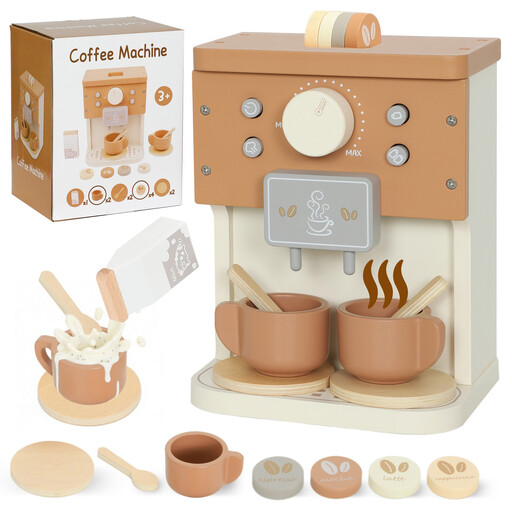
Why It Stands Out: This charming kids coffee machine set is a wonderful introduction to the world of pretend play. Its compact, wooden design focuses on a specific activity—making coffee—which is great for developing fine motor skills and focused play sessions.
Pros:
Who is it for? This set is ideal for families with limited space or for those looking to add a unique activity to an existing play kitchen. It's a thoughtful gift for a toddler kitchen setup, encouraging imaginative cafe scenarios.
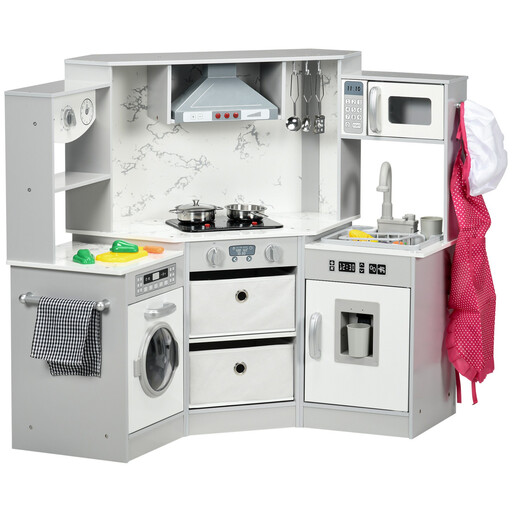
Why It Stands Out: This comprehensive corner play kitchen is designed for immersive, all-day play. It combines a space-saving layout with a host of realistic features, including a sink with a water circulation system, a microwave and a washing machine, creating a complete home corner.
Pros:
Who is it for? This is an excellent choice for parents seeking a feature-rich kids kitchen set to serve as the main attraction in a playroom. It's built to entertain for hours and is great for siblings or friends to play together.
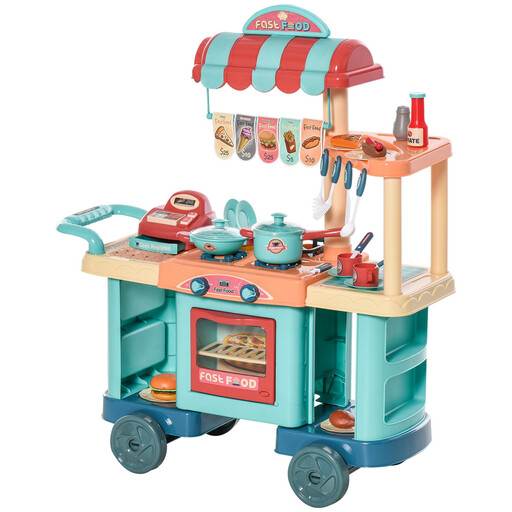
Why It Stands Out: This playset goes beyond the traditional kitchen, combining cooking with commerce. The mobile trolley design and included cash register transform it into a kids shop playset, allowing children to explore roles as both chef and cashier.
Pros:
Who is it for? This set is perfect for children who love social and imaginative play. It encourages them to develop skills beyond cooking, such as counting money and customer service, making it a versatile and educational toy.
While these recommendations cover a range of play styles, every child is different. If you're searching for a specific theme, size or feature set, there are many other models to consider.
? Explore our full collection of boys play kitchen set to find the perfect match for your little one.
1. What age is a play kitchen suitable for? Most play kitchens are designed for children aged 3 to 6 years. At this age, they have the motor skills to manipulate the accessories and are deeply engaged in imaginative role-play. Simpler, more robust sets can be introduced to a toddler kitchen setup for younger children, provided there are no small parts and they are supervised.
2. Are wooden toy kitchens better than plastic ones? Neither is inherently "better"; it depends on your priorities. A wooden toy kitchen often offers superior durability and a classic look, making it a long-lasting piece of furniture. Plastic kitchens are generally lighter, easier to clean and may include more electronic sounds and lights, which can be very engaging for some children.
3. What do children learn from a role play kitchen? A role play kitchen is a powerful learning tool. Through play, children develop crucial life skills, including: