
24/7 全天候客户支持

免费退货

当日/次日达

品质保障

开启新人专享福利: 全场免邮 | 低至 2 折 | 免费试用 30 天 JoyPlus 会员
下载 Joybuy
A play kitchen is more than just a toy; it's a stage for imagination, a tool for learning and the heart of many childhood memories. From brewing a pretend cup of tea to preparing a multi-course meal for a family of teddy bears, a kids kitchen offers endless opportunities for creative play. However, the market is flooded with options and it's easy to choose a model that looks promising online but fails to deliver in reality.
As the Joybuy Product Recommendation Officer, my role is to help you navigate the choices and identify the key features that truly matter. Before you invest, let's look at some common pitfalls that can lead to disappointment and wasted money.
play food set almost immediately.toddler kitchen.To avoid these issues, focus on a few non-negotiable parameters. These are the details that determine a play kitchen's longevity, safety and play value.
The choice between a wooden play kitchen and a plastic one often comes down to personal preference, but there are quality indicators for both.
A kitchen that's the wrong size will either be outgrown too quickly or be difficult for a smaller child to use.
toddler kitchen aimed at younger children, a slightly lower height might be more appropriate.Never compromise on safety. In the UK, all toys must meet specific safety standards.
Instead of providing a simple list, we've matched a few standout options to different household needs and play styles.
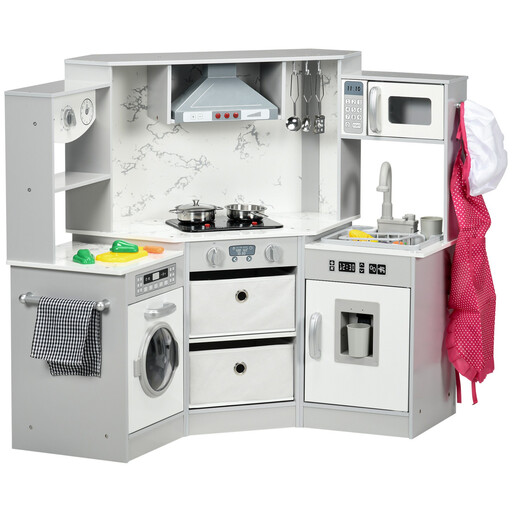
Why This Fits Their Persona: This user wants a complete, immersive experience straight out of the box. This large corner kitchen is packed with realistic features like a water-circulating sink, stove lights and sounds and even a pretend washing machine, providing a comprehensive world for imaginative play.
It directly counters the "accessories illusion" by including a generous set of utensils, pretend food and even an apron and chef's hat. The MDF construction provides a sturdier frame than many basic plastic models.
The functioning water sink and realistic sound effects offer a high level of interactivity. Its corner design makes efficient use of playroom space while offering a large play area.
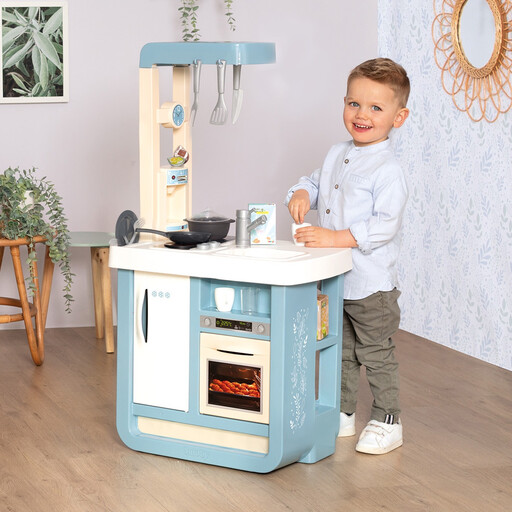
Why This Fits Their Persona: Ideal for families in smaller homes or flats, this user needs a kitchen that won't dominate a room but still offers a full play experience. The Smoby kitchen's compact, modern design fits well in bedrooms or living areas without sacrificing features.
Despite its smaller size, its sturdy construction ("Made in France") avoids the flimsy build pitfall. It also includes 23 accessories, including a `toy coffee machine` with pods, providing good value from the start.
It balances a compact footprint with engaging features like a hotplate with cooking sounds. The 48.5 cm countertop height is well-suited for the target 3+ age range.
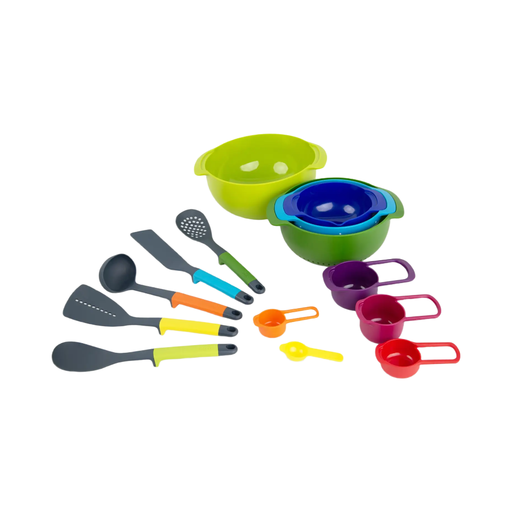
Why This Fits Their Persona: This person may already own a `play kitchen` or simply wants to provide a high-quality `kids cooking set` without the large footprint. They value design, functionality and educational elements, mirroring the popular Joseph Joseph brand.
This set is the antidote to the "illusion of accessories." Instead of dozens of tiny, generic items, it provides 14 thoughtfully designed, functional pieces that encourage genuine play, from measuring cups to a colander.
The nesting design is a clever feature that teaches organisation. The easy-to-read measurements on the cups also introduce early numeracy skills in a practical, playful way.
A great kitchen needs great ingredients. If you're looking to expand your child's culinary world, a high-quality set of accessories is the next step. We have compiled a complete range of items that satisfy these strict selection criteria and UK safety regulations.
Most play kitchens are designed for children aged 3 and up, as they may contain small parts. However, many children as young as 2 can enjoy a toddler kitchen under supervision, especially simpler wooden models. The key is to check the manufacturer's age recommendation and ensure the countertop height is appropriate for your child.
For a wooden play kitchen, it's best to avoid harsh chemical cleaners. A simple wipe-down with a damp cloth is usually sufficient. For tougher marks, a mild solution of water and vinegar can be used. Always dry the surface thoroughly afterwards to prevent the wood from warping.
This depends on the child. For some, the realistic sizzle of a hob or the beep of a microwave significantly enhances their imaginative play. For others, the joy comes from creating the sounds and scenarios themselves. If you choose a model with electronics, ensure the battery compartments are securely screwed shut. Many excellent kitchens offer rich play value without any batteries at all.