
24/7 Customer Support

Free returns

Same-day & Next-day Delivery

Quality Guaranteed

Unlock Your Welcome Offers: FREE Delivery | Up to 80% OFF | Free 30-day JoyPlus trial
Download the APP
As a Joybuy Product Recommendation Officer, my role is to help you navigate the crowded market of children's toys. A play kitchen is a fantastic investment in imaginative, screen-free play, but choosing the right one can be surprisingly tricky. It’s easy to be swayed by glossy photos and impressive feature lists, only to end up with a toy that disappoints.
Before you add anything to your basket, let's look at the common pitfalls that many UK buyers fall into. Understanding these will help you make a choice that provides lasting value and, more importantly, lasting fun for your little one.
To avoid these issues, focus on a few core parameters that determine a product's safety, usability and longevity.
The material is the foundation of any good pretend kitchen. Always check that the toy conforms to EN 71 safety standards, which is the UK and European benchmark for toy safety.
A kitchen that's the wrong size won't get used. Before buying, measure your available space. For children aged 3 to 6, a countertop height of around 45-50 cm is ideal. This allows them to comfortably reach the hob, sink and accessories without straining or needing to stand on their tiptoes, making for a much more immersive experience.
Electronic sounds and lights can be exciting initially, but the most enduring role play toys for 3 year olds are often those that encourage imagination through tactile features. Look for:
These features empower a child to create their own stories and sound effects, offering far greater long-term play value than a repetitive electronic sizzle.
Based on these practical criteria, here are a few options that align with different needs and spaces.
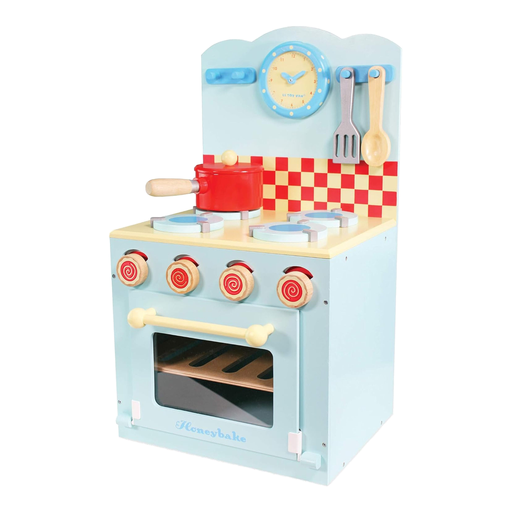
Why This Fits Their Persona: For those prioritising longevity and eco-conscious design, this kitchen is an excellent choice. Its classic aesthetic fits well in a family living space, and it's built to be passed down, not thrown away.
It directly counters the 'flimsy build' trap by using FSC-certified sustainable rubberwood and non-toxic paints, ensuring a robust and safe structure that won't wobble or degrade quickly.
Features tactile, non-electronic elements like turning dials and a clock with moving hands, encouraging imaginative play. Comes with a pot, spoon and spatula to start playing immediately.
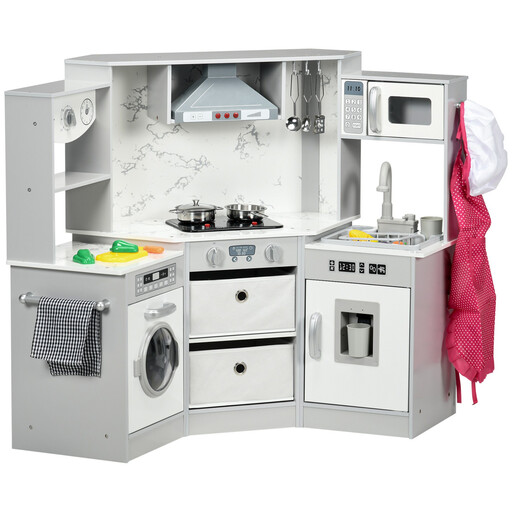
Why This Fits Their Persona: Ideal for those with a dedicated playroom or more space, this large corner kitchen is designed to be a complete activity hub. It's perfect for siblings or playdates, offering multiple stations for simultaneous play.
While large, its corner design is a smart use of space, avoiding the 'playroom dominator' issue of a long, straight kitchen. It provides maximum features without taking over the centre of the room.
Features a water circulation system for the sink, plus realistic lights and sounds. Includes a comprehensive set of accessories like an apron, hat and stainless steel pots.
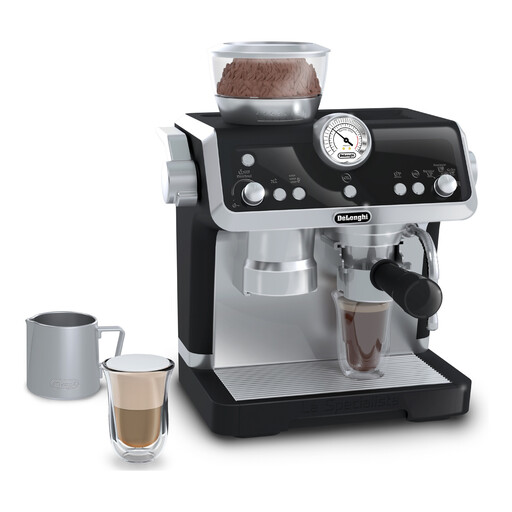
Why This Fits Their Persona: Perfect for expanding an existing play kitchen or for children fascinated by the morning coffee routine. This kids coffee machine adds a specific, modern and highly engaging activity to their pretend play.
This sidesteps the 'low-quality accessories' trap by being a substantial, high-quality accessory itself. It's a focused toy with its own play pattern, rather than a cheap filler item.
Features realistic sounds, moving parts and multiple accessories like a portafilter and coffee pods. It's a great tool for developing fine motor skills and social skills through role-play.
We have compiled a complete, real-time list of products that fully satisfy these strict selection criteria and UK safety regulations.
There isn't one "best" material, as it depends on your priorities. A wooden play kitchen made from solid wood or high-quality plywood generally offers the greatest durability and a classic aesthetic. However, well-made plastic kitchens can be lighter, easier to clean and often come with more moulded features. The key is to avoid thin, brittle plastic and low-density MDF, which are less likely to stand the test of time.
Most play kitchens are designed for children aged 3 and up. This is primarily due to the inclusion of small parts and play kitchen accessories that can pose a choking hazard for younger toddlers. For children aged 3 to 6, these toys are ideal for developing fine motor skills, creativity and social skills through role-play.
This varies widely. Compact, single-unit kitchens might only be 30-40 cm wide, while large, multi-feature sets can be over a metre wide. Before purchasing, it's wise to measure the floor space in your playroom or child's bedroom. Remember to leave enough room around the kitchen for your child to move freely, open doors and play comfortably with others.