
24/7 Customer Support

Free returns

Same-day & Next-day Delivery

Quality Guaranteed

Unlock Your Welcome Offers: FREE Delivery | Up to 80% OFF | Free 30-day JoyPlus trial
Download the APP
A play kitchen is more than just a toy; it's a miniature world where creativity, learning and fun come together. For parents and relatives seeking an engaging, screen-free activity for a child, a toy kitchen is a classic choice that supports development. However, with so many options available, from simple wooden sets to elaborate kitchen playsets with lights and sounds, making the right decision can feel overwhelming.
As the Joybuy Product Recommendation Officer, my role is to help you navigate these choices. This guide offers practical advice and highlights a few standout options to help you find a kids kitchen that will spark hours of imaginative play for your little one.
Before diving into specific models, here are a few key factors to keep in mind. Thinking about these points will help you narrow down the options and select a role play kitchen that fits your home and your child's needs.
The two most common materials are wood and plastic, each with distinct advantages. A wooden play kitchen often has a classic, durable feel and can blend seamlessly with home decor. They are typically sturdy and built to last. Plastic models, on the other hand, are lightweight, easy to clean and can incorporate more complex electronic features like sounds and lights. When choosing, always look for products that meet UK safety standards, such as EN71, ensuring they are made with non-toxic materials and have a child-safe finish.
Play kitchens range from compact, tabletop units to large, freestanding structures. Before you buy, measure the intended space in your playroom or living area. A corner kitchen can be a clever, space-saving solution for smaller rooms, while a larger kitchen playset can become a central feature for siblings and friends to play together. For those with very limited space, a portable or countertop model offers the fun of a toddler kitchen without the large footprint.
Interactive features can significantly enhance the play experience. Look for elements like turning knobs that click, opening oven doors and sinks with taps. Some kitchens come with built-in lights and sounds for added realism. Also, consider the included accessories. A set that comes with pretend food, pots and utensils provides everything a child needs to start cooking right away, offering great value and immediate play potential.
Here are a few recommendations that cater to different spaces, budgets and play styles.
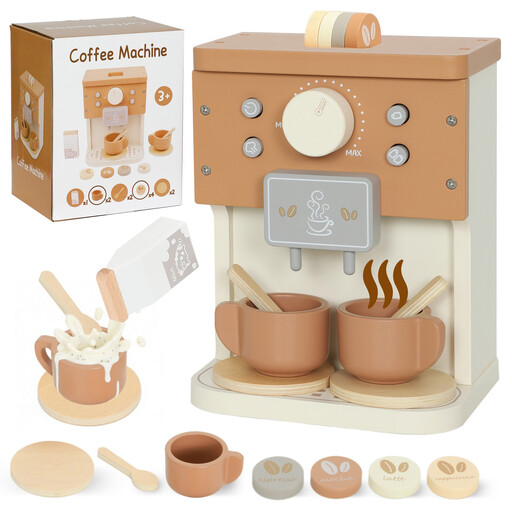
Why It Stands Out This charming barista set is a wonderful alternative or addition to a full play kitchen. Its compact, tabletop design focuses on the modern cafe experience, encouraging children to role-play making and serving coffee for family and friends. It’s a unique take on the traditional toy kitchen concept.
Pros
Who is it for? This set is ideal for families with limited space or for those looking to add a new dimension to an existing play area. It's a thoughtful gift for a child who loves mimicking trips to the local coffee shop.

Why It Stands Out This compact mini kitchen offers the core experience of a kids kitchen in a portable, tabletop format. Featuring a realistic design licensed by Miele, it provides an immersive introduction to pretend cooking without requiring the space of a full-sized unit.
Pros
Who is it for? This is a great starting point for a toddler just beginning to explore role-play. It's also a practical choice for grandparents or relatives who want a fun toy for visiting children that can be packed away easily.
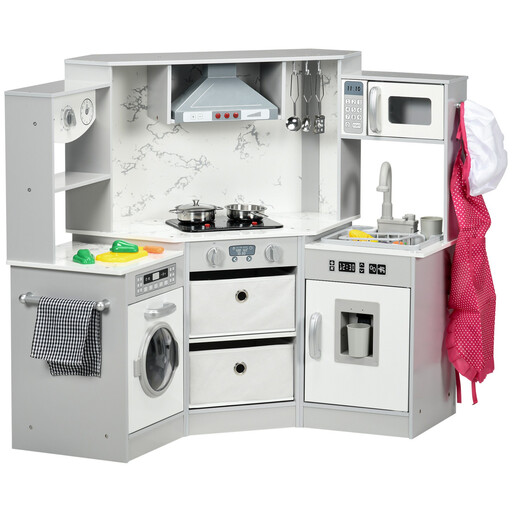
Why It Stands Out For those seeking a comprehensive and feature-rich experience, this corner kitchen is an excellent choice. Its clever design maximises play area while fitting neatly into the corner of a room. Packed with realistic features like running water, lights and sounds, it provides a complete and immersive role play kitchen experience.
Pros
Who is it for? This kitchen is perfect for parents looking for a long-lasting, all-in-one playset that will be a centrepiece of the playroom. It's well-suited for children aged 3-6 and is large enough for siblings or friends to play together.
While these recommendations cover a range of popular styles, every child's preference is unique. If you're looking for a different configuration, colour or feature set, there are many other models to consider.
Explore our full range of Boys Kitchen Playsets to find the perfect match for your little chef.
Most play kitchens are designed for children aged 3 and up, as they may contain small parts that pose a choking hazard for younger toddlers. Simpler toddler kitchen models are great for ages 3-4, while more complex sets with electronic features can keep children aged 5-6 engaged. Always check the manufacturer's age recommendation on the product.
One is not definitively better than the other; the choice depends on your priorities. A wooden play kitchen is often praised for its durability, stability and classic aesthetic. Plastic kitchens are typically lighter, easier to wipe clean and may offer more interactive electronic features. Both materials can provide a safe and enjoyable play experience when purchased from a reputable source.
A kitchen playset is a powerful tool for learning through play. It helps children develop social skills and language by role-playing scenarios with others. Handling accessories like utensils and pretend food enhances fine motor skills and hand-eye coordination. It also introduces them to concepts like sequencing (following steps to "cook" a meal), sorting and counting, all while fostering creativity and imagination.