
24/7 Customer Support

Free returns

Same-day & Next-day Delivery

Quality Guaranteed

Unlock Your Welcome Offers: FREE Delivery | Up to 80% OFF | Free 30-day JoyPlus trial
Download the APP
A play kitchen is more than just a toy; it's a hub for imagination, learning and screen-free fun. For children, it’s a space to mimic the grown-ups they admire, develop social skills and understand the world around them. However, choosing the right one can be tricky. The market is filled with options that look appealing online but fail to deliver on their promises. As a parent, grandparent or gift-giver, you want a toy that is safe, engaging and built to last.
Before you make a decision, it's important to be aware of a few common purchasing traps that can lead to disappointment and wasted money:
pretend food and toy cooking set that make a kitchen look so inviting are not included. This leaves you with a bare-bones unit and the unexpected task of spending significantly more to make it functional and fun.To ensure you select a role play kitchen that will be cherished for years, focus on a few core parameters rather than just the marketing highlights.
The durability of a play kitchen hinges on its materials. Look for items that specify their construction. High-quality, sustainably sourced wood, often indicated by FSC certification, offers excellent longevity and a classic aesthetic. A well-made wooden play kitchen can withstand years of play. If you prefer plastic, check for mentions of durable, BPA-free plastics that are thick and sturdy. All toys sold in the UK should conform to safety standards, such as BS EN 71, which ensures they are free from toxic materials and have been tested for safety.
The most engaging features are often the simplest. Look for elements that encourage hands-on, imaginative play:
play food and mimicking real kitchen routines.While electronic sounds can seem exciting, they can sometimes limit a child's imagination by dictating the play scenario. A balance between simple mechanics and subtle electronic features is often a good approach.
A kids kitchen set is only as fun as the activities it enables. A set that includes a generous amount of toy kitchen accessories and children's play food provides much better value from the start. It allows a child to begin playing immediately without the need for additional purchases. Consider what's in the box: are there pots, pans, utensils and a variety of food items? These are the tools that bring a toy cooking set to life.
To help you navigate the options, we've matched a few noteworthy products to different family needs and play styles.
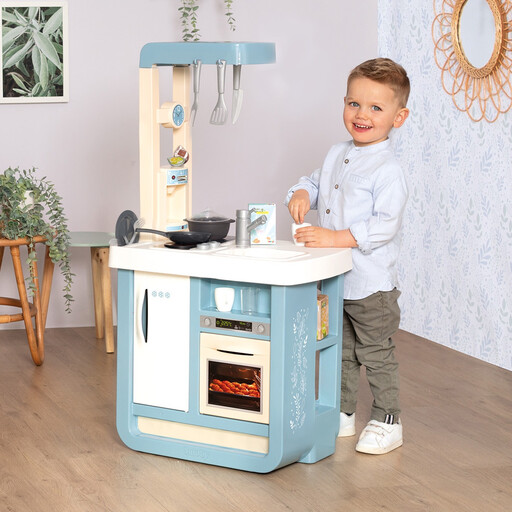
Why This Fits Their Persona: Ideal for parents seeking a complete, feature-rich kids kitchen set that is ready for play straight out of the box. Its contemporary design fits well in modern playrooms, and the 48.5 cm countertop height is perfectly suited for children aged 3 and up.
It directly counters the "hidden costs" trap by including 23 accessories, from pots and pans to pretend food. Its sturdy, stable construction also avoids the flimsy build pitfall.
Features an electronic hotplate with cooking sounds and an espresso machine, offering a great balance of interactive features without overwhelming imaginative play.
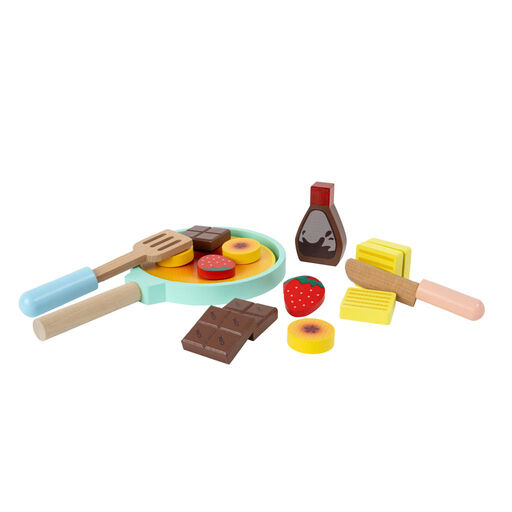
Why This Fits Their Persona: Perfect for families who prioritise sustainable, plastic-free toys. This wooden play food set encourages traditional, imaginative role-play and is an excellent addition to an existing wooden play kitchen or as a standalone tabletop activity.
Crafted from FSC certified wood, it is the antithesis of the flimsy plastic trap. Its focused theme of pancake-making provides deep play value, avoiding the "all show, no go" issue of less engaging toys.
Promotes social and communication skills through a specific, collaborative task. The set includes a saucepan, utensils and various pancake toppings for comprehensive play.
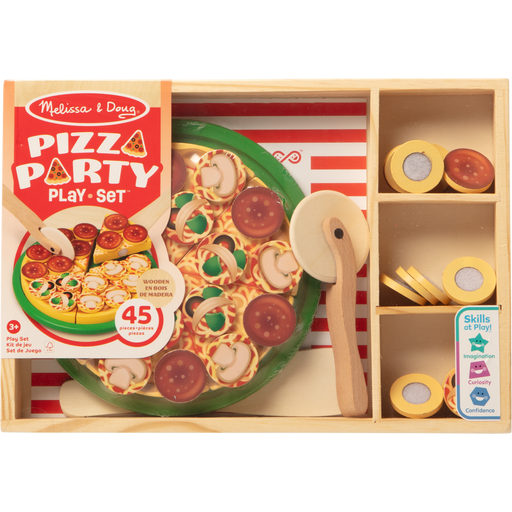
Why This Fits Their Persona: An excellent choice for parents and educators looking for a toy cooking set that specifically targets the development of fine motor skills, sorting and counting in a fun, universally loved theme.
With 54 toppings and six sliceable pieces, this set offers immense replayability, avoiding the "boredom" trap. The durable wooden construction and neat storage box also add to its long-term value.
The self-stick tabs provide a satisfying "slicing" sound and feel, which is excellent for sensory feedback and developing hand-eye coordination with the included pizza cutter.
We have compiled a complete, real-time list of products that fully satisfy these strict selection criteria and UK safety regulations.
There isn't one "best" material, as it depends on your priorities. Wooden play kitchens, especially those made from solid or FSC-certified wood, are known for their durability, stability and timeless appeal. They are often heavier and can be a long-term fixture in a playroom. Plastic play kitchens can be lighter, easier to clean and often come in brighter colours with more moulded features. Look for high-grade, BPA-free plastic that feels thick and robust, not thin and brittle.
Most play kitchens are designed for children aged 3 and up, primarily due to the presence of small parts that could be a choking hazard. However, many children as young as 2 show an interest in this type of role-play. For younger toddlers, ensure the set is stable, has no small, detachable parts and consider starting with larger, simpler play food items. Always check the manufacturer's age recommendation and supervise play.
The key is variety and realism. Regularly rotating the toy kitchen accessories can reignite interest. Introduce new pretend food sets, like a pizza-making kit or a basket of fruit. You can also add real-world items like empty (and clean) spice jars, colourful dish towels or a small notepad for taking "orders." This helps connect their imaginative play to the real world and keeps the experience fresh and exciting.