
24/7 Customer Support

Free returns

Same-day & Next-day Delivery

Quality Guaranteed

Unlock Your Welcome Offers: FREE Delivery | Up to 80% OFF | Free 30-day JoyPlus trial
Download the APP
A play kitchen is more than just a toy; it's a stage for imagination, a tool for learning and the source of countless hours of creative fun. But with so many options on the market, it's easy to fall into common purchasing traps. As a Joybuy Product Recommendation Officer, my role is to help you see past the marketing and focus on what truly matters for a lasting, engaging and safe toy for your child.
Before you add a kids kitchen set to your basket, let's look at a few pitfalls that often lead to disappointment:
To ensure you're choosing a play kitchen that will be loved for years, focus on these core practical considerations.
The choice between wood and plastic is about more than just looks; it affects durability, features and maintenance.
A play kitchen should be an accessible and comfortable space for your little chef. The most critical measurement is the countertop height.
Always measure the space in your playroom or living area. Some kitchen sets have a surprisingly large footprint, especially those with breakfast bars or extended sections.
A kitchen is empty without things to cook. The quality of the included pretend food and utensils can make or break the experience. When evaluating a set, consider if the accessories are robust and realistically sized. Sometimes, it is more practical to purchase a simpler kitchen unit and invest separately in a high-quality set of pans, utensils and pretend food that will stand up to daily "cooking."
Based on these practical criteria, here are a few options that match different needs and priorities.
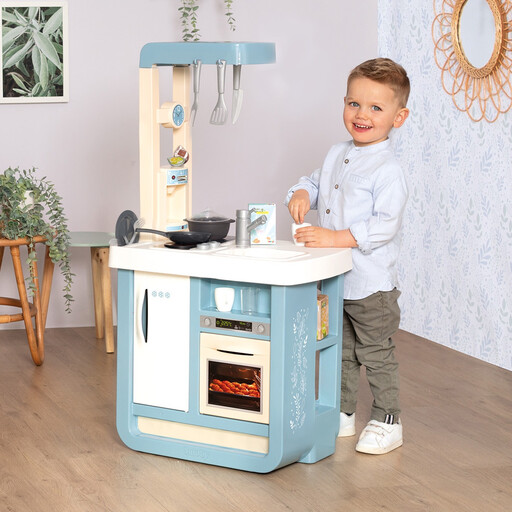
Why This Fits Their Persona: This is for the parent or gift-giver who wants a complete, out-of-the-box solution. It has everything needed for immediate play, from the kitchen structure to sounds and a generous set of accessories, removing the need to buy extras right away.
It sidesteps the "low-quality accessory" trap by providing 23 well-integrated items, including pots, pans and an espresso machine. The 48.5 cm countertop is a suitable height for its target age group (3+).
The electronic hob with cooking sounds adds a layer of sensory realism that deeply engages children. Its stable, contemporary design includes an oven, fridge and ample storage.
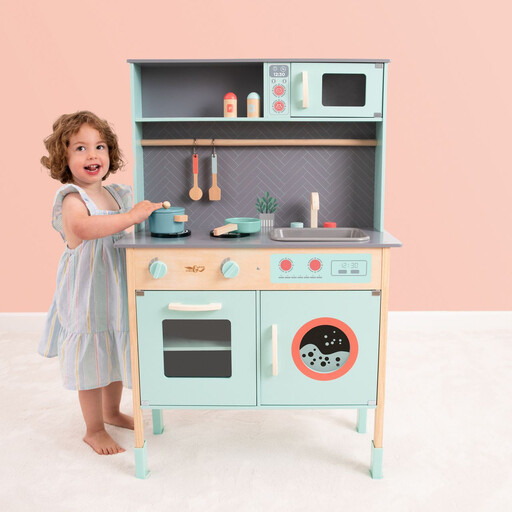
Why This Fits Their Persona: This is for the family that values sustainable materials and a design that blends seamlessly with modern home decor. It prioritises aesthetics and eco-credentials without compromising on play value.
It directly counters the "flimsy build" trap by using FSC certified wood, ensuring a sturdy and responsibly sourced product. Anti-slip rubber feet also add stability and protect floors.
Its Montessori-inspired design encourages independent, creative play. The clean, organised layout with a sink, hob and taps provides a solid foundation for imaginative scenarios.
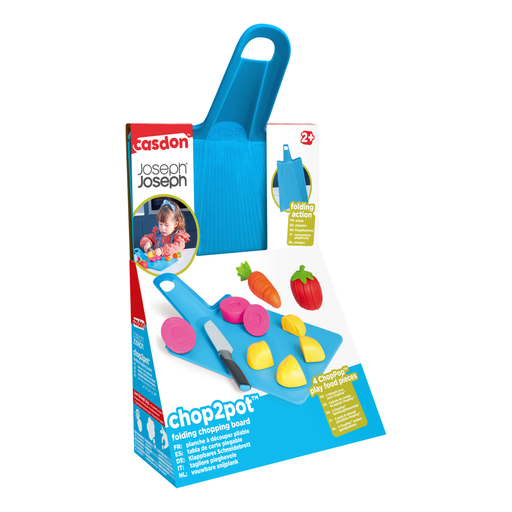
Why This Fits Their Persona: This is an ideal choice for expanding an existing kitchen or for children who are fascinated by the process of cooking. It focuses on the single, satisfying task of chopping and preparing food with cleverly designed tools.
This set is the antithesis of the "cheap accessory" trap. It offers a small number of high-quality, functional items. The Choppop technology provides a realistic slicing action without relying on flimsy velcro or magnets.
The innovative chopping mechanism and foldable board mimic adult kitchen gadgets, promoting fine motor skills and hand-eye coordination in a uniquely engaging way.
We have compiled a complete, real-time list of products that fully satisfy these strict selection criteria and UK safety regulations.
Most children start showing an interest between 18 months and 2 years old. Simpler, shorter toddler kitchens are great for this age. From age 3 upwards, they can handle more complex, feature-rich kitchens and will engage in more elaborate role-play. The key is to match the kitchen's height and complexity to the child's developmental stage.
For a wooden play kitchen, avoid harsh chemical cleaners or soaking it with water, which can damage the wood and finish. Use a soft, damp cloth with a mild soap solution to wipe down surfaces, then dry it immediately with another cloth. This will keep it clean without causing the wood to swell or warp.
Absolutely. A play kitchen is a fantastic tool for development. It encourages imaginative role-play, which helps children process the world around them. It also develops fine motor skills (turning knobs, stirring), social skills (playing with others, "serving" food) and even early maths concepts (counting ingredients, setting the table).