
24/7 全天候客户支持

免费退货

当日/次日达

品质保障

开启新人专享福利: 全场免邮 | 低至 2 折 | 免费试用 30 天 JoyPlus 会员
下载 Joybuy
A play kitchen is more than just a toy; it's a stage for imagination, a tool for learning and a backdrop for countless childhood memories. But with so many options on the market, it's easy to fall into common purchasing traps. As a Joybuy Product Recommendation Officer, my role is to help you navigate the choices and find a kids kitchen that will inspire creative play for years to come, without the buyer's remorse.
Before you add one to your basket, let's look at the frequent pitfalls that can turn a promising toy into a piece of clutter.
To ensure you're investing in a toy that lasts, focus on a few core parameters. These are the non-negotiable details that separate a worthwhile purchase from a disappointing one.
The choice between a wooden play kitchen and a plastic one is often the first decision.
Regardless of material, the most important factor is safety certification. Always look for products that conform to BS EN 71 standards, which is the UK and European benchmark for toy safety. This ensures the materials are non-toxic and the construction is safe for children.
Before you start browsing, measure the space you have available. A large, feature-rich kitchen is only useful if it fits comfortably in your home. Many compact and even tabletop models offer excellent functionality, including a hob, oven and sink, making them perfect for smaller rooms. Look for clever storage solutions like hooks, shelves and cupboards to keep the play kitchen accessories tidy. A well-designed pretend play kitchen maximises play opportunities within a reasonable footprint.
The kitchen unit itself is just the beginning. The real magic of role play kitchen toys comes alive with the right accessories. A basic kitchen can be endlessly enhanced with realistic additions. Consider items that mimic what children see every day, such as a toy coffee machine, a toaster that pops or a set of colourful utensils.
High-quality play food is also essential for sparking culinary creativity. Sets that include a variety of food types, from fruits and vegetables to pretend tins and boxes, can help teach children about different foods and meal preparation.
Instead of a one-size-fits-all approach, we've matched some standout options to different family needs and play styles.
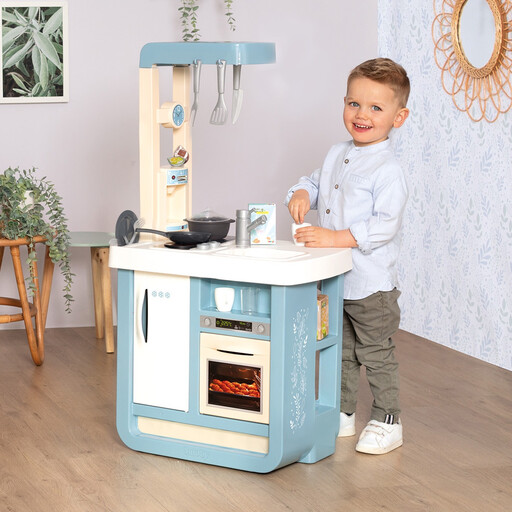
Why This Fits Their Persona: Perfect for the child who loves to copy grown-ups, this kitchen includes modern features like an espresso machine with pods and a hob with electronic sizzling sounds. It’s a complete and contemporary starter set for any budding chef.
It counters the "limited play value" trap with its interactive sound effects and coffee machine. The included 23 accessories are substantial enough to avoid the "all-included illusion," providing a solid foundation for play.
The integrated sound effects and espresso machine add a layer of realism that enhances imaginative play. Its sturdy, French-made construction ensures stability.
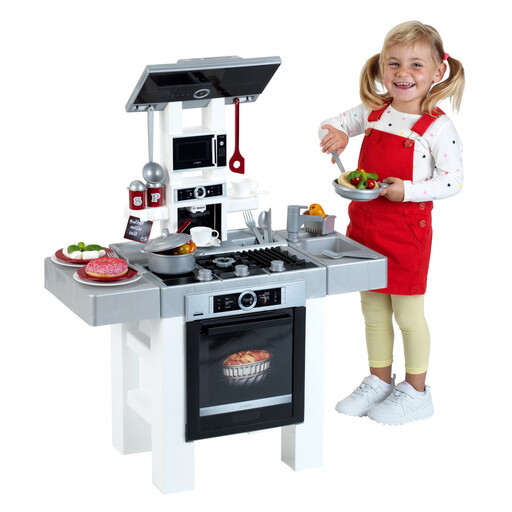
Why This Fits Their Persona: Designed for shared fun, this kitchen is playable from both sides, making it ideal for siblings or playdates. It's packed with high-end features, including a sink with a real water pump function and a hob with light and sound effects.
Its robust, double-sided German engineering directly counters the "unstable design" pitfall. The extensive, genuinely interactive features like the water pump and electronic hob ensure it has lasting play value.
The dual-sided playability is a major benefit for social development. The functional water pump offers a unique and highly engaging sensory experience.
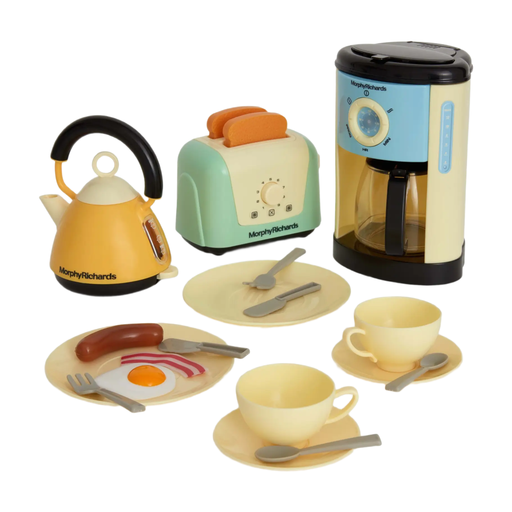
Why This Fits Their Persona: For those who already have a basic kitchen or want to build a collection of realistic appliances. This set features licensed replicas of Morphy Richards items, including a fillable coffee maker, kettle and a toaster with pop-up toast.
This set avoids the "all-included illusion" by focusing on being a high-quality accessory pack. It delivers on its promise of realistic, functional appliances rather than trying to be a complete, low-quality kitchen.
The licensed designs and functional features (fillable coffee pot, pop-up toast) add a level of authenticity that greatly enhances any pretend play kitchen setup.
We have compiled a complete, real-time list of products that fully satisfy these strict selection criteria and UK safety regulations.
Generally, children from ages 2 to 7 enjoy play kitchens. For toddlers (2-3), a simple, sturdy model with basic functions is ideal. As they get older, you can introduce more complex play kitchen accessories and food sets, like the Melissa & Doug Wooden Pizza Party, to keep the play challenging and engaging.
Not necessarily. Safety is determined by the quality of construction and adherence to safety standards like BS EN 71, not the material itself. A well-made plastic kitchen from a reputable brand is just as safe as a high-quality wooden one. Plastic can be easier to wipe clean, while wood offers a classic look and feel. The choice often comes down to personal preference and style.
This varies significantly. Before buying, measure your available area. For smaller rooms or flats, a compact or tabletop model like the Theo Klein Miele Pretend Play Mini Kitchen can provide the full experience without dominating the space. Larger, freestanding kitchens are wonderful for a dedicated playroom corner but check the assembled dimensions to ensure a good fit.