
24/7 全天候客户支持

免费退货

当日/次日达

品质保障

开启新人专享福利: 全场免邮 | 低至 2 折 | 免费试用 30 天 JoyPlus 会员
下载 Joybuy
Is the floor of your playroom more of a toy-strewn obstacle course than a space for fun? You are not alone. Keeping children's books, games and countless treasures organised can feel like a never-ending task. The right playroom storage does more than just clear the clutter; it creates an environment where children can play freely, find their favourite things easily and even learn the valuable habit of tidying up after themselves.
This guide is designed to help you navigate the options and find practical, safe and effective storage solutions. We will look at key features to consider and share some of our top recommendations to help you reclaim your space and build a more organised, engaging playroom for your little ones.
Before you decide, it helps to think about what makes a piece of storage furniture suitable for a child's space. Here are a few practical points to consider.
When selecting children's storage furniture, safety is paramount. Look for items made from sturdy materials like MDF or robust plastic with smooth, rounded corners to prevent bumps and scrapes. An essential feature for any tall unit, such as a kids bookshelf, is an anti-tip mechanism. This often comes as a strap or a pre-drilled hole allowing you to secure the unit to the wall, providing stability and peace of mind, especially with adventurous climbers. Always check for safety certifications, such as EN71-1-2-3, which indicate the product has been assessed for use by children.
The ideal storage solution often depends on your child's age and developmental stage. For toddlers and younger children, a Montessori bookcase with forward-facing shelves can be brilliant. It allows them to see the covers of their books, encouraging them to pick one out for themselves. Simple, low-level bin units or a kids chest of drawers are also effective nursery storage solutions, making it easy for little hands to help with tidying. As they grow, modular cube units and taller bookshelves can accommodate expanding collections of books and larger toys.
In many UK homes, space is at a premium. Multi-functional furniture is a smart choice for maximising a room's potential. A unit that combines shelves for books, cubes for toys and drawers for art supplies can serve as an all-in-one organisation station. Before purchasing, measure your available space to ensure the unit fits comfortably without overwhelming the room. A well-chosen toy organiser should create more space for play, not less.
Here are a few thoughtfully selected items that balance functionality, safety and design to help bring order to your child's play area.
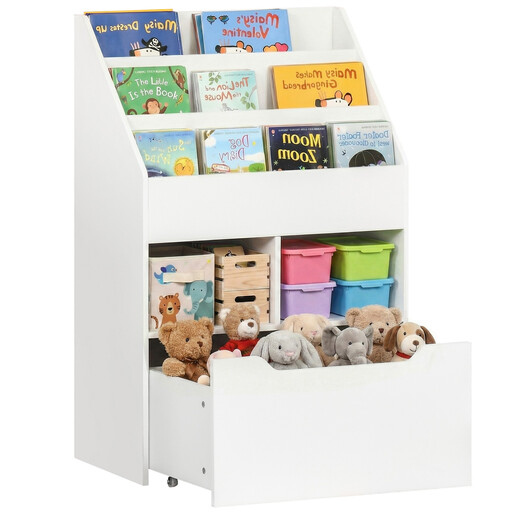
Why It Stands Out: This unit is a fantastic all-rounder, combining three different types of storage in one compact design. Its Montessori-inspired layout features forward-facing bookshelves, while the cubes and large, rolling bottom drawer provide ample space for toys and games. The drawer is on wheels, so it can be rolled out for playtime and easily pushed back, making tidying up a simple task.
Pros:
Who is it for: Parents of children aged 3-12 who need a versatile piece of furniture that acts as both a kids bookshelf and a toy organiser. It’s ideal for those wanting to encourage independence and good tidying habits.
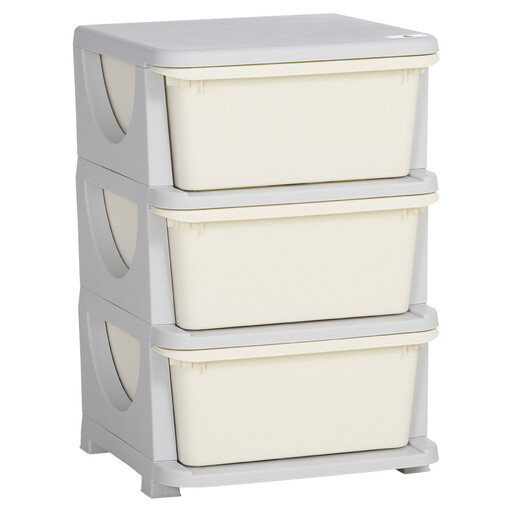
Why It Stands Out: Sometimes, simplicity is the most effective solution. This three-drawer chest is a straightforward and robust toy organiser. Made from tough, easy-to-clean plastic with rounded corners, it’s built for the realities of a child's room. The deep drawers are perfect for stashing everything from building blocks to dress-up clothes, keeping them out of sight but within easy reach.
Pros:
Who is it for: Families with younger children (ages 3-6) who need a simple, durable and safe kids chest of drawers. It’s a practical choice for containing clutter in bedrooms, nurseries or playrooms where floor space is limited.
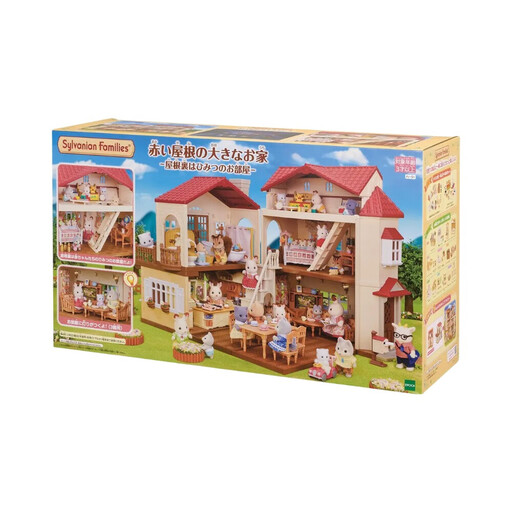
Why It Stands Out: While not a traditional storage unit, this playset offers a clever way to manage the sprawl of small toys. Imaginative playsets like this one provide a dedicated world for figures and accessories, containing the play in one area. The Red Roof Country Home is particularly engaging with its multiple rooms and a secret attic playroom, encouraging children to keep all the related pieces together.
Pros:
Who is it for: Parents looking to foster imaginative play while indirectly managing the clutter of small-figure collections. It’s a wonderful centrepiece for a playroom that doubles as a home for a whole world of tiny toys.
Every child and playroom is unique and finding the right items to spark joy and maintain order is a personal journey. If our recommendations have you thinking about other ways to enhance your child's play area, there are many more options to discover.
If you're searching for more engaging toys and activities, explore our full collection of playroom toys to find the perfect fit for your child's imagination.
1. What is the best way to organise a small playroom? For smaller spaces, think vertically and multi-functionally. A tall but slim kids bookshelf with integrated bins or a compact kids chest of drawers can help maximise floor space. Furniture that serves more than one purpose is always a practical choice.
2. How can I encourage my child to tidy up their toys? Make it as easy as possible. Choose children's storage furniture that is at their height, with drawers or bins they can manage themselves. A Montessori bookcase or low-level shelves empower them to access and return items. Using labels with pictures can also help younger children know where everything belongs.
3. What is Montessori-style storage? Montessori-style storage is designed to promote a child's independence. It typically involves low, open and forward-facing shelves that allow children to clearly see and choose their toys and books. The philosophy is that if a child can easily access their things, they are also more capable of putting them away, fostering a sense of responsibility and order.