
24/7 全天候客户支持

免费退货

当日/次日达

品质保障

开启新人专享福利: 全场免邮 | 低至 2 折 | 免费试用 30 天 JoyPlus 会员
下载 Joybuy
Advice from the Joybuy Product Recommendation Officer
Choosing pliers and specialist hand tools is less about buying the largest set and more about matching the tool to the material, access and force required. A general household pliers set may handle occasional repairs, but electrical, plumbing, automotive and tiling work often needs a purpose-designed option.
The wrong choice can damage a cable, crush a hose, round off a filter or leave a tile edge uneven. Before comparing prices, check the following buying pitfalls and specifications.
Combination pliers, side cutters and water pump pliers are useful across many jobs, but they are not interchangeable. A water pump plier is designed to grip pipes and fittings; it is not a substitute for hose clamp pliers. Similarly, side cutters may cut wire, but they may not provide the controlled stripping required for electrical work.
A tool that technically fits the job may still provide poor access, excessive force or an inaccurate cut.
Product titles can make a tool sound universal, while the actual working range is limited. Check:
For example, hose clamp pliers designed for flexible hoses should not automatically be used on hard, reinforced or high-pressure lines.
A soft-grip handle can make a tool more pleasant to use, but it cannot compensate for poorly aligned jaws or unsuitable teeth. Look for a jaw profile that suits the workpiece. Serrated jaws can improve grip on pipes, while smooth or specially radiused jaws may reduce marking or damage on flexible hoses.
For regular workshop or site use, heat-treated chrome-vanadium steel, alloy steel or forged carbon steel can offer useful strength and wear resistance. Corrosion-resistant finishes may help when tools are stored in garages, vans or damp utility areas, but all metal tools should still be wiped clean and kept dry.
Specialist tools may use different materials for a reason. The DURATECH hose clamp pliers use PA6 reinforced nylon, which is non-conductive and designed for flexible lines. That does not make them suitable for every fluid system, but it is relevant when working around fuel, coolant or brake hoses according to the stated application.
A quick-adjust mechanism saves time when switching between different pipe or fitting sizes. Compare the actual opening rather than relying on terms such as “universal”. The WORKPRO 180 mm and 250 mm water pump pliers set, for instance, lists maximum openings of 33 mm and 43 mm.
For oil filter removal, the DURATECH set includes a three-jaw wrench adjustable from 63 to 103 mm, alongside a 300 mm oil filter plier. Check the filter diameter before ordering and avoid excessive force if the filter or housing is damaged.
For electrical tools, confirm whether the product handles solid or stranded copper and aluminium wire, and whether its range is given in mm² or AWG. These measurements are not interchangeable without checking a conversion table.
The C.K. Automatic Wire Stripper Pro states a stripping range of 0.2–6.0 mm² for copper or aluminium wire and a cutting capacity of 0.05–8.5 mm². The C.K. Automatic Cable & Wire Stripper is specifically designed for PVC-insulated flat twin and earth cables up to 12 mm wide, with a stated range of 0.75–2.5 mm². Selecting between them depends on cable type, not simply on the word “automatic”.
Always isolate electrical circuits before work. Wire strippers are not a replacement for safe isolation procedures, suitable PPE or a properly qualified person where regulations require one.
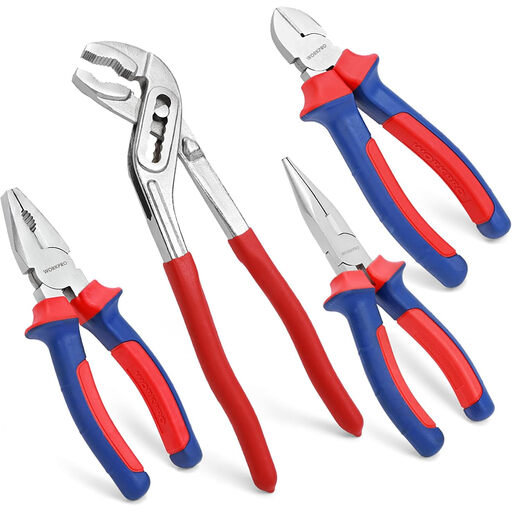
Why This Fits Their Persona: A practical starting point for UK households, landlords and DIY users who need several common plier types without buying each tool separately.
It clearly lists four separate tools: combination, long-nose, side cutters and water pump pliers, reducing reliance on one unsuitable multi-purpose tool.
Heat-treated alloy steel construction; PP and TPR resin handles; includes a 244 mm water pump plier.
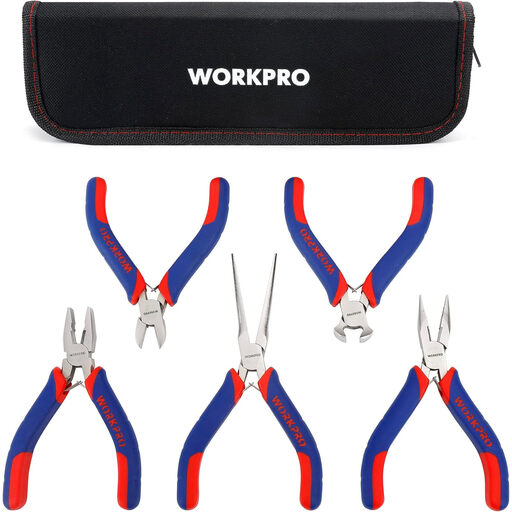
Why This Fits Their Persona: Suits jewellery making, electronics repair, model building and craftspeople who prioritise controlled handling in a small footprint.
The five-piece selection separates side cutting, front cutting, flat-nose, needle-nose and combination tasks instead of disguising them as one tool.
Drop-forged alloy steel with Ni-Fe coating; jaws stated as hardened to HRC55-65; supplied with a 600D nylon pouch.
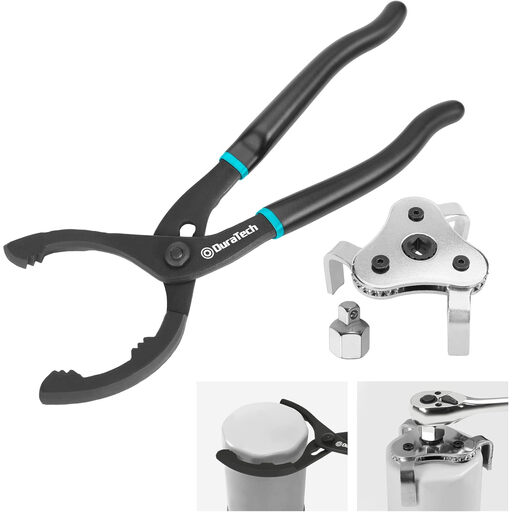
Why This Fits Their Persona: Designed for mechanics, automotive technicians and garage DIY users handling oil filters on cars, motorcycles, lorries or equipment.
The stated 63–103 mm wrench range makes compatibility easier to check before purchase, rather than assuming one size fits every filter.
Two-piece set; heat-treated hardened steel; includes 3/8-inch and 1/2-inch adapter compatibility as stated in the product details.
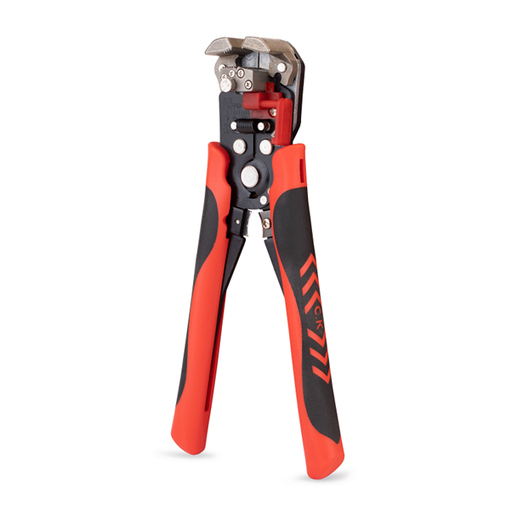
Why This Fits Their Persona: A suitable match for electricians and DIY users who regularly strip flat or round cables and want automatic size adjustment.
Its listed wire ranges and micro-adjustment feature provide more useful detail than an unspecified “automatic wire stripper” claim.
Handles stated cable sizes from 0.05–8 mm² with micro adjustment; hardened steel blades; two-component handles.
We have compiled a complete, real-time list of products that fully satisfy these strict selection criteria and UK safety regulations.
Wipe tools after use, remove debris from the jaws and apply a small amount of light oil to pivots where appropriate. Store them in a dry toolbox, pouch or cabinet. Inspect cutting edges, adjustment mechanisms, handles and locking features before use. Replace tools showing cracks, excessive play or damaged jaws.
For cutting tasks, wear safety glasses; gloves may also be appropriate where sharp edges or hot components are present. Keep all pliers away from children and never assume a non-conductive handle makes a tool safe for live electrical work.
A set can be cost-effective when you regularly perform several related tasks. A household pliers set covers general gripping, cutting and plumbing work, while a precision pliers set or automotive hand tools set is more appropriate for a defined application. Compare the included sizes and capacities rather than the piece count alone.
Lifespan depends on material, frequency of use, storage and whether the tool is used within its rated capacity. Heat-treated steel, clean pivots and dry storage can support continued operation, but cutting edges and jaw teeth will wear faster when used on excessively hard materials or oversized workpieces.
An automatic wire stripper removes insulation using a self-adjusting mechanism, while side cutters are primarily designed to cut wire. Some combination tools perform both functions, but the listed wire range and cutting capacity must match your cable. Neither tool should be used on an energised circuit.