For a lower-fat milkshake alongside a ploughman's lunch, compare fat and sugars per 100ml, then consider how much you will actually drink. The Sainsbury's listings show that Pro Mlk Vanilla has less than 0.5g fat per 100ml, while Tesco lists Arla Protein Chocolate at 0.9g fat and 4.7g sugars per 100ml; both are 1L cartons, so their ingredients and after-opening instructions matter if you are sharing.
Who is choosing?
The useful starting point is whether the drink is a small accompaniment, a shared carton or a way to meet a particular ingredient preference.
Lower-fat lunch shoppers
If you want milkshake with a ploughman's lunch while paying attention to fat, compare the nutrition panel per 100ml. Check sugars and the portion you plan to pour too: a lower fat figure does not tell you either of those things.
People sharing lunch
A 1L carton offers several portions, but the ingredients must suit everyone drinking it. Plan how you will refrigerate and use any remainder after opening.
Protein-focused or lactose-avoidant shoppers
Compare protein in the portion you intend to drink, not just the bottle's headline figure. If you need to avoid lactose, check the specific product label; lactose-free milk drinks can still contain milk and are not suitable for someone with a milk allergy.
What should you compare?
Start with the per-100ml nutrition figures to compare different pack sizes, then check the serving, ingredients and storage instructions that apply to your lunch.
| Priority |
What to check |
Your needs |
| Fat and sugars |
Compare both figures per 100ml, then check the portion. Sainsbury's lists 1.2g fat and 8.9g sugars per 100ml for its 1% chocolate milkshake; Tesco lists 0.9g fat and 4.7g sugars per 100ml for Arla Protein Chocolate. |
I want a lower-fat drink, but I also care how much sugar is in the glass I pour with lunch. |
| Protein and portion |
Read protein and energy for the serving or whole bottle as well as per 100ml. Sainsbury's lists 50g protein and 312kcal for the full 471ml For Goodness Shakes bottle. |
A small drink alongside lunch suits me better than a full large bottle; alternatively, I may be choosing the drink specifically for its stated protein amount. |
| Ingredients |
Check the current ingredients and allergen statement. Tesco identifies milk in Arla Protein and milk and barley in the Mars drink; a lactose-free or no-added-sugar claim answers a different question. |
Before I serve anyone, I need to know whether the drink contains an ingredient they must avoid, or a sweetener they prefer not to have. |
| Pack and storage |
Check the pack size, stated portions and instructions after opening. Tesco says to refrigerate Arla Protein 1L and use it within 3 days of opening. |
Will several people share the carton, or can I use what remains within the time stated on its label? |
Common buying mistakes
-
Choosing by the fat claim alone
A fat figure does not establish the sugar content. Sainsbury's lists 1.2g fat and 8.9g sugars per 100ml for its 1% chocolate milkshake; its stated 200ml serving contains 17.9g sugars.
Use the per-100ml panel for comparison, then read the figures for the amount you expect to drink.
-
Reading lactose-free as milk-free
Tesco describes Arla Protein Chocolate as lactose-free but states that it is unsuitable for people with a milk allergy. Its Mars no-added-sugar drink lists sugars and contains milk and barley.
Check the current ingredients and allergen statement for the person who will drink it, and use the nutrition panel to assess sugars.
-
Treating a large single bottle as a small accompaniment
Sainsbury's lists the full 471ml For Goodness Shakes bottle as one serving, with 312kcal, 50g protein and 23g sugars. Those are whole-bottle figures, not figures for a small glass.
Decide how much drink you want with the meal before comparing a single bottle with a multi-serve carton.
-
Overlooking what happens after opening
A large carton only suits the meal plan if you can store and use what remains. The Tesco Arla Protein listing says 3 days after opening, while Sainsbury's states 5 days for its chocolate milkshake, without exceeding the use-by date.
Follow the instructions on the pack you buy and choose a size that fits the number of people drinking it.
Brand and retailer references
These examples show why a familiar name or a front-of-pack phrase is not enough to compare drinks: figures and ingredients belong to the specific product and variant.
Yazoo
The 400ml Chocolate Milk Drink is a ready-to-drink option; the Tesco listing does not identify it as a specifically low-fat product.
- Tesco lists 1.4g fat, 8.6g sugars and 3.2g protein per 100ml.
- It contains milk. Compare its sugars as well as its fat with any other drink you are considering.
FRijj
The researched chocolate milkshake comes in a 330ml bottle.
- Tesco lists 1.3g fat and 3.7g protein per 100ml.
- Tesco lists 11.4g sugars per 100ml, so check the sugar figure if that matters alongside fat.
Mars
The 400ml chocolate-flavoured milk drink carries a no-added-sugar claim.
- Tesco lists 6.5g sugars and 2.2g fat per 100ml; no added sugar does not mean sugar-free.
- The listed ingredients include milk, barley and sweeteners. Check the label if any of these affect your choice.
Tesco
Its product listings provide figures for several distinct drinks, including Arla Protein, Yazoo, FRijj and Mars.
- The listed per-100ml values make it possible to compare these particular products on the same basis.
- Use the current pack's ingredients and nutrition label when a formulation or allergen matters to the person drinking it.
Sainsbury's
Its listed drinks include an own-brand 1% chocolate milkshake and separate protein-shake products.
- The own-brand 1L chocolate milkshake lists 1.2g fat per 100ml and a stated 200ml serving.
- It also lists 8.9g sugars per 100ml. Do not transfer those figures to another Sainsbury's drink.
Asda
Its listing for the Mars 400ml milk drink provides another product-specific label reference.
- Asda lists 2.2g fat and 6.5g sugars per 100ml for that drink.
- The listing identifies milk and barley; check the current pack before serving it to someone with an allergy.
Joybuy milkshake-style options
These ready-to-drink protein shakes offer individual bottle or can portions to consider alongside a ploughman's lunch. Compare their stated nutrition on the same basis as any milkshake you are considering, and check whether the full portion suits your meal.
 No image available
Applied Nutrition Vanilla Ice Cream Protein Nutrition Shake, 8 × 500ml
The 500ml bottle is a larger individual portion to consider alongside lunch. Its listed nutrition gives 0.1g fat, 3.4g sugars and 8.4g protein per 100ml; check the amount you intend to drink rather than treating the whole bottle as a small glass.
It contains milk and sucralose. The product instructions say to refrigerate it after opening and consume it within 24 hours; check the pack's use guidance if buying it for someone under 18 or someone who is pregnant or nursing.
View on Joybuy
 No image available
Applied Nutrition Strawberries & Cream Protein Nutrition Shake, 8 × 330ml
Each 330ml bottle is a smaller individual portion than the 500ml Applied Nutrition variant. Its listed nutrition gives 1.0g fat, 3.5g sugars and 6.1g protein per 100ml; the bottle lists 20g protein.
It contains milk and sucralose. The product instructions say to refrigerate it after opening and consume it within 12 hours; check the pack's use guidance if buying it for someone under 18 or someone who is pregnant or nursing.
View on Joybuy
 No image available
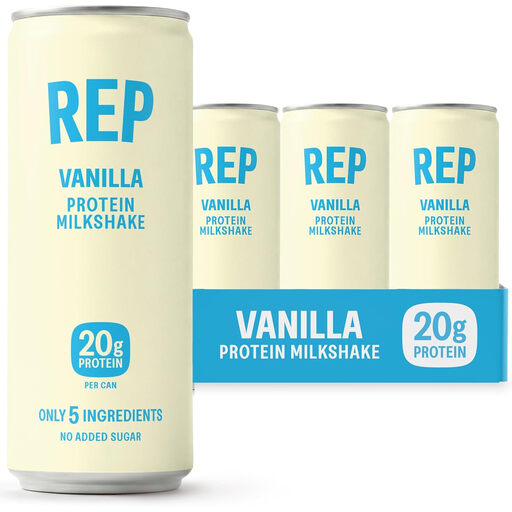
REP Vanilla Protein Shake with 5 Ingredients, 8 × 250ml
The 250ml can is the smallest individual portion in this selection. Its listed figures are per can: 2.8g fat, 10.8g sugars and 20.3g protein. Compare its current per-100ml label with other drinks before drawing a conclusion about fat or sugars.
It contains milk. The product instructions say to refrigerate it after opening and consume it within 24 hours.
View on Joybuy
Questions before you buy
Does low fat mean a milkshake is low in sugar?
No. Sainsbury's lists 1.2g fat but 8.9g sugars per 100ml for its 1% chocolate milkshake; Tesco lists 0.9g fat and 4.7g sugars per 100ml for Arla Protein Chocolate. Compare both figures per 100ml and check the amount you plan to drink.
What works for a ploughman's lunch shared by two or three people?
A 1L carton can provide several portions if its ingredients suit everyone and you can use any remainder in time. Sainsbury's lists approximately three 330ml servings for Pro Mlk Vanilla, while Tesco lists approximately three 333ml portions for Arla Protein Chocolate; both listings give a 3-day limit after opening.
Is a lactose-free milkshake suitable for someone with a milk allergy?
No: lactose-free does not mean milk-free. Tesco describes Arla Protein Chocolate as lactose-free but explicitly states that it is not suitable for people with a milk allergy. Check the current ingredients and allergen statement before serving any drink.
Is a no-added-sugar milk drink sugar-free?
Not necessarily. Tesco's Mars No Added Sugar milk drink lists 6.5g sugars per 100ml and states that it contains naturally occurring sugars. Read the sugars value on the nutrition panel rather than relying on the front-of-pack phrase.
How long can an opened carton be kept?
Follow the instructions for the particular product. The Tesco listing for Arla Protein 1L says to refrigerate it and use it within 3 days of opening; Sainsbury's says to refrigerate its own-brand chocolate milkshake and use it within 5 days, without exceeding the use-by date.


