
24/7 Customer Support

Free returns

Same-day & Next-day Delivery

Quality Guaranteed

Unlock Your Welcome Offers: FREE Delivery | Up to 80% OFF | Free 30-day JoyPlus trial
Download the APP
A plush donut dog bed can give your dog a soft place to curl up, but appearance alone does not tell you whether it will remain practical in a UK home. Long plush fabric may collect fur, loose filling can flatten and a bed that looks large online may provide less usable sleeping space once the raised rim is included.
Before buying, focus on washability, internal dimensions, filling and floor grip. These details have more effect on everyday use than colour or lifestyle photography.
A round dog bed with an 80 cm diameter does not offer 80 cm of flat sleeping area. The raised bolster takes up part of the surface, so measure your dog in its usual curled position and compare this with the central cushion area where available.
For larger breeds, a large dog bed such as a 120 cm model may be more suitable than simply choosing a thicker bed. A bed that is too small can encourage dogs to sleep partly on the floor, reducing the practical value of the purchase.
Some products have a removable centre cushion, while others only allow spot cleaning. Check how the cover opens, whether the central cushion can be removed and whether the care label permits machine washing.
A removable cover dog bed is generally easier to maintain than one-piece designs, particularly for dogs that bring in muddy paws after walks. However, always follow the supplied washing instructions, avoid bleach or harsh chemicals and dry the components thoroughly before use.
A soft surface can feel comfortable, but the filling determines how the bed supports your dog over time. PP filling or PP cotton provides cushioning, yet it may need regular shaking and patting to restore its shape, particularly after vacuum-packed delivery.
Also check the base. A non-slip dog bed with rubber dots or similar grip can move less on laminate, vinyl or tiled floors, but the base must sit fully flat and on a dry surface. No non-slip feature removes the need to check the bed periodically for wear.
Measure your dog from nose to the base of the tail, then add room for stretching and turning. For dogs that curl tightly, a smaller medium dog bed may be sufficient; dogs that sleep stretched out or change position frequently may need a large dog bed.
Consider where the bed will be placed. A round or donut-shaped design can fit neatly in a living-room corner, but a plush dog crate bed must also match the crate’s internal width and depth. Do not rely only on the external dimensions of the crate.
The listed dimensions for the products below are:
Look for a zip or opening that allows the central cushion to be removed. This is more practical than trying to wash a bulky filled bed in a domestic machine.
For a washable dog bed, check:
Long plush can feel inviting for a cuddly dog, but it may also show flattened areas and loose debris more readily than short fabric. Regular shaking, vacuuming with a suitable attachment and prompt cleaning can help keep the bed fresher.
Supportive PP filling gives a padded feel without using a rigid foam slab. Since these beds are delivered vacuum-packed, allow the product to expand fully before judging its shape. Shake and gently pat the bed, then leave it on a flat, dry surface.
Inspect the underside after unpacking. Rubber dots should make full contact with the floor and the base should not be folded underneath the cushion. Replace or stop using the bed if seams, zips or anti-slip features become damaged.
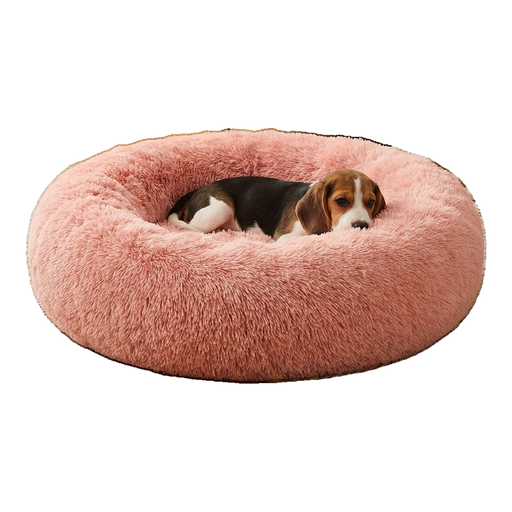
Why This Fits Their Persona: A practical 80 cm option for owners furnishing a flat, bedroom or smaller living area for a medium-sized dog.
The central cushion can be removed through the bottom zip, while rubber nubs on the base are designed to reduce movement on the floor.
80 × 20 cm dimensions; plush material; supportive PP filling; removable centre cushion for cleaning.
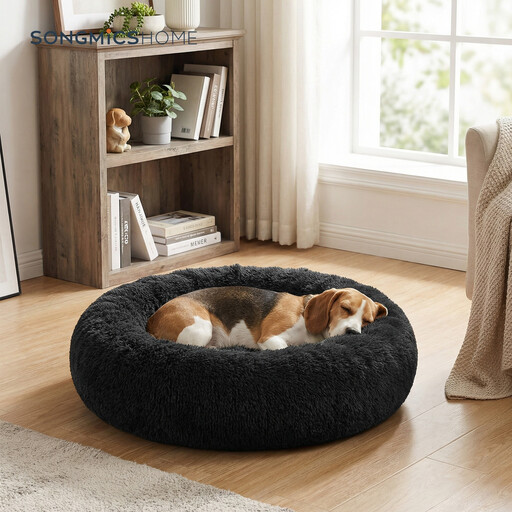
Why This Fits Their Persona: A neutral black finish suits owners who want a soft, cuddly dog bed that blends into a contemporary UK home.
Its specification identifies long plush, PP filling, a removable centre cushion and rubber dots underneath rather than relying only on appearance.
Black long-plush surface; 80 × 20 cm size; zip-access central cushion; non-slip base with rubber dots.
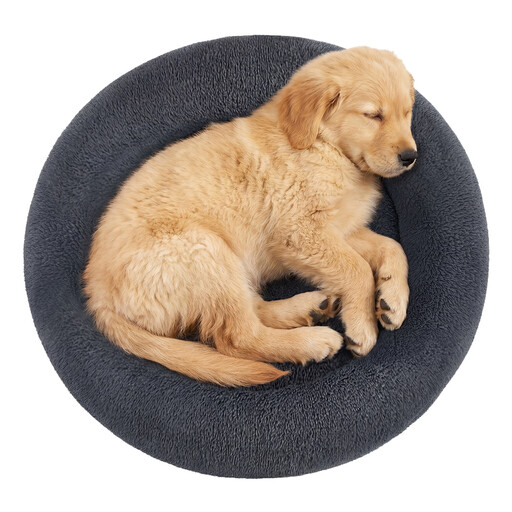
Why This Fits Their Persona: Designed for large dogs, this wider bed gives dogs more room to turn, stretch and settle in a larger crate or open resting area.
The 120 cm diameter addresses the risk of undersizing, while a removable centre cushion and rubber-dotted base support routine cleaning and placement.
120 × 20 cm dimensions; long plush and PP cotton filling; removable, washable-cover design; listed for large dogs.
We have compiled a complete, real-time list of products that fully satisfy these strict selection criteria and UK safety regulations.
Place the bed on a flat, dry surface away from radiators, heaters and open flames. For crate use, check that the door can open and close without catching the raised rim. If the bed arrives compressed, shake and pat it before use and allow the plush to regain its shape.
Vacuum or shake the surface regularly, particularly during muddy weather. Remove the central cushion before washing when the design allows it, then dry all parts completely. Inspect the stitching, zip and rubber base regularly, especially if your dog chews bedding or uses it heavily.
It can be, provided the usable central area and overall dimensions allow your dog to lie comfortably in its preferred position. The 120 cm model listed above is specified for large dogs, but measure your pet and crate before ordering.
Lifespan depends on washing frequency, scratching, chewing, moisture and the dog’s weight. Regularly check for flattened filling, torn seams, exposed zips or a deteriorating non-slip base. Replace the bed if it can no longer provide a clean, stable resting surface.
The main ongoing costs are washing, drying and occasional replacement. Following the care label, washing only when needed and removing loose dirt first can reduce unnecessary cycles. A removable-cover design may also be easier to clean than washing a fully filled bed.