Choose a portable hard disk drive (HDD) if your priority is keeping a growing podcast archive on one drive that will mostly stay at your desk. A portable solid-state drive (SSD) suits more frequent copying and retrieval or a tighter space; if you regularly carry the archive to recording locations, consider a model with stated handling protection. Whichever route you choose, check capacity for future episodes, your computer connection and file-system needs, and keep another copy of important files somewhere separate.
Who is this for?
Growing podcast-library archivists
If completed episodes, exported masters and artwork are accumulating, check how much room you will need beyond today’s library. At higher capacities, also check the exact drive’s dimensions before assigning it a permanent spot on your desk.
Frequent ingest and restore users
If you often move finished episodes onto the archive or retrieve older masters for editing, a compact SSD may fit your routine. Check your computer’s port and the supplied cable before choosing one for its stated USB 3.2 Gen 2 performance.
Mobile recording and editing teams
If the archive travels between a home desk, studio and recording location, consider how it will be carried and handled. A model with stated protection may be relevant, but its test conditions and warranty exclusions still matter.
What matters when choosing?
Start with whether archive growth, routine transfers or regular travel drives the decision. Then check the physical space, connection and file-system setup for the exact drive you choose.
Portable HDD
Choose it when: the archive will mostly stay beside your computer and capacity in one drive is the priority. Western Digital specifies WD Elements Portable capacities from 1TB to 6TB, while Seagate lists Expansion Portable capacities up to 5TB.
Allow for: the dimensions of your chosen capacity. Western Digital lists its 4TB, 5TB and 6TB Elements Portable versions at 23.7mm thick, compared with 15.0mm for its 1TB and 2TB versions.
Compact portable SSD
Choose it when: you regularly copy or restore episodes and want a particularly small device on the desk. Kingston specifies the XS1000 at 69.54 × 32.58 × 13.5mm.
Allow for: the capacity of the particular model: Kingston’s XS1000 range stops at 2TB. Its quoted transfer speeds are maximum figures, so check the computer connection before making speed the deciding factor.
Portable SSD with handling protection
Choose it when: the archive regularly travels between your desk and recording locations. Samsung specifies IP65 protection and a 3-metre drop test for the T7 Shield under controlled conditions.
Allow for: the limits of those claims: Samsung says liquid, dust and drop damage are not covered under its warranty. Keep a separate backup even if you choose a protected drive.
| Concern |
What to check |
Who this matters to |
| Room for archive growth |
Count current episodes alongside masters, artwork and recordings you plan to retain; compare that total with the capacity of the exact drive. |
If my library is still growing, I need room for future files rather than just today’s episodes. Around 36% of consumers would put archive headroom first. |
| Desk fit and connection |
Check the selected capacity’s dimensions, cable clearance, computer ports and supplied connector or adapter. |
On a crowded desk, I want the drive and its cable to fit without complicating my setup. Compact, straightforward placement is the main need for around 29% of consumers. |
| Copying and retrieval |
Compare your computer’s USB connection and cable with the drive’s requirements, especially if you regularly move large batches of files. |
When I often bring old masters back into an editing workflow, transfer time matters more to me than maximum capacity. Around 21% of consumers would prioritise frequent copying and retrieval. |
| Regular transport |
Read the exact model’s protection test conditions and warranty exclusions if the archive will travel. |
If I carry the archive to recording locations, I pay closer attention to handling risks than I would for a drive left on my desk. Protection during regular transport would come first for around 14% of consumers. |
Mistakes to avoid
-
Treating the archive drive as the only copy
A single connected drive still leaves important episodes vulnerable to deletion, damage or loss. The National Cyber Security Centre describes a backup as a copy kept in a separate safe location.
Keep another copy of the episodes and associated files elsewhere, and check that you can restore what you need.
-
Choosing capacity for today’s library alone
Exports, alternate masters, artwork and raw recordings can add to the archive. Capacity also affects the dimensions of some portable HDD variants, including Western Digital’s Elements Portable line.
Estimate what you intend to retain, then check both capacity and dimensions for the specific variant you plan to buy.
-
Formatting before protecting existing files
Apple says Time Machine cannot back up to a disk formatted for Windows, and erasing a disk permanently removes its existing files.
Decide whether the drive is for Mac, Windows or shared use before copying the archive. Back up any files already on it before changing its format.
-
Assuming maximum speed or protection applies everywhere
Samsung says the T7 Shield’s maximum performance requires compatible USB 3.2 Gen 2 hardware, cable and UASP mode. Its stated protection is based on controlled testing, and liquid, dust and drop damage are excluded from warranty coverage.
Check the host connection and cable, read the protection conditions, and continue to handle and back up the drive carefully.
Brands and product lines to consider
Western Digital
WD Elements Portable is a portable-HDD option for an archive that needs room to grow.
- Western Digital specifies capacities from 1TB to 6TB and a two-year worldwide limited warranty for this line.
- Its 4TB, 5TB and 6TB versions are specified at 23.7mm thick, rather than the 15.0mm of its 1TB and 2TB versions. Reformatting may be required for operating systems other than Windows 10 and later.
Seagate
Expansion Portable is a portable-HDD line to consider when a straightforward archive drive is the priority.
- Seagate lists capacities up to 5TB and describes the line as ready to use without installing software.
- Seagate says reformatting is required for Time Machine. Check desk fit for the selected capacity; it specifies the 5TB version at 115.3 × 80.0 × 20.9mm.
Kingston
The XS1000 is a small portable SSD for a desk where space and regular file movement matter.
- Kingston specifies a 69.54 × 32.58 × 13.5mm body, a USB-C-to-USB-A cable and a USB-A-to-USB-C adapter.
- The XS1000 range stops at 2TB. Kingston’s stated speeds of up to 1,050MB/s read and 1,000MB/s write are maximum figures, not a result to assume for every connection.
Samsung
The T7 Shield is a portable-SSD option when the archive is regularly moved as well as used at a desk.
- Samsung specifies an IP65 rating and a 3-metre drop test for the T7 Shield under controlled conditions.
- Samsung says maximum performance requires a compatible USB 3.2 Gen 2 host, cable and UASP mode. Liquid, dust and drop damage are not covered under its warranty.
Joybuy product choices
These portable drives cover capacity-focused desk archives, compact SSD use and an SSD for more frequent transport. Choose by the work your archive must support, then confirm the connection and file-system setup for your computer.
 No image available
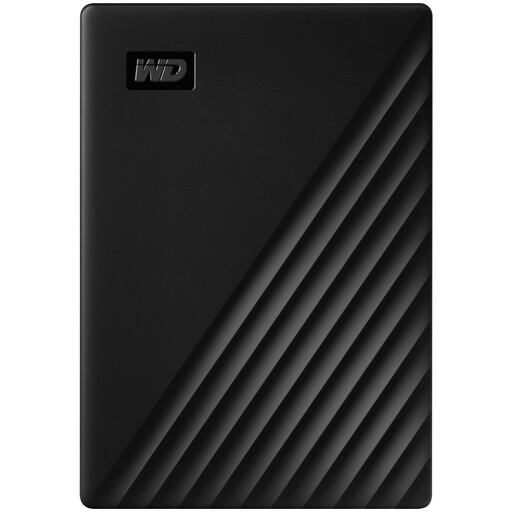
Western Digital My Passport 4TB Portable Hard Drive, Black
Consider this portable HDD if keeping a growing episode archive on one drive is your main need.
Stated capacity: 4TB. Check its dimensions and the file-system setup for your computer before moving the archive.
View on Joybuy
 No image available
Samsung Portable SSD T7 4TB, Grey
Consider this SSD if you want a 4TB archive drive while also prioritising a compact device for regular file movement.
The product name specifies USB Type-C 3.2 Gen 2. Check the drive’s file format and your computer connection before copying files; do not assume T7 Shield protection applies to this T7 model.
Purchase link unavailable
 No image available
Western Digital Elements Portable 4TB Hard Drive, Black
This portable HDD suits a capacity-led archive that will usually stay beside the computer.
Stated capacity: 4TB. Western Digital specifies the 4TB Elements Portable version at 23.7mm thick; check desk and cable clearance. Reformatting may be required for operating systems other than Windows 10 and later.
View on Joybuy
 No image available
Samsung T7 Shield Portable SSD 1TB, Blue
Consider the T7 Shield if you regularly carry the archive between a desk and recording locations, provided 1TB leaves enough room for future episodes.
Samsung specifies USB 3.2 Gen 2 and conditional IP65 and drop-test protection for the T7 Shield. Check the host, cable and file-system setup; Samsung excludes liquid, dust and drop damage from warranty coverage.
View on Joybuy
 No image available
SanDisk Portable SSD 2TB
Consider this portable SSD if a 2TB archive fits your planned retention and you want a small drive on the desk.
Confirm its connector, USB requirements and file-system setup against your computer before choosing it for regular transfers.
View on Joybuy
Common questions
Should I choose an HDD or SSD for a podcast archive?
Choose a portable HDD if capacity for a growing archive is your priority and the drive will mostly stay at your desk; consider an SSD if frequent copying or a smaller device matters more. Western Digital specifies WD Elements Portable capacities up to 6TB, while Kingston’s compact XS1000 range stops at 2TB. Compare the capacity and connection of the particular model you intend to use.
What should I check before formatting an archive drive for a Mac?
Decide whether the drive will be dedicated to Time Machine or shared with Windows, and protect any existing files before formatting. Apple says Time Machine cannot back up to a disk formatted for Windows and lists ExFAT as a Windows-compatible format for shared use; erasing a disk removes its existing contents.
Is one external drive enough to protect my podcast episodes?
No: if the external drive holds the only copy, losing it could also mean losing the archive. The National Cyber Security Centre advises keeping a backup of important data in a separate safe location. Include associated masters and artwork, and check that you can restore them.
Which warranty details are worth checking?
Check the terms for the exact model and capacity rather than assuming every drive from a brand has the same cover. Western Digital specifies a two-year worldwide limited warranty for WD Elements Portable, while Kingston lists a limited five-year warranty for the XS1000. If handling protection influences your choice, read the exclusions as well: Samsung says liquid, dust and drop damage are not covered under its T7 Shield warranty.


