Choose a laptop that runs your editing application, plug-ins and audio-interface drivers, then match its memory and storage to your sessions and local files rather than treating a powerful graphics processor as the default priority. For prolonged work at a standing desk, plan how to raise the screen while using a separate keyboard and mouse, as the Health and Safety Executive advises for laptop use.
Who this choice matters to
Editors working long sessions at a standing desk
If you edit for sustained periods, the laptop needs to fit a raised-screen setup with a separate keyboard and mouse. The Health and Safety Executive recommends separating those input devices from a laptop so its screen can be elevated.
Editors who take a Windows setup between locations
If you move between recording locations and your desk, check both carrying weight and whether your Windows applications, plug-ins and audio-interface drivers work with the exact configuration. Connections for your desk equipment matter when you return.
Editors keeping larger local project libraries
If you retain recordings, exports and other active files on the laptop, memory and SSD capacity deserve attention alongside software compatibility. Adobe’s Audition requirements distinguish minimum memory from recommendations for HD media and additional high-speed media storage.
What to check before buying
Start with the software and audio equipment you need to use. Then assess the desk connections, carrying needs and space for your projects against the exact laptop configuration.
| Concern |
What to check |
Who this matters to |
| Editing compatibility |
Check the named editor and version, plug-ins and audio-interface drivers against the exact operating system, processor and memory configuration. |
If my editor or audio interface cannot run on the laptop, extra storage will not rescue the session. Around 36% of consumers put editing compatibility and reliable operation first. |
| Standing-desk setup |
Check connections for the display and peripherals you intend to use, and allow space for a riser, separate keyboard and mouse. |
I want the screen high enough to view comfortably without reaching up to type on it. For around 29% of consumers, the standing workstation is the primary concern. |
| Portability |
Compare the exact model’s weight and charger, then confirm that its ports or a compatible dock accommodate your equipment. |
Moving between recording and editing locations makes carrying the laptop and reconnecting my equipment a recurring task. Around 21% of consumers place that mobility need first. |
| Local project capacity |
Estimate space for current recordings, backups and exports; check the SSD capacity and whether the exact configuration permits memory expansion. |
I keep active takes and exports close at hand and would rather choose enough capacity for them now. Local-library capacity comes first for around 14% of consumers. |
Buying pitfalls
-
Treating a laptop riser as the whole desk setup
Raising the screen also raises the built-in keyboard and trackpad. For prolonged laptop use, the Health and Safety Executive advises a separate keyboard and mouse so the screen can be elevated.
Plan where the display, keyboard, mouse and audio equipment will sit, and check the connections needed to use them together.
A separate keyboard and mouse, and potentially a display, dock or adapters, add equipment to the desk setup.
-
Buying to the operating system’s minimum requirements
Operating-system eligibility does not establish that a laptop meets the requirements of your audio editor and its plug-ins. Adobe publishes separate requirements and recommendations for Audition.
Check the publisher’s requirements for your application and version against the laptop’s exact configuration, including any audio-interface driver requirements.
-
Assuming a product-family name identifies the configuration
Apple and ASUS list different memory and SSD options within the MacBook Pro and Zenbook S 14 families. ASUS describes memory in its listed UX5406 variants as on-package or on-board, making the chosen configuration particularly important.
Check the full model and variant, processor, memory and SSD capacity before ordering. If later memory expansion matters, confirm whether it is possible for that exact variant.
Relevant brands to consider
Apple
MacBook Pro is a macOS option if your editing application, plug-ins and audio-interface drivers support the chosen Apple silicon configuration.
- Apple UK lists 14-inch MacBook Pro configurations with different chip, unified-memory and SSD options.
- Check the specific chip, memory and storage: the MacBook Pro family name alone does not identify the configuration you need.
Lenovo
The ThinkPad X1 Carbon Gen 13 Aura Edition illustrates a portable Windows option for editors who need to move between locations.
- Lenovo UK lists a configuration with Windows 11 Pro, 16 GB memory and a 512 GB SSD; Lenovo states that the model weighs less than 1 kg.
- Check whether that storage capacity and the exact configuration’s connections suit your local files, dock and audio interface.
ASUS
The Zenbook S 14 UX5406 offers Windows configurations with differing memory and storage capacities.
- ASUS UK lists UX5406 variants including 32 GB memory and a 1 TB SSD.
- Other listed variants have lower capacities, and ASUS describes the memory as on-package or on-board. Choose the required variant rather than assuming a later memory upgrade.
Joybuy laptops for this setup
These laptops offer different memory, storage and screen configurations to consider for podcast editing. Check your software and audio equipment against the exact model, and plan separate input devices if you will work at a raised screen for prolonged periods.
 Image unavailable
ASUS Vivobook 15 X1504VA, Core 5 120U, 24 GB, 1 TB SSD
Consider this configuration if you want a 1 TB internal SSD for active projects and a 15.6-inch screen for viewing the timeline.
The listed processor is an Intel Core 5 120U, with 24 GB memory. Confirm that your editing software, plug-ins and audio interface support the configuration.
View on Joybuy
 Image unavailable
Lenovo LOQ Essential 15ARP11, Ryzen 7 170, 16 GB, 1 TB SSD
This is a configuration to check if your editing workflow calls for 16 GB memory and you want a 1 TB internal SSD for current files.
Its title also specifies a 15.6-inch 144 Hz FHD screen and GeForce RTX 5050 graphics. Do not treat the graphics specification as a substitute for checking your editor, plug-ins and audio-interface compatibility.
View on Joybuy
 Image unavailable
LOQ 17IRX10, i7-13650H, 24 GB, 1 TB, W11H
Consider the stated 24 GB memory and 1 TB storage if your active projects and concurrent applications call for those capacities.
Check that the i7-13650H configuration runs your editor and audio equipment, and compare its carrying requirements with how often you move between recording and editing locations.
View on Joybuy
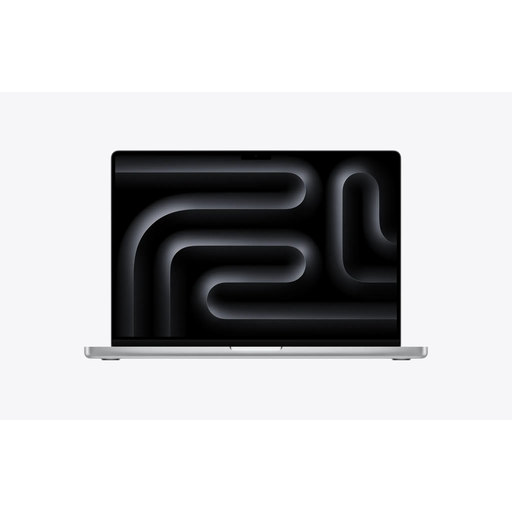 Image unavailable
Apple MacBook Pro 16.2-inch M5 Max, 36 GB, 2 TB, Silver
This macOS configuration is worth assessing if you retain substantial local media and your required editor, plug-ins and audio-interface drivers support it.
The title specifies an 18-core CPU, 32-core GPU, 36 GB memory and a 2 TB SSD. Check its carrying weight if you travel frequently, and confirm whether a suitable USB-C power adapter is included.
View on Joybuy
 Image unavailable
Lenovo Legion Pro 7 16IAX10H 83F5000UUK, 64 GB, 2 TB
Assess this configuration if your concurrent applications and local files make its stated memory and storage capacities relevant to your workflow.
The title lists a 16-inch screen, Intel Core Ultra 9, NVIDIA GeForce RTX 5090 and Windows 11 Home. Confirm your software and audio-interface requirements rather than assuming the graphics hardware benefits podcast timeline editing; check carrying weight if you move the laptop regularly.
View on Joybuy
Questions about podcast editing laptops
Do I need 32 GB of RAM to edit a podcast timeline?
Not for every workflow. Adobe lists 8 GB RAM as the Windows minimum for Audition 25.x and recommends 16 GB for HD media; its macOS recommendation lists 16 GB unified memory for Apple silicon. Check your own editor, plug-ins and concurrent applications before deciding whether more memory is useful.
Can I work with just a laptop at a standing desk?
For brief tasks, you may be able to, but prolonged laptop use calls for more attention to screen and input-device placement. The Health and Safety Executive advises a separate keyboard and mouse so the laptop screen can be raised on a riser or similar support; it advises placing the top of the screen around eye level and the screen about an arm’s length away.
When does a workplace display-screen assessment apply?
For employees who use display-screen equipment daily as part of normal work for continuous periods of an hour or more, the UK Health and Safety Executive says employers must carry out a workstation assessment. That concerns the whole work setup, not a requirement triggered by every personal laptop purchase.
What should I do with an old laptop when replacing it?
Arrange appropriate electrical-product recycling rather than treating the old laptop as ordinary household rubbish. GOV.UK says that, when you buy a new electrical product in the UK, the retailer must accept an old equivalent product free on a like-for-like basis.


