
24/7 Customer Support

Free returns

Same-day & Next-day Delivery

Quality Guaranteed

Unlock Your Welcome Offers: FREE Delivery | Up to 80% OFF | Free 30-day JoyPlus trial
Download the APP
Starting a podcast, streaming or creating voice-overs can be an exciting venture. But the first hurdle many UK creators face is choosing the right equipment. The market is flooded with options, and it's easy to fall for marketing hype and end up with a podcast microphone kit that hinders your audio quality rather than helps it.
As a Joybuy Product Recommendation Officer, my role is to help you see past the flashy descriptions and focus on what truly matters. Before you spend your hard-earned money, let's look at the common traps that catch out aspiring creators and how you can sidestep them.
To ensure you get clear, consistent audio, focus on these three non-negotiable specifications.
For most home-based podcasters, streamers and gamers, a dynamic microphone is the more practical choice. Unlike sensitive condensers, dynamic mics are built to reject off-axis noise. They focus on capturing the sound source directly in front of them, which means your voice remains the centre of attention, not the background noise.
Look for a cardioid microphone for PC, as this pickup pattern is heart-shaped, capturing sound from the front while rejecting it from the sides and rear. This is ideal for a single speaker in a less-than-perfect recording space.
The ideal setup for a creator who wants both simplicity and a path for future upgrades is a USB XLR dynamic microphone.
A hybrid model gives you the freedom to start with USB and graduate to an XLR setup when you're ready, without needing to buy a new microphone.
Forget the tiny tripods. A streaming microphone with boom arm is essential for both ergonomics and audio quality. A boom arm clamps securely to your desk and allows you to position the microphone perfectly in front of your mouth, regardless of how you sit. This ensures consistent volume and tone. Crucially, it also isolates the microphone from desk vibrations, a major source of unwanted low-frequency rumble in recordings.
We've filtered through the options to find kits that address the common pitfalls and deliver on their promises. Here are our recommendations matched to different creator profiles.

Why This Fits Their Persona: An ideal starting point for podcasters, streamers or anyone doing a microphone for gaming voice-over. It provides a complete, high-quality setup that's easy to use straight out of the box but doesn't limit future expansion.
This is a true all-in-one kit with a sturdy metal boom arm and shock mount. As a dynamic microphone, it excels at isolating your voice in a typical home office or bedroom, avoiding the background noise issues of a condenser.
The dual USB/XLR connectivity offers ultimate flexibility. Start with plug-and-play USB, then switch to XLR when you upgrade to a mixer. The on-mic gain, headphone jack and mute button are incredibly practical for real-time control.
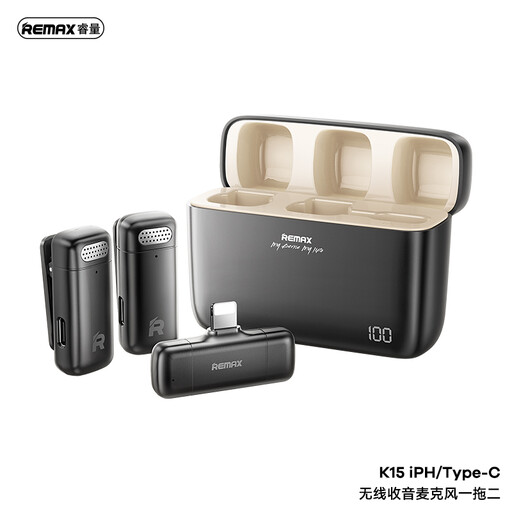
Why This Fits Their Persona: For the creator who shoots vlogs, interviews or social media content primarily on their iPhone. This offers a massive audio upgrade over the phone's built-in mic without any complex setup.
This kit avoids the "incomplete kit" trap by being highly specialised. It's not trying to be a studio microphone; it's a purpose-built wireless system for mobile devices, providing exactly what a mobile creator needs without unnecessary parts.
Its key advantage is its simplicity and portability. The plug-and-play Lightning receiver and wireless transmitter offer freedom of movement, which is crucial for dynamic, on-location filming. It's lightweight and easy to carry.
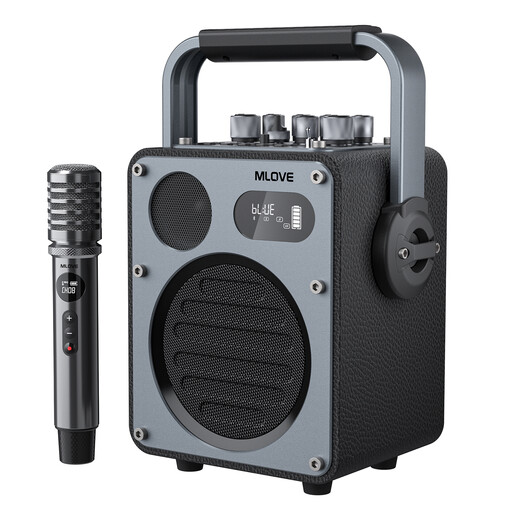
Why This Fits Their Persona: Perfect for karaoke streamers, online music teachers or presenters who need to amplify their voice and music simultaneously. It combines a high-quality wireless microphone with a powerful portable speaker.
This system sidesteps the trap of mismatched components. The microphone and speaker are engineered to work together, with dedicated EQ modes for vocals and instruments, ensuring a balanced sound without complex mixing.
The main advantage is its function as a complete performance system. It supports Bluetooth, instrument inputs and direct-to-phone recording/streaming via USB-C, making it an incredibly versatile tool for live content creation.
We have compiled a complete, real-time list of products that fully satisfy these strict selection criteria and UK safety regulations.
Yes, a dynamic microphone is an excellent choice for both. Its ability to reject background noise means your teammates or audience will hear your voice clearly, without the distracting clicks of your mechanical keyboard or the hum of your computer's fans. This focused audio capture is exactly what's needed for clear communication and professional-sounding voice-overs.
No, you do not need an audio interface to get started if your microphone has a USB port. The beauty of USB is its plug-and-play simplicity. However, an audio interface offers an upgrade path. It can provide better sound quality through superior preamps and gives you more physical control over levels. This is why a hybrid USB XLR dynamic microphone is such a practical investment, as it allows you to start simple and add an interface later without replacing your mic.
The lifespan of a kit depends on the build quality of its components. The microphone itself, if cared for, can last for many years. The most common point of failure in cheaper kits is the stand. A robust metal streaming microphone with boom arm and a well-made shock mount are built for longevity and daily use, whereas flimsy plastic tripods can break or lose their grip within months. Investing in a kit with durable accessories is key to its long-term value.