Solo kitchen-table readers
If you stay seated, a head-and-shoulders view keeps attention on the reading. Test spoken-word audio at your usual distance from the camera rather than judging it from microphone features alone.


For a seated solo reading, start with a frame that keeps your face prominent and test how your voice sounds through the platform your guests will use. PCMag UK describes 1080p as a reasonable webcam starting point; 4K is more relevant if you intend to crop the picture, while a wider view helps only when guests need to see a book, the table or another reader. Check the lighting at reading time, particularly if a bright window will be behind you.
If you stay seated, a head-and-shoulders view keeps attention on the reading. Test spoken-word audio at your usual distance from the camera rather than judging it from microphone features alone.
If guests need to see a page, book or prompt card, look for a way to adjust or angle the view. Check that the material is legible without leaving an unnecessarily wide view of the kitchen.
If the room is dim or a window sits behind you, preview the picture at the time you plan to read. Light correction may help, but moving your seat or adding light in front of you may be more practical.
Decide what guests must see and hear before choosing a resolution: spoken words, your face and any reading material place different demands on a kitchen-table setup.
| Concern | What to check | Who this matters to |
|---|---|---|
| Spoken words and simple setup | Check computer and call-platform compatibility, then record a poem at normal volume with typical kitchen noise present. | I want guests to follow every line without a complicated setup or distracting room noise; roughly 33% of consumers put clear speech and simplicity first. |
| Pages and tabletop objects | Check whether you can adjust the field of view or angle the mount towards the table. | When I hold up a poem or show a book, guests need to see it without losing my face in a wide shot. About 25% of consumers make showing reading material their primary concern. |
| Difficult kitchen lighting | Preview the intended seat at reading time; check light correction or HDR if a bright window cannot be avoided. | A window behind me or dim evening light could make my expression hard to see; around 25% of consumers prioritise staying visible in difficult light. |
| Picture control and cropping | Compare resolution and frame-rate modes, focus behaviour and the computer connection each mode requires. | If I crop the frame or repeat readings from the same seat, I want control over the result. Roughly 17% of consumers place picture control first. |
A wide frame can make the reader smaller and expose distracting surfaces or private information in the background.
Begin with the narrowest view that fits the reading. Widen it for a book, table object or second reader, then inspect the full preview before going live.
Higher resolution does not correct poor framing or lighting. Logitech lists 4K at 30 fps and 1080p at 60 fps for its Brio 4K, giving that model a choice between more source detail and smoother movement.
Decide whether you will crop the picture or would rather show hand and head movements more smoothly. Check the modes of the particular webcam you intend to buy.
Backlighting can leave your face difficult to see. AnkerWork specifically advises against using the PowerConf C200 in a backlit position and says that model has no HDR.
Try facing a soft light source instead of placing the window behind you, and preview the scene at the planned reading time.
That may mean changing seats or arranging a separate front light.
Microphone position and noise processing affect spoken words. AnkerWork advises facing the PowerConf C200 when using its directional microphone mode to avoid reduced or distorted voice pickup.
Record a complete test poem at your normal volume. If the voice sounds distant or inconsistent, consider a separate microphone rather than choosing a different webcam solely for its microphone claims.
A separate microphone adds another device to position and connect before the reading.
These examples illustrate different webcam features to check; the suitability of a particular model still depends on your seat, lighting, computer and reading format.
The Brio 500 suits a seated setup that may occasionally show an object on the table; Brio 4K offers more resolution and selectable framing modes.
The PowerConf C200 is an option to examine when adjustable framing and integrated microphones matter.
Facecam MK.2 is relevant to a repeatable, seated picture setup when audio will be handled separately.
Meet 2 is relevant if a reader may move, stand or share the frame.
The Kiyo is relevant if you want a light built into the webcam rather than relying only on kitchen lighting.
These webcams offer different starting points for a seated reading, from a straightforward clip-on camera to models with higher stated resolution or a wider adjustable view. Check framing, speech and lighting in your own setup before relying on any of those features for a live event.
 No image available
Consider this model if you expect to adjust your seated framing during a reading. Its stated features include 5x digital zoom and a remote control; check whether its focus behaviour and view suit the distance between your seat and camera.
 No image available
Consider its adjustable wide view if another reader or part of the table needs to fit in the shot, but preview how much kitchen background it includes. The product name also specifies fixed focus, a four-microphone array, dual speakers and plug-and-play USB; check the focus distance for your seat.
 No image available
This is a focus-control option for a straightforward seated setup. Its name specifies both auto and manual focus; check the video detail, field of view and lighting you need before choosing it for pages or an evening reading.
 No image available
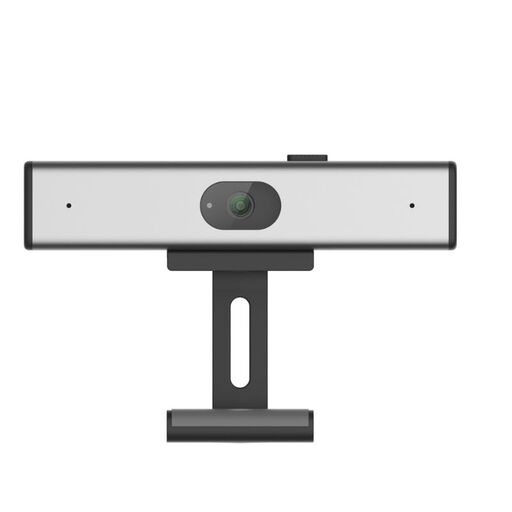
Consider the clip-on format if your camera will sit on a desktop or laptop screen. The product name specifies a noise-reduction microphone; test speech through your intended call platform and check the camera’s view and connection against your setup.
No, not necessarily: PCMag UK describes 1080p as a reasonable starting point, and a seated reader may gain more from clear speech and careful framing. Consider 4K if you plan to crop the image; check the particular model’s frame-rate modes if smoother movement also matters.
Use the narrowest view that still shows what guests need to see. For a solo reading, preview a tighter setting before widening it for a book, tabletop object or second reader; AnkerWork lists 65°, 78° and 95° choices for the PowerConf C200, while Logitech lists 65°, 78° and 90° for Brio 4K.
You can try it for a simple setup, but record a poem in the actual kitchen and listen through the platform your guests will use. If you use the PowerConf C200’s directional microphone mode, AnkerWork advises facing the camera to avoid reduced or distorted voice pickup.
Confirm that the camera connects to your computer and works with your intended call platform, then check its mount, included accessories and the seller’s applicable terms. If you plan to show pages or read near a bright window, check the model’s framing and lighting features against those specific needs rather than resolution alone.