Gym-goers eating a meal later
A portable bag can provide a snack between training and your next meal. If you want carbohydrate and protein in that interval, consider the popcorn alongside a protein-containing food or drink.


An individually packed popcorn bag can be a convenient snack after exercise, particularly if a meal is coming later. It should not be treated as a complete carbohydrate-and-protein snack when both matter to your recovery: University College London Hospitals NHS Foundation Trust distinguishes snacks that provide carbohydrate and protein for exercise. Choose by the amount you will eat, check the pack’s nutrition figures and consider what else you will eat alongside it.
A single bag is most useful when its portion fits what you plan to eat after exercise, rather than when the pack is assumed to cover every recovery need.
A portable bag can provide a snack between training and your next meal. If you want carbohydrate and protein in that interval, consider the popcorn alongside a protein-containing food or drink.
An individually wrapped bag gives you a defined portion without opening a sharing pack. Check its weight: a 10g bag and a 30g bag are different amounts of food.
Popcorn can be one part of what you eat afterwards, but a very small bag alone may not meet a broader refuelling need. The British Dietetic Association advises starting with carbohydrate-rich food and fluids promptly when quick recovery is required.
Start with the training session and the amount you expect to eat. Then compare nutrition figures for that portion, not just the flavour or a claim on the front of the pack.
| Priority | What to check | Your needs |
|---|---|---|
| Recovery food | Read carbohydrate and protein separately on the nutrition panel. Think about the length and demands of your session and when you will next eat. | I want a snack before my next meal, but need to know whether to have a protein food with it. University College London Hospitals NHS Foundation Trust describes carbohydrate-and-protein snacks as an option around exercise; the British Dietetic Association emphasises carbohydrate-rich food and fluids when quick refuelling is needed. |
| Portion size | Check the weight of each sealed bag, the number of bags in a multipack and whether nutrition is stated per bag, per serving or per 100g. | A sealed portion helps me plan what I will actually eat. Retailer listings include individual Propercorn bags of 10g, 14g and 30g, while Tesco lists Metcalfe’s bags of 17g. |
| Sugar and salt | Compare sugars and salt for the portion you intend to eat, using the same measurement basis where possible. Check the exact flavour’s label rather than judging by its name. | I may want a sweet-and-salty flavour, but I still want to see its figures. ASDA lists 6.3g sugars and 0.50g salt per 25g serving for its Sweet & Salted sharing bag; that is not a per-bag figure for other products. |
| Ingredients and allergens | Read the current ingredients, emphasised allergens and any precautionary allergen statement on the exact pack. Check dietary claims for that variant, not just the brand. | If an ingredient or allergen matters to me, I need the declaration for the bag I am buying. A vegan or gluten-free description does not answer every allergy question. |
ASDA’s listing for Propercorn Sweet & Salty 90g gives 3.5g fibre and 2.1g protein per 28g serving. Those figures describe different nutrients; the fibre claim cannot tell you how much protein the snack provides.
Read the protein figure separately and consider another food if you want a carbohydrate-and-protein snack.
A 10g or 14g bag contains a different amount from the 100g used on some nutrition panels.
Use a stated per-pack figure when available. For a sharing pack, check the serving size against the amount you intend to eat.
A sharing pack does not provide the same ready-defined portion as a sealed grab bag.
If the portion matters to you, choose an individually packed format or divide the sharing bag before eating.
Ingredients and allergen declarations can change with a product’s formulation. A brand’s older flavour page also does not establish what is currently on a shop shelf.
Read the current pack for the precise flavour and size, especially when avoiding an allergen.
These examples show different pack formats to check; a brand name alone does not establish the nutrition or availability of a particular bag.
Retailer listings include a 30g Sweet & Salty bag, a 6 x 14g Sweet & Salty multipack and a 6 x 10g Lightly Sea Salted multipack.
Tesco lists Sweet & Salt popcorn as a multipack of six 17g bags.
ASDA’s own-label Sweet & Salted popcorn is listed as a 100g sharing bag with a suggested 25g serving.
Tyrrells’ popcorn archive describes flavours including Sea Salted Caramel and Sea Salt.
These are small popcorn bags sold in multipacks for a planned snack after exercise. Compare each bag’s size and label, and consider what else you will eat if you want a carbohydrate-and-protein snack.
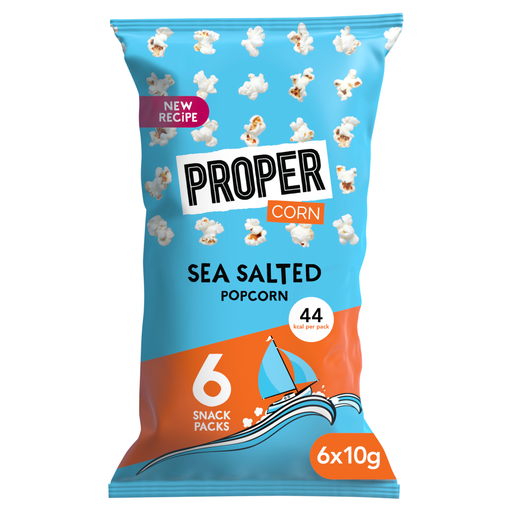 No image available
Each 10g bag provides a defined small portion for a snack after light activity. Sainsbury’s lists 44 kcal per bag for this multipack; check the pack’s carbohydrate and protein figures if you are planning what to eat after a demanding session.
 No image available
The six 12g bags offer separate portions if you want a small sweet-and-salty snack after exercise. Check the current label for nutrition per bag, or account for the actual bag weight when reading values stated per 100g; check the allergen statement too.
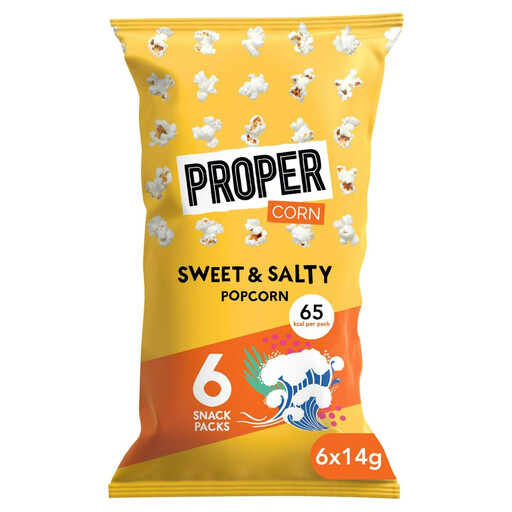 No image available
The individual 14g bags give you a defined portion without opening a sharing pack. Sainsbury’s lists 65 kcal per bag for this multipack; use the current pack’s carbohydrate and protein figures when deciding what else to eat after training.
Not if you are relying on the snack to provide both carbohydrate and protein. University College London Hospitals NHS Foundation Trust describes carbohydrate-and-protein snacks for use around exercise. Check the popcorn’s protein figure and consider a protein-containing food or your next meal alongside it.
A small bag can be a planned snack after light activity or while you wait for a meal. When quick recovery is required, the British Dietetic Association advises starting with carbohydrate-rich food and fluids as soon as possible; do not assume a 10g or 14g bag alone covers what you need after a long or repeated session.
Choose according to the exact pack’s portion size, ingredients and nutrition panel, rather than assuming one flavour has a particular sugar or salt level. Compare figures for the amount you expect to eat; flavour alone does not tell you how much protein the bag provides.
No. Read the ingredients, emphasised allergens and any precautionary statement on the exact pack. UK government guidance describes allergen declarations for relevant prepacked foods, while a dietary description does not replace checking the full label.
The timing and amount depend on your activity and what you will eat next. The British Dietetic Association places particular emphasis on prompt carbohydrate-rich food and fluids when quick recovery is required, rather than setting the same refuelling approach for every exercise session.