When choosing popcorn while managing diabetes, compare total carbohydrate for the portion you intend to eat before deciding between plain, sweetened and protein-branded options. Plain salted popcorn avoids a sweet coating, but protein-branded popcorn may suit someone seeking more protein per serving; check its carbohydrate and protein figures rather than relying on the name.
Who this choice matters to
People with diabetes comparing popcorn snacks
If you prefer popcorn to another snack, the total carbohydrate and portion size give you more useful information than a reassuring description on the front of the pack. Diabetes UK suggests plain popcorn as a swap for crisps, while emphasising that portion size matters.
Shoppers looking for more protein in popcorn
Check how many grams of protein the portion provides. Myprotein lists 3.8g per serving for its Protein Popcorn; that figure is more informative for this decision than the product name alone.
People who count carbohydrate or use insulin
The amount eaten matters more than the pack size alone. Diabetes UK explains that carbohydrate counting can be used to match insulin to food; follow advice from your diabetes team for your own plan.
What to compare on the label
Start with the portion you expect to eat, then compare carbohydrate, protein and the other label values that matter to your choice.
| Priority | What to check | Your needs |
|---|
| Carbohydrate and portion |
Find total carbohydrate for the amount you will eat. Check whether the panel describes one bag, a smaller serving or 100g. |
I want to account for the whole portion, especially if I open a sharing bag. University Hospitals Coventry and Warwickshire NHS Trust advises checking total carbohydrate for the portion eaten. |
| Protein per serving |
Compare grams of protein for the stated portion, not just protein wording on the pack. Myprotein lists 3.8g per serving for Protein Popcorn; Tesco Groceries lists 1.6g per 21g serving for Tesco Salted Popcorn. |
If extra protein is my reason for choosing popcorn, I want to know what one serving actually contributes. |
| Sugars and salt |
Read both values per serving alongside total carbohydrate. Tesco Groceries lists 5.6g sugars per 27g serving for Tesco Sweet Popcorn, compared with less than 0.1g per 21g serving for Tesco Salted Popcorn; those are different portion sizes. |
A sweet coating may not suit what I have planned. For salted popcorn I eat often, I also want to compare the salt figure. |
| Ingredients |
Check the ingredient and allergen lists when considering flavoured or protein-enriched popcorn. |
Milk-derived ingredients or sweeteners may affect which product I choose, independently of its protein figure. |
Common buying mistakes
-
Assuming “protein popcorn” answers the protein question
A product name does not say how much protein the portion you eat will provide. Myprotein lists 3.8g per serving for its Protein Popcorn.
Compare the per-serving protein figure with the amount you are looking for, then check the carbohydrate on the same label.
-
Treating sweet-and-salty popcorn like plain popcorn
The coatings change the figures. Tesco Groceries lists 5.6g sugars per 27g serving for Tesco Sweet Popcorn and less than 0.1g per 21g serving for Tesco Salted Popcorn.
Compare the declared portions as well as the sugars and total carbohydrate before choosing between them.
-
Overlooking salt in an unsweetened option
Low listed sugars do not tell you the salt content. Tesco Groceries lists 0.26g salt per 21g serving for Tesco Salted Popcorn, while ASDA Groceries lists 0.32g per 20g serving for PROPER salted microwave popcorn.
Read the salt figure for the portion you intend to eat rather than judging a salted product by its sugar figure alone.
-
Using a sharing bag as the serving size
A larger amount changes the total carbohydrate eaten. Diabetes UK notes that glycaemic index does not account for portion size.
Decide how much you will serve and use the nutrition panel to account for that amount.
Brand and product-line references
Myprotein
Its Protein Popcorn is relevant when the amount of protein in a popcorn serving is the main point of comparison.
- Myprotein lists 3.8g protein per serving.
- Check the full nutrition and ingredient panels rather than treating the product name as a measure of its suitability.
PROPER
Its salted microwave and sweet-and-salty popcorn give shoppers two different label profiles to compare.
- ASDA Groceries lists 2.1g protein and 0.1g sugars per 20g serving for the salted microwave popcorn.
- Sainsbury's lists 17g carbohydrate and 3.4g sugars per 30g bag for PROPER Sweet & Salty.
Tesco
The own-label salted and sweet popcorn listings allow a direct check of their declared serving figures.
- Tesco Groceries lists less than 0.1g sugars and 10.2g carbohydrate per 21g serving for Tesco Salted Popcorn.
- The salted product lists 1.6g protein and 0.26g salt per 21g serving; the sweet product uses a different, 27g serving.
Metcalfe's
Sweet 'N Salt is a ready-to-eat sweet-and-salty option, rather than a substitute for checking a plain popcorn label.
- Tesco Groceries lists 10.7g carbohydrate per quarter pack.
- The same listed portion contains 3.6g sugars and 1.6g protein.
Joybuy salted popcorn options
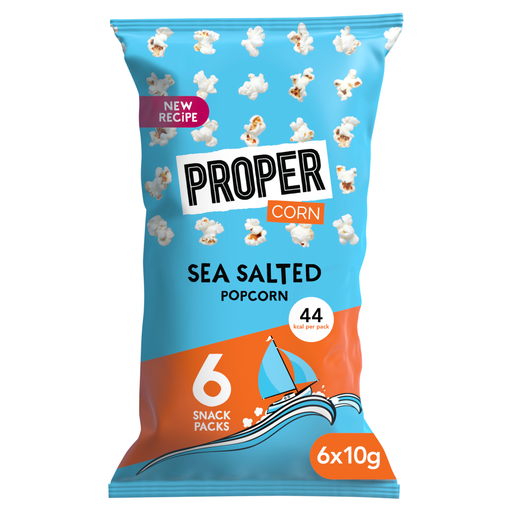
These lightly sea-salted popcorn options are relevant if you want to compare a portioned multipack with a larger bag. Neither product name establishes a high-protein choice; use the nutrition panel for the amount you intend to eat.
 No image available
Propercorn Lightly Sea Salted Popcorn 6x10g
Choose this format if separate 10g bags help you identify the amount you are serving. Check total carbohydrate and protein for the number of bags you actually eat.
View on Joybuy
 No image available
Propercorn Lightly Sea Salted Popcorn 70g
Choose a serving from this 70g bag before comparing it with a portioned option. Check the pack’s nutrition panel for the carbohydrate and protein in the amount you serve.
View on Joybuy
Popcorn questions answered
Is popcorn automatically suitable if I have diabetes?
No single popcorn choice suits everyone. Diabetes UK suggests plain popcorn as a swap for crisps, but portion size still matters; check total carbohydrate for the amount you plan to eat.
What should I read first on a popcorn label?
Start with total carbohydrate for the portion you will eat, then compare sugars, protein and salt according to what matters to you. University Hospitals Coventry and Warwickshire NHS Trust advises checking carbohydrate for the actual portion rather than relying on a pack description.
Does “Protein Popcorn” tell me how much protein I will get?
The name alone does not: read the amount per serving. Myprotein lists 3.8g protein per serving for its Protein Popcorn; check the serving size and the rest of the nutrition panel when comparing it with another bag.
What if I count carbohydrate or use insulin?
Account for the carbohydrate in the popcorn portion you actually eat. Diabetes UK explains that carbohydrate counting can help match insulin to food and drink; follow your diabetes team’s advice for decisions specific to your own insulin plan.


