Groups wanting snacks without preparation
Individually wrapped multipacks give players separate servings they can open at different times. If everyone is happy to share from bowls, a larger ready-to-eat bag is another option.


Choose a ready-to-eat multipack if players want separate portions without pausing to prepare food. A larger ready-to-eat bag suits bowl sharing, while kernels make sense when you can prepare popcorn before the session; compare total pack weights and check the exact flavour’s ingredients and allergen information before buying several packs.
Individually wrapped multipacks give players separate servings they can open at different times. If everyone is happy to share from bowls, a larger ready-to-eat bag is another option.
Check the total net weight as well as the number of packs. Kernels require preparation, so they suit sessions where there is time and suitable equipment to make popcorn beforehand.
Choose by the exact flavour and pack label rather than assuming all popcorn has the same ingredients. The listed multipacks differ in their milk information and per-pack nutrition.
Choose when: Players want ready-to-eat servings they can open separately during a session.
Trade-off: Six small packs may contain less popcorn in total than a larger bag, so check the weight on the pack.
Choose when: The group can serve popcorn into bowls and does not need separately wrapped portions.
Trade-off: You will need to divide the bag yourself, which may not suit players choosing different flavours or ingredients.
Choose when: You have suitable equipment and can prepare popcorn before play or during a break.
Trade-off: Kernels are not ready to eat; preparation and any oil or seasoning are separate considerations.
| Priority | What to check | Your needs |
|---|---|---|
| Amount to share | Read the total net weight alongside the pack count. A 6 × 10g multipack and a 6 × 20g multipack contain different amounts. | There are several of us playing, and I want to know how much popcorn the group will have. |
| Serving format | Check whether the popcorn is ready to eat, individually wrapped or supplied as kernels that need preparation. | Separate packs would let us take a serving without stopping play to prepare food or divide a bag. |
| Ingredients and nutrition | Check the exact flavour’s ingredients, allergen statement and nutrition figures. Compare figures on the same basis, such as per pack or per 100g. | I need to check the label for the people sharing the snacks, rather than treating sweet, toffee and lightly salted packs as interchangeable. |
Six-pack listings in the supplied retailer examples range from 6 × 10g to 6 × 20g. The same number of packets does not mean the same total weight.
Compare the net weight and the size of each serving before choosing a pack for the group.
Kernels need preparation and will not meet an immediate snack need during a game.
Prepare them before play if you have suitable equipment, or choose a ready-to-eat format when you do not want to pause.
Allow time for preparation and decide whether you will need oil or seasoning.
ASDA’s Butterkist Crunchy Toffee listing declares milk and 9.8g sugars per 20g pack. Sainsbury’s Propercorn Lightly Sea Salted listing describes a different ingredient profile and says the product is made in a factory handling milk.
Read the current ingredients, allergen statement and nutrition table for the exact flavour and pack size you intend to buy.
Tesco Groceries lists own-label ready-to-eat popcorn in both a sharing bag and a multipack.
Sainsbury’s lists ready-to-eat popcorn as well as popping corn, allowing shoppers to compare formats in its grocery range.
ASDA’s Butterkist listings provide examples of ready-to-eat multipacks with different flavours and portion sizes.
Sainsbury’s lists Propercorn Lightly Sea Salted as a ready-to-eat 6 × 10g multipack.
ASDA lists Butterkist Sweet and Crunchy Toffee popcorn as separately portioned multipacks.
These individually portioned, ready-to-eat packs suit gaming sessions where players want to open snacks as they go. Compare their pack sizes and check the current label for the flavour you choose.
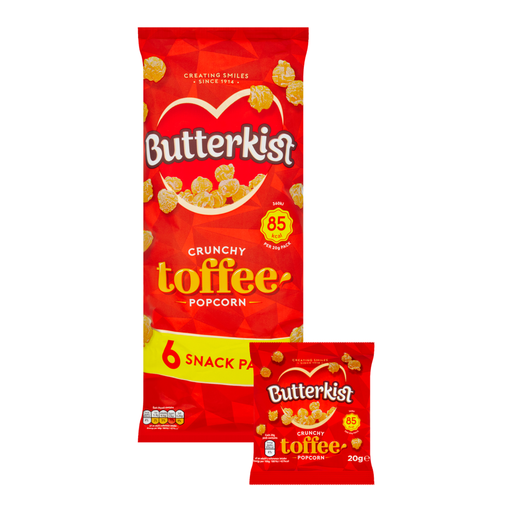 No image available
Six ready-to-eat 20g packs give players separate servings. ASDA’s listing for this Butterkist format declares milk and states 9.8g sugars per 20g pack; check the current label before sharing.
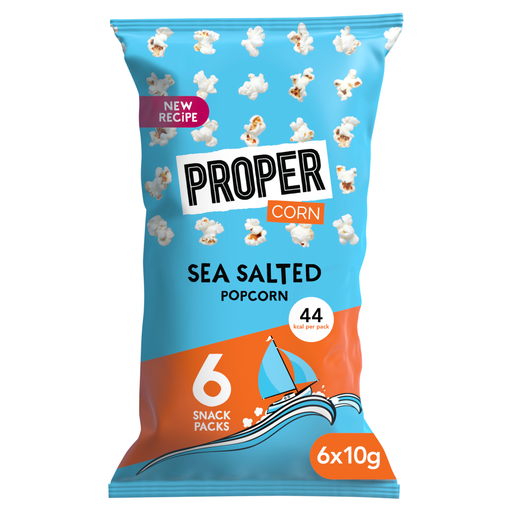 No image available
These six ready-to-eat 10g packs suit players who want small, separate servings. Sainsbury’s listing for this format names wholegrain corn, rapeseed oil and sea salt, and says it is made in a factory handling milk.
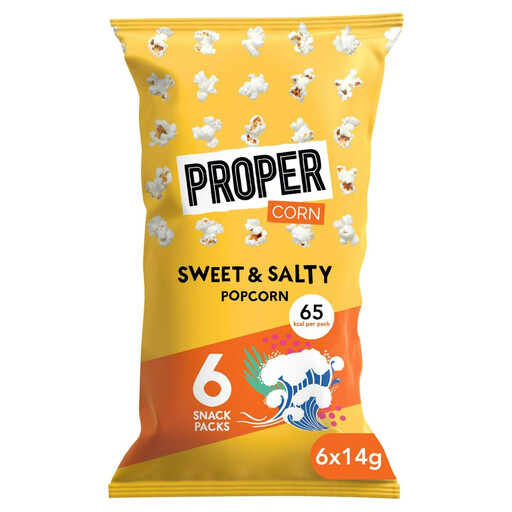 No image available
Six ready-to-eat 14g packs provide individual sweet-and-salty servings during play. Check the current pack’s ingredient and allergen statements before buying for a group.
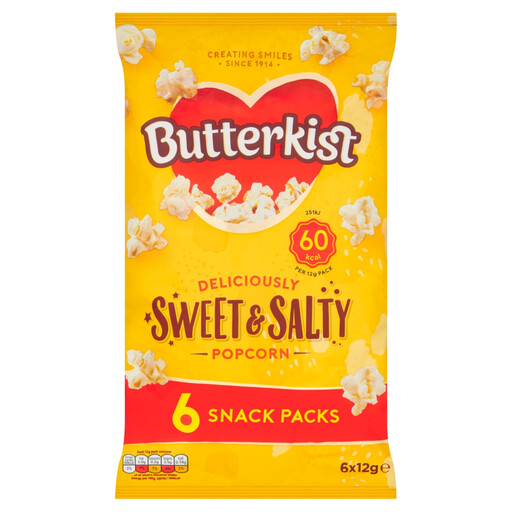 No image available
This ready-to-eat six-pack provides separate 12g sweet-and-salty servings. Check its current allergen statement when choosing snacks for other players.
 No image available
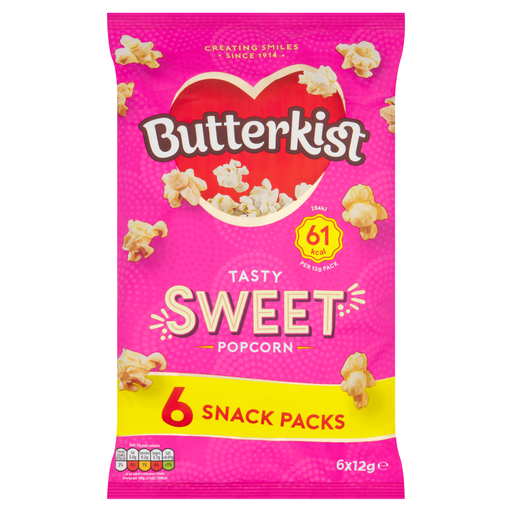
Six ready-to-eat 12g packs offer individual sweet-popcorn servings without preparation. ASDA’s listing for Butterkist Sweet states 61 kcal per 12g pack; check the current nutrition and allergen information on the pack.
Check both the number of packets and their total net weight. Six 10g portions contain less popcorn than six 20g portions, so choose a serving size that fits how your group plans to snack; compare kernels separately because they still need preparation.
Choose individual packs when players want separate servings at different times. A ready-to-eat sharing bag suits a group that can divide popcorn into bowls and does not need individually wrapped portions.
Yes, check the current label of the exact flavour and pack size, particularly when buying for someone with an allergy or intolerance. ASDA’s Butterkist Crunchy Toffee listing declares milk, while Sainsbury’s Propercorn Lightly Sea Salted listing says it is made in a factory handling milk.
Yes, but check whether each figure is given per pack, per serving or per 100g before comparing products. UK Department of Health and Social Care guidance describes front-of-pack labelling that combines colour coding with percentage reference intakes; the full nutrition table provides further detail.