Students looking for lunch protein
If you want popcorn to contribute protein rather than simply add a crunchy snack, compare the grams in the portion you will eat. A separate lunch component may need to provide the main contribution.


For a university lecture lunch, treat popcorn as a portable side snack rather than relying on it for the main protein contribution: Myprotein Protein Popcorn lists 3.8g protein per 21g serving. Its published nutrition works out at about 16.7% of energy from protein, below the 20% high-protein claim threshold described by legislation.gov.uk. Choose a ready-to-eat portion for days without preparation time, and check protein per pack and allergens when planning the rest of lunch.
The role popcorn plays in lunch matters more than a protein-themed product name.
If you want popcorn to contribute protein rather than simply add a crunchy snack, compare the grams in the portion you will eat. A separate lunch component may need to provide the main contribution.
A small ready-to-eat pack needs no cooking. Microwave popcorn calls for preparation, so it suits a lecture day only if you can make it before you eat.
Check the exact pack’s ingredients and allergen statement. The protein-enriched popcorn described here contains milk and soya ingredients; a vegan-labelled popcorn can still carry a milk cross-contact warning.
Start with protein in the portion you will actually take to campus, then check whether the pack fits your timetable and dietary requirements.
| Priority | What to check | Your needs |
|---|---|---|
| Protein per portion | Compare grams per pack or planned portion, not just per 100g. For a high-protein claim, the legislation.gov.uk annex describes a threshold of at least 20% of energy from protein. | I want to know whether popcorn contributes much protein to lunch or is mainly a side snack. Myprotein lists 3.8g per 21g serving; Sainsbury’s lists 0.9g per 10g pack for Propercorn Lightly Sea Salted. |
| Preparation | Check whether the product is ready to eat or needs cooking, and compare nutrition on the same prepared or as-sold basis. | Between lectures, I need something I can eat without finding a microwave. I would choose microwave popcorn only if I can prepare it beforehand. |
| Ingredients and allergens | Read the current pack for milk, soya and cross-contact statements. Check dietary-suitability wording separately from protein figures. | If I avoid particular ingredients, I need the exact product label to guide my choice; vegan wording alone does not answer a milk cross-contact question. |
| Sugar and fibre | Compare the stated values on a consistent per-100g or per-portion basis. Keep these figures separate from protein. | I may care about sugar or fibre when choosing a flavour, but those numbers do not tell me how much protein my pack supplies. |
Myprotein lists 18g protein and 430kcal per 100g. Those figures work out at about 16.7% of energy from protein, below the 20% high-protein claim threshold described by legislation.gov.uk.
Use the nutrition panel rather than the product name when that distinction matters, and check grams in the portion you intend to eat.
Sainsbury’s lists Propercorn Lightly Sea Salted at 8.6g protein per 100g, but its individual 10g pack supplies 0.9g. Tesco lists 1.6g for a quarter of Metcalfe’s 80g sharing bag.
Compare the pack or planned serving first, then decide what else to include in lunch.
Microwave popcorn needs cooking, and its stated prepared serving is not directly equivalent to an unopened ready-to-eat pack.
Take a ready-to-eat pack if you cannot prepare popcorn before eating.
Propercorn Lightly Sea Salted is listed as vegan but supplies 0.9g protein per 10g pack. Its product information also carries a possible milk cross-contact warning.
Check protein, ingredients and allergen statements as separate parts of the decision.
These figures refer to the named popcorn products and portions, not every product made by each brand.
Its Protein Popcorn is a ready-to-eat option to compare when protein per small serving is the priority.
Its listed range includes small ready-to-eat packs and a product that needs microwave preparation.
Sweet ’N Salt is a sharing-bag option rather than an individually packed lecture snack.
Tesco Sweet Popcorn is another sharing-bag product to assess by portion.
ASDA Sweet Popcorn is a sharing-bag option rather than a protein-led lunch component.
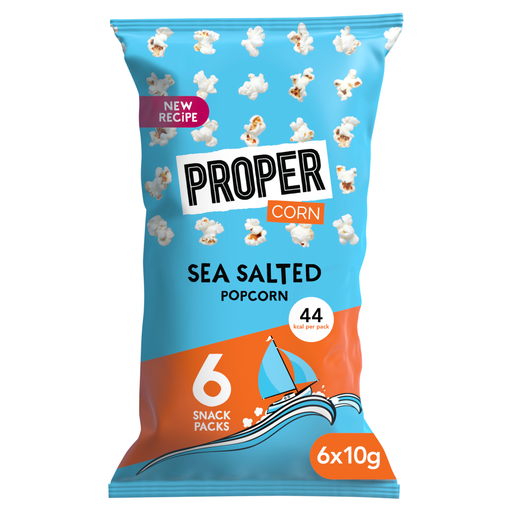
This small, ready-to-eat pack fits a lecture-day snack when portability matters more than protein contribution.
 No image available
The individually packed, ready-to-eat portions suit a snack between lectures, rather than the main protein component of lunch. Joybuy lists 0.9g protein per 10g pack and a possible milk cross-contact warning; check the pack if that affects your choice.
No. A product name does not establish how much of its energy comes from protein. The legislation.gov.uk annex describes at least 20% of energy from protein as the condition for a high-protein claim; check the product’s nutrition information rather than relying on its name.
It supplies 3.8g protein per 21g serving according to Myprotein, so consider what the rest of your lunch provides rather than treating the popcorn as its main protein component. Myprotein’s per-100g figures work out at about 16.7% of energy from protein, below the high-protein claim threshold described by legislation.gov.uk.
Only if you can prepare it before eating or have access to a microwave you may use. Propercorn Fresh Salted Microwave Popcorn needs preparation, and its stated serving figures refer to the prepared product.
Check protein for the portion you plan to eat, then read the ingredients and allergen statement for the exact product. Myprotein Protein Popcorn contains milk and soya ingredients, while Propercorn Lightly Sea Salted carries a possible milk cross-contact warning despite being listed as vegan.