Students planning several revision breaks
Individual ready-to-eat bags make it easier to set aside a separate snack for each break without opening one larger bag.


Choose ready-to-eat individual bags if you want separate snacks for several revision breaks or people; compare both the bag count and grams per bag, because multi-packs contain different amounts. Microwave packs suit a freshly prepared bowl when a suitable microwave and supervision are available, but they are not the same as individual desk snacks. Check the current pack for nutrition, ingredients and allergen information before choosing either format.
Individual ready-to-eat bags make it easier to set aside a separate snack for each break without opening one larger bag.
Count the bags as well as the total weight. If everyone needs their own bag, its size matters too.
Compare the exact products’ labels rather than assuming a flavour or brand tells you their sugar, salt, ingredients or allergen information.
Start with how many separate snacks you need, then check the bag size and whether you can prepare the format you choose.
| Priority | What to check | Your needs |
|---|---|---|
| Individual portions | Compare the number of bags, grams per bag and total net weight. Tesco lists ready-to-eat formats of 12 × 14g, 6 × 14g and 6 × 10g. | I want a separate bag for each planned break or person, without assuming that six smaller bags provide the same amount as six larger ones. |
| Nutrition | Compare energy, sugars and salt on the exact products. The NHS explains that nutrition information is given per 100g and sometimes per portion; check what the stated portion represents. | If I’m comparing flavours or bag sizes, I want figures measured on the same basis as well as the values for the amount I plan to eat. |
| Ingredients and allergens | Read the ingredients, allergen information, necessary warnings and any dietary claims on the current pack. Recipes and labels can change. | When I’m sharing the snacks, I need to check the particular pack against each person’s dietary requirements. |
| Preparation and storage | Check whether the bags are ready to eat or need a microwave, and follow the pack’s preparation and storage instructions. Waitrose describes Proper’s 3 × 70g microwave format as approximately three servings per prepared bag and says not to leave it unattended while popping. | For a desk break without a microwave, I’d choose a ready-to-eat bag. For a prepared bowl, I need the equipment and time to follow the microwave instructions. |
Six 10g bags and six 14g bags provide different amounts, even though both are six-packs.
Compare bag count, grams per bag and total net weight against the number of breaks or people you are planning for.
Sugar and salt values depend on the particular recipe; a flavour name does not give you the amounts.
Use the exact packs’ per-100g figures for comparison, then check the per-portion values where provided. The NHS explains both ways of presenting nutrition information.
A microwave multi-pack needs preparation rather than simply opening an individual bag. Proper’s microwave instructions also require supervision while popping.
Choose ready-to-eat bags when you cannot prepare popcorn; otherwise, check the equipment and follow the microwave pack’s instructions.
Ingredients and product information can change, which matters when snacks are being shared with someone who has a dietary requirement.
Check the physical pack’s ingredients, allergen and precautionary information, date mark and storage instructions before use.
Tesco lists ready-to-eat individual multi-packs, while Waitrose lists a salted microwave format.
Tesco lists an own-label Sweet & Salted ready-to-eat multi-pack of 6 × 14g.
Tesco’s product page describes a Sweet & Salty popcorn multi-pack of 6 × 12g.
DDC Foods lists Metcalfe's Sweet 'N' Salt popcorn in a 24 × 20g wholesale case.
These ready-to-eat six-packs offer individual bags for planned revision breaks or sharing. Compare their stated bag sizes and flavours, then check the current pack labels for nutrition and dietary suitability.
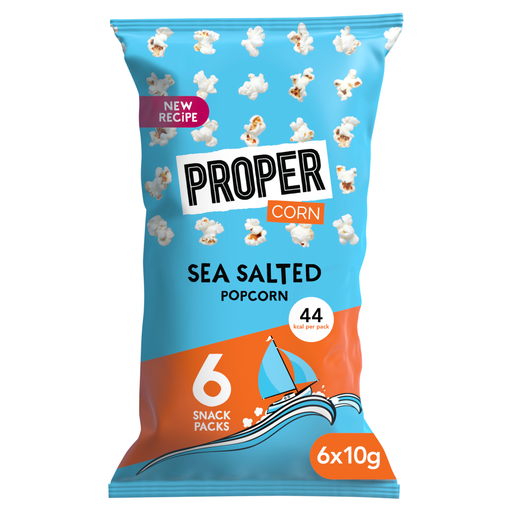 Image unavailable
Six ready-to-eat 10g bags provide separate snacks without microwave preparation. Check whether six bags cover the planned breaks or people, and read the current pack for nutrition and allergen information.
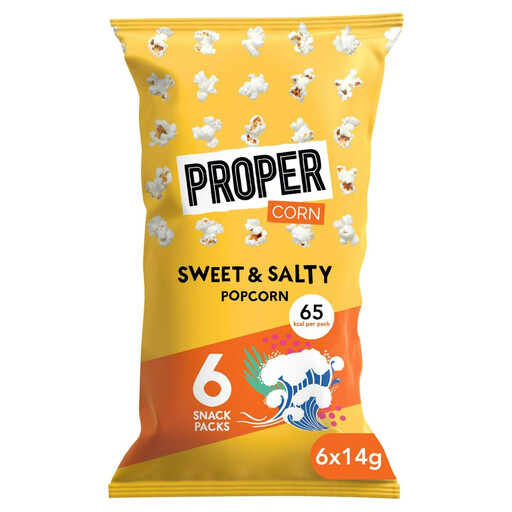 Image unavailable
This ready-to-eat pack has six 14g bags for separate breaks or people. It is a different pack size from the 12 × 14g PROPER listing; check the current label for nutrition, ingredients and allergens.
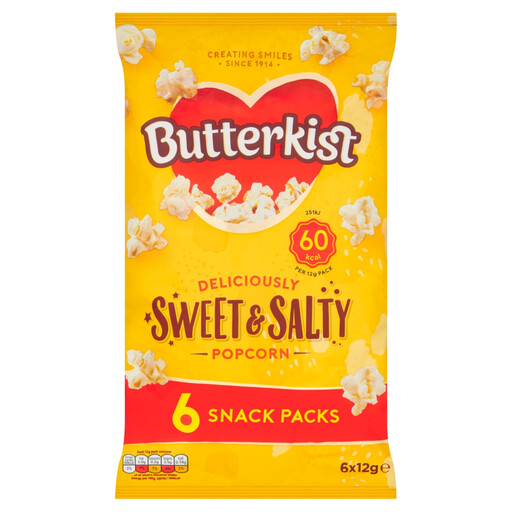 Image unavailable
Six ready-to-eat 12g bags can be allocated across revision breaks or shared individually. Compare the bag size and the current nutrition panel with the other flavours and formats you are considering.
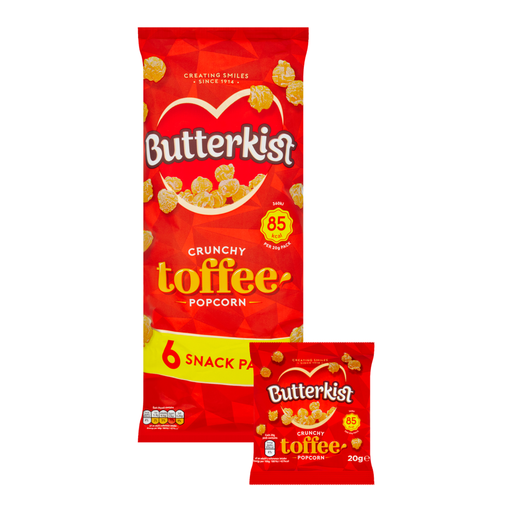 Image unavailable
This toffee-flavoured option has six ready-to-eat 20g bags. Its bag size differs from the other packs shown, so compare the current per-100g and per-portion nutrition figures before choosing.
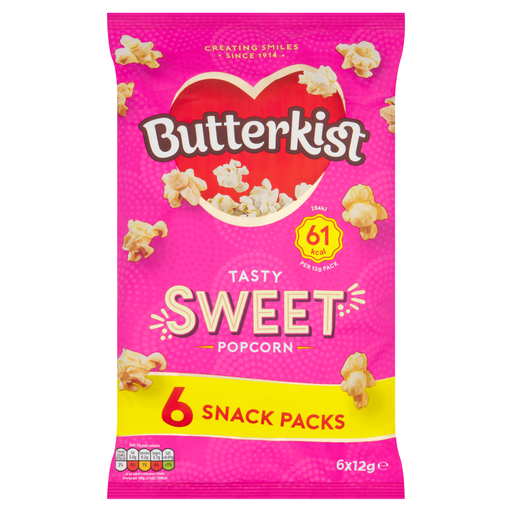 Image unavailable
Six ready-to-eat 12g bags provide individual portions in a sweet flavour. Check the pack’s sugars per 100g and per portion if comparing it with the other flavours, as well as its ingredients and allergen information.
Start with the number of bags and grams per bag, then check total net weight and the nutrition panel. Tesco lists ready-to-eat formats of 12 × 14g, 6 × 14g and 6 × 10g, so the word “multi-pack” alone does not tell you how much each person or break gets.
No. Read the exact product’s nutrition panel rather than relying on its flavour name. The NHS explains that pre-packed food labels give figures per 100g and sometimes per portion, allowing you to compare packs of different sizes.
Check the ingredients, allergen and precautionary information and any relevant dietary claim on the exact physical pack. Recipes can change, and a statement about one flavour or product does not establish suitability for another.
Yes, when you have the equipment and want to prepare a bowl, but a microwave bag is not an individual ready-to-eat portion. Waitrose describes Proper’s 3 × 70g salted microwave pack as approximately three servings per prepared bag and instructs users not to leave the microwave unattended while popping.
Check the pack’s date mark and storage instructions, and plan how many bags you will use. GOV.UK explains that a best-before date concerns quality, whereas a use-by date concerns safety; follow the marking on the particular product.