Students with cooking equipment
If you can use a suitable lidded pan, plain kernels let you prepare popcorn for dinner and choose the seasoning. Plan a separate protein food for the meal.


Use popcorn as part of dinner rather than relying on it for the meal’s protein: the listed popcorn examples provide modest amounts per serving. Plain kernels make sense if you have cooking equipment and want to choose your own seasoning; ready-to-eat bags save preparation but need a separate protein food alongside them.
If you can use a suitable lidded pan, plain kernels let you prepare popcorn for dinner and choose the seasoning. Plan a separate protein food for the meal.
A ready-to-eat bag can travel with a meal or be opened in a shared kitchen. Treat it as a snack or side, not the meal’s protein component.
Compare the exact pack’s ingredients and allergen statements, particularly for flavoured popcorn or if you need to avoid milk, nuts or other allergens.
Start with the role popcorn will play in dinner, then choose between kernels that need cooking and a bag that is ready to eat.
| Priority | What to check | Your needs |
|---|---|---|
| Protein in the meal | Read protein per serving, not just per 100g. Decide which separate protein food will form part of dinner. | I want popcorn with dinner, but I need another food to provide the meal’s protein. The NHS Eatwell Guide includes foods such as beans, pulses, eggs, fish and meat among protein foods. |
| Preparation | Check the kernel pack’s cooking instructions and whether you have the specified equipment. Ready-to-eat popcorn needs no popping. | On a night without access to a lidded pan, I would rather open a bag; when I can cook, kernels give me control over what I add. |
| Portion and pack | Compare pack sizes and the labelled serving size. Check how much popcorn you expect to use alongside the rest of dinner. | Individual packs suit a portable side; a larger bag or kernel pack may suit several meals if I can store it appropriately. |
| Seasoning and allergens | Compare sugars and salt for the portion eaten. Read the current ingredients and precautionary allergen statements on the pack. | If dinner already has seasoned ingredients, I may prefer plain kernels. I also need to check flavoured popcorn against my own dietary requirements. |
A wholegrain description does not tell you how much protein your serving contributes. The listed popcorn examples still call for another protein food if that is the focus of dinner.
Check protein per serving and plan the other components of the meal separately.
A small ready-to-eat pack and a bag of unpopped kernels serve different purposes. Their pack sizes alone do not show how much popcorn you will eat with dinner.
Check the serving information, preparation method and amount you expect to use.
Asda Sweet & Salted Popcorn lists 6.3g sugars and 0.50g salt per 25g serving, while Proper Mature Cheddar lists 0.47g salt per 20g serving and contains milk ingredients, according to their Asda Groceries listings.
Compare the figures for the portion you will eat, or choose plain kernels when you want to decide what seasoning to add.
Ingredients and precautionary statements can differ between products and may change. Flavoured and plain popcorn should not be assumed to have the same allergen information.
Read the current physical pack before eating if an ingredient or allergen matters to you.
Asda Groceries lists both plain popcorn kernels and ready-to-eat sweet-and-salted popcorn. They serve different roles in a student meal.
Proper’s ready-to-eat and microwave popcorn formats are relevant when preparation and portion format matter.
Sainsbury's Groceries lists popping corn alongside bagged and microwave popcorn, offering formats to compare for different cooking setups.
Tyrrells’ published range describes potato, Furrows and lentil crisps rather than providing popcorn details for this decision.
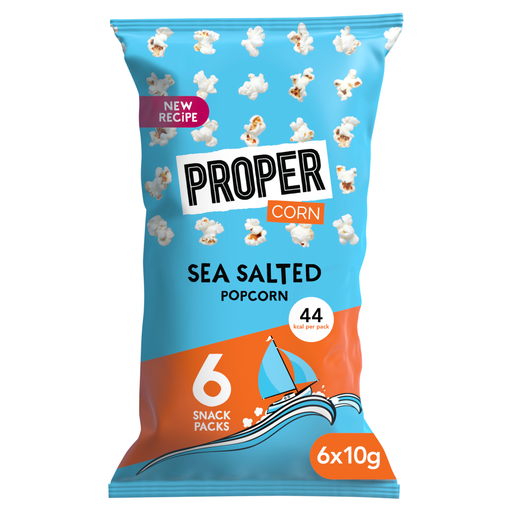
These Propercorn Lightly Sea Salted packs are ready-to-eat options for a snack or side with a student dinner. Neither pack replaces the separate protein food you may want in the meal.
 No image available
The individual ready-to-eat packs suit a portable popcorn side that needs no cooking.
The pack contains six 10g portions. Add a separate protein food if this is part of dinner, and check the current pack for ingredients and allergens.
 No image available
This ready-to-eat pack suits a savoury side when you do not want to prepare kernels.
The pack is 70g. Decide on your serving alongside the rest of the meal, and check the current ingredients and allergen information before eating.
Do not rely on the listed popcorn examples as the meal’s protein component. For instance, Asda Popcorn Kernels list 13g protein per 100g prepared as directed, while Proper Mature Cheddar Popcorn lists 1.9g per 20g serving. Include a separate protein food if that is your dinner goal.
Use popcorn as a side and choose another food for the protein part of the meal. The NHS Eatwell Guide identifies beans, pulses, fish, eggs and meat among protein foods; choose meal components that fit your own preferences and requirements.
Choose kernels if you can follow the pack’s cooking instructions and want to add your own seasoning. Choose ready-to-eat popcorn when avoiding preparation matters more; check its serving size and label, and do not assume it supplies dinner’s protein.
Follow the instructions on your particular pack. Asda Groceries’ instructions for its popcorn kernels specify oil and a large pan with a well-fitting lid for hob preparation. Keep the lid on as directed and do not leave the pan unattended.
Read the ingredients and precautionary allergen statements on the current physical pack. Proper Mature Cheddar Popcorn lists milk ingredients in its Asda Groceries listing, but that does not establish the ingredients of other flavours or products.