
24/7 Customer Support

Free returns

Same-day & Next-day Delivery

Quality Guaranteed

Unlock Your Welcome Offers: FREE Delivery | Up to 80% OFF | Free 30-day JoyPlus trial
Download the APP
Choosing popcorn snacks should be simple, but packaging and flavour descriptions can make comparison surprisingly difficult. A large-looking bag may contain less than expected, while a “light” option can still be high in energy per 100g. Dietary labels also need careful checking, particularly where products are made in factories handling milk, cereals or soya.
This guide explains the practical details to check before buying sweet popcorn, salted popcorn, microwave popcorn or more indulgent gourmet popcorn options for your household.
Popped corn naturally varies in shape and size. Two bags with the same net weight may look different because one contains larger, airier pieces. This is especially relevant when buying popcorn sharing bags for a film night. Compare net weight, rather than judging value by how full the packaging appears.
For individual popcorn snack packs, check both the number of bags and the weight per bag. A multipack may suit lunchboxes or portioned snacks, while a larger pouch may be more practical for sharing.
A small stated serving can make a product appear lower in calories, sugar or salt. Use the per 100g figures for a fair comparison, then consider how much you are likely to eat.
For example, Propercorn Sweet lists 470 kcal and 20g of sugar per 100g, while Butterkist Crunchy Toffee Popcorn lists 427 kcal and 49g of sugar per 100g. These products serve different flavour preferences, but the figures demonstrate why the nutrition panel matters more than front-of-pack language such as “indulgent” or “light”.
“Vegan”, “vegetarian” and “gluten-free” are not the same claim. Always read the current ingredients and allergen statement on the pack. Propercorn Sweet is described as vegan and naturally gluten-free, but it may contain traces of milk. Caramel and cream-coated products commonly contain milk, while peanut or pistachio flavours require particular care for nut allergies.
Ready-to-eat bags offer immediate convenience for desks, picnics and packed lunches. Resealable pouches can help preserve texture after opening, although popcorn should still be stored according to the label.
For families, individual popcorn snack packs can make portions easier to manage. A six-pack of 10g bags provides a different format from a 170g sharing bag, even when both are intended for casual snacking.
Microwave popcorn is useful when you want freshly popped corn at home. Follow the cooking instructions precisely, including the wattage, cooking time and requirement for a turntable. Do not use a grill setting, leave the microwave unattended or reheat unpopped kernels. The bag can become hot, and unpopped kernels may pose a dental risk.
Wholegrain corn contributes fibre, but the amount varies considerably between products. Propercorn Lightly Sea Salted lists 10.9g of fibre per 100g, while Butterkist Crunchy Toffee Popcorn lists 3.9g per 100g. A high-fibre popcorn choice may appeal to mindful snackers, but fibre does not cancel out sugar, fat or salt.
For dietary requirements, look for clearly stated information and verify it against the packaging. Some products are suitable for vegans and gluten-free diets, while cream, butter, chocolate, peanut or pistachio recipes are not suitable for everyone.
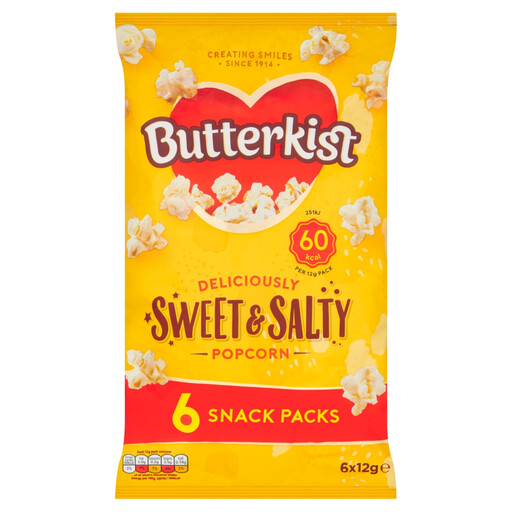
Why This Fits Their Persona: Six individually packed 12g bags offer a straightforward way to divide snacks between lunchboxes, after-school occasions or smaller movie-night portions.
The pack count and per-bag weight are clear, so shoppers do not need to estimate portions from a large-looking pouch.
Sweet-and-salty flavour; six ready-to-eat 12g packs; labelled free from cereals containing gluten, with trace warnings to check.

Why This Fits Their Persona: A smaller pouch with caramel coating and sea salt suits shoppers seeking a more distinctive treat for an evening at home or serving with coffee.
The 70g net weight and ingredient list make the portion clear, while the milk allergen is stated rather than hidden behind a general flavour description.
Caramel and sea-salt combination; resealable storage guidance; suitable for vegetarians but not vegans or those avoiding dairy.

Why This Fits Their Persona: Three 60g microwave bags are convenient for repeated film nights, family sharing or keeping in the cupboard for planned snacks.
The instructions specify microwave wattage, timing and safety restrictions, helping prevent overcooking caused by treating every microwave as identical.
Three ready-to-cook bags; sweet-and-salted flavour; described as gluten-free, vegan and high in fibre.
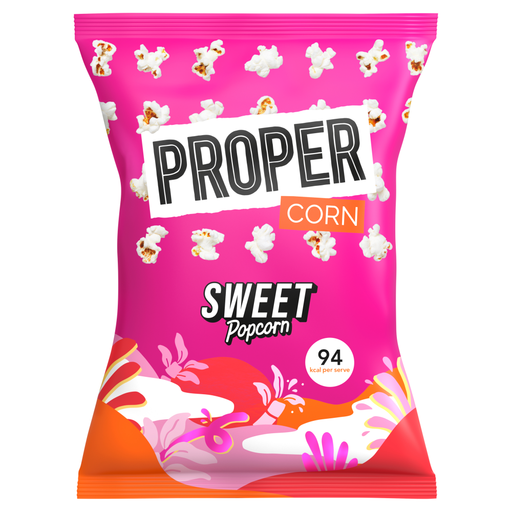
Why This Fits Their Persona: This 90g ready-to-eat bag is suited to shoppers looking for sweet popcorn with wholegrain corn and a clearly stated fibre value.
The listed 90g weight and nutrition panel provide more useful information than judging the bag by appearance or relying on broad “better-for-you” wording.
11g fibre per 100g; vegan and naturally gluten-free description; made with wholegrain corn and without palm oil.
We have compiled a complete, real-time list of products that fully satisfy these strict selection criteria and UK safety regulations.
Ready-to-eat individual popcorn snack packs are convenient for lunchboxes, but check the age guidance and allergen information first. Some packs warn about hard, unpopped kernels, and popcorn may not be suitable for young children because of choking and dental risks.
Follow the storage instructions on the packaging. Most ready-to-eat popcorn should be kept in a cool, dry place and resealed or transferred to an airtight container after opening. The crisp texture can deteriorate when exposed to moisture, even before the stated best-before date.
The answer depends on pack size, serving size and how much is wasted. Microwave popcorn can provide several prepared servings from one multipack, while ready-to-eat popcorn saves preparation time. Compare the price per 100g, not only the shelf price, and follow the microwave instructions to avoid burnt bags or discarded kernels.