
24/7 Customer Support

Free returns

Same-day & Next-day Delivery

Quality Guaranteed

Unlock Your Welcome Offers: FREE Delivery | Up to 80% OFF | Free 30-day JoyPlus trial
Download the APP
Buying pork belly online can be convenient, but the product name alone does not tell you whether it will suit your recipe. A pack labelled pork belly slices may be thin and suited to quick frying, while a skin-on joint needs a very different cooking method. Origin, storage format, rind and portion size also affect the final result.
Before choosing pork belly, watch for three common shopping pitfalls:
Choose the structure of the meat according to the dish you are making:
If you want British-style crackling, look for a skin-on joint with a clearly described rind and preparation guidance. For Chinese recipes such as hong shao rou, rind-on slices or chunks can provide a different texture during slow braising.
A chilled product may suit a planned weekend roast, but frozen pork belly is often more practical for UK households that want to keep ingredients available. Check whether the pack requires defrosting in the fridge before cooking and note how quickly it must be used after thawing.
Raw pork belly should be cooked thoroughly. Follow the product label, use a clean meat thermometer where appropriate and ensure the centre is fully cooked. Do not rely solely on browning, particularly with thick-cut pork belly.
Ready-to-eat pork belly or prepared pork dishes reduce preparation time, but they are not interchangeable with raw meat. Check allergens, heating instructions, salt content and whether the item is chilled or frozen. Prepared products may contain sauces, wheat, soya, sesame or other ingredients that are not present in plain pork.
A pork belly 500g pack is a practical size for a small family meal, a couple of servings or recipe experimentation. Larger packs, such as 1kg joints, can be more suitable for batch cooking, catering or a traditional Sunday roast.
Thickness affects cooking time and texture. Thin slices cook rapidly but can become dry if left over high heat. Thick strips retain more moisture and fat, making them suitable for grilling, roasting or braising. Origin is also worth checking: the available selection includes British pork belly, Spanish pork belly and products where the country of origin is stated on the packaging.
The word “premium” should not replace useful information. Compare the actual cut, weight, rind, storage conditions, ingredients and cooking instructions rather than relying on promotional language.
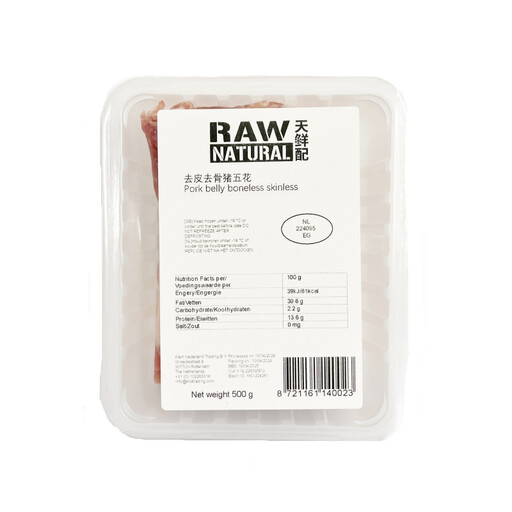
Why This Fits Their Persona: A straightforward 500g boneless, skinless cut for UK cooks trying pork belly in stir-fries, stews or weekday meals without paying for bone or rind.
The product description clearly states that it is boneless and skinless, so there is less uncertainty about preparation and portioning.
500g quantity; 100% pork; frozen storage instructions supplied on the product listing.
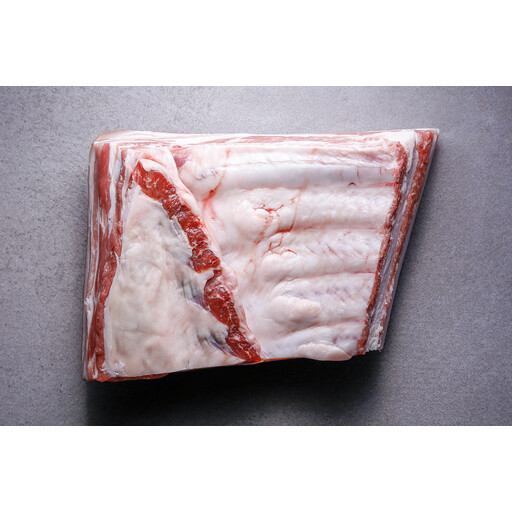
Why This Fits Their Persona: Suitable for shoppers planning a British roast, slow-cooked centrepiece or braised dish where skin and bone are part of the intended cut.
It specifies skin-on and bone-in, with scoring and roasting instructions, helping buyers match the joint to a crackling-focused recipe.
500g portion; scored skin; country of origin listed as the United Kingdom.
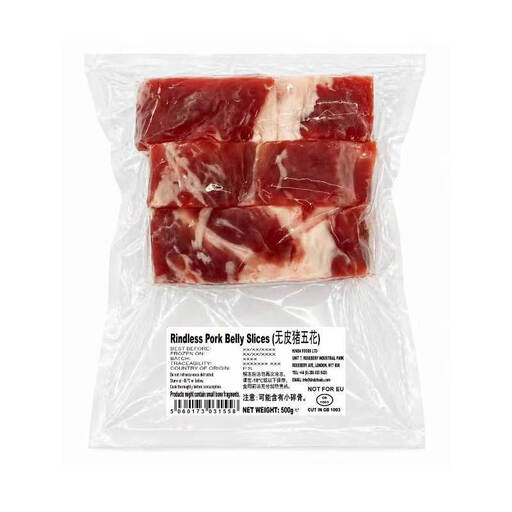
Why This Fits Their Persona: A practical choice for frequent stir-fries, Korean BBQ, pan-frying, hot-plate cooking or catering portions where pre-sliced meat saves preparation time.
The rindless, sliced format is stated clearly, avoiding the mismatch of buying a roasting joint for a fast-cooking recipe.
Pre-sliced 500g pack; Spanish origin stated; vacuum-packed and stored frozen at –18°C or below.
For pork belly for roasting, select skin-on meat and allow enough time to dry the rind before cooking. For pork belly for braising, rind-on slices, boneless chunks or a larger joint can work well because slow cooking softens the connective tissue.
For pork belly for Korean BBQ, rindless slices are usually simpler to grill and portion at the table. For pork belly for Chinese recipes, compare rind-on slices or chunks depending on whether you are preparing braised pork, twice-cooked pork or a stir-fried dish.
If convenience is the priority, a ready-to-eat prepared dish may be more suitable than raw meat. Check the full ingredient and allergen declaration: some prepared pork products include wheat, soya, sesame, molluscs or mustard-based ingredients.
We have compiled a complete, real-time list of products that fully satisfy these strict selection criteria and UK safety regulations.
A 500g pack is suitable for a smaller household, trial recipe or side dish. Choose 1kg when cooking for several people, preparing leftovers or serving at a barbecue. Remember that rind and bone affect the amount of edible meat.
Follow the product instructions. Many frozen pork belly products require complete defrosting in the fridge before cooking. Keep the meat covered, place it on the bottom shelf and do not refreeze after thawing unless the packaging specifically permits it.
Thin pork belly slices are generally more convenient for fast frying, grilling and stir-frying than a whole joint. Rindless slices can reduce preparation work, while thick-cut slices may still need careful cooking to ensure the centre is thoroughly cooked.