Daily porridge households
Households with two or more people eating porridge on most mornings who need to translate pack weight into breakfasts, storage needs and reorder frequency.


For a household that eats porridge regularly, a larger pack can reduce reordering only if it will be used steadily and stored sealed, cool and dry. Mornflake and the cited Waitrose packs use a 40g serving basis: this makes a 1kg pack about 25 portions and a 3kg pack about 75 portions, while jumbo and smaller-cut oats suit different cooking times and textures.
Households with two or more people eating porridge on most mornings who need to translate pack weight into breakfasts, storage needs and reorder frequency.
Families choosing between thicker jumbo oats for porridge and flapjacks, and smaller-cut oats intended for a smoother, quicker-cooking bowl. Mornflake describes these formats differently for texture and preparation.
Households where an allergy, intolerance or gluten-free requirement means the exact allergen statement and any gluten-free claim must be checked before buying a large pack. The Food Standards Agency notes that oats remain an allergen in their own right.
Choose it when: cupboard space is limited, you are trying a new brand, or the household may not finish a larger bag promptly.
Trade-off: a 1kg pack needs replacing more often than a multi-kilogram format.
Choose it when: porridge, baking or flapjacks are regular household staples and there is dry, sealed storage available.
Trade-off: the larger bag takes more space and its unit price should still be compared with the exact alternatives at checkout.
Choose it when: busy mornings call for a quick, smooth bowl rather than a firmer texture.
Trade-off: the smoother style may not suit people who prefer the bite of jumbo flakes.
Start with how quickly the household will use the oats, then check storage, flake style and the current pack label before committing to a larger format.
| Priority | What to check | Your needs |
|---|---|---|
| Pack duration | Use the serving basis on the exact pack; compare household portions with the pack weight; allow for baking and overnight oats. | A 40g basis makes a 1kg pack about 25 portions and a 3kg pack about 75 portions where the cited packs use that serving size. I want enough breakfasts without leaving an opened bag unused. |
| Cooking style | Check whether flakes are jumbo or smaller-cut; consider cooking time; choose the texture the main eaters prefer. | For weekday breakfasts, I may prefer oats designed to absorb liquid quickly. For a thicker bowl or flapjacks, jumbo oats may suit the household better. |
| Opened-pack storage | Make room in a cool, dry cupboard; use a clean airtight container after opening where the pack instructs this; retain the original label details. | I need a pack size that fits the storage space available and can be kept sealed between breakfasts. |
| Allergen checks | Read the allergen panel on the exact pack; look for a specific gluten-free claim where required; check the label again on delivery. | Where wheat, barley or gluten-free requirements matter, I need the current pack information rather than assuming ordinary oats are suitable. |
Pack weight alone does not establish a lower unit cost, and delivery conditions can change the practical cost of buying direct from a brand.
Compare the current £/kg figure for the exact packs available, then include relevant delivery charges or thresholds before choosing a larger format.
Large packs need more cupboard capacity. Waitrose pack guidance calls for cool, dry storage and an airtight container after opening, while Mornflake also advises sealed, cool and dry storage.
Measure the available space before ordering. Decant only into a clean, dry airtight container and keep the original bag or label for best-before and allergen details.
Mornflake distinguishes thicker jumbo flakes for a more textured porridge and flapjacks from smaller-cut flakes intended to absorb liquid more quickly for a smoother bowl.
Choose around the usual breakfast routine rather than bulk-buying a texture or cooking style that the main eaters may not finish.
Some cited standard oat products carry wheat or barley warnings. The Food Standards Agency states that food labelled gluten-free must contain no more than 20mg/kg gluten when sold to the final consumer, and oats remain an allergen.
Where a specific dietary requirement applies, select an exact product whose current pack label meets it and inspect the allergen panel and gluten-free claim on delivery.
A bulk-buying reference because Mornflake lists larger formats including 3kg whole jumbo oats and 1.25kg, 2kg and 3kg Superfast oats in its direct shop.
A conventional 1kg rolled-oat option for households that prefer a standard family-size pack over a specialist bulk format.
An organic 1kg rolled-oat option for households choosing on organic status rather than the largest single pack size.
An own-label 1kg reference for comparing a basic family-size porridge-oat pack with branded formats at a UK grocery retailer.
A jumbo-oat comparison option for households considering organic oats rather than maximising pack size.
Joybuy options for regular shared breakfasts, including a standard 1kg loose-oat pack and a pre-portioned convenience format.
 No image available
A 1kg loose-oat option for regular shared breakfasts.
The listing states 25 portions based on 40g servings and identifies the oats as gluten-free oat flakes for porridge or baking.
If cooking speed or texture matters, check the current pack before choosing. For a medically necessary dietary requirement, inspect the physical pack label.
 No image available
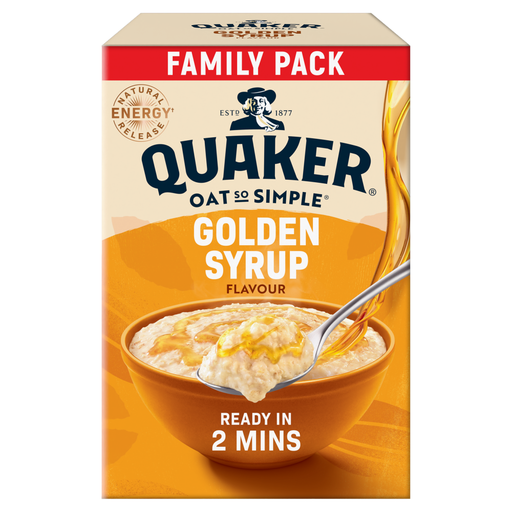
A convenience-led choice for busy shared breakfasts, with pre-portioned sachets.
The listing states 20 individual 36g sachets and a two-minute microwave preparation method.
This is a golden-syrup flavoured product rather than plain oats; check the current pack for allergen and dietary suitability.
Using the 40g serving basis stated on the cited Quaker and Waitrose packs, a 1kg bag makes about 25 portions. For two people eating one portion daily, that is about 12 to 13 days; for four daily users, it is about six days. Treat it as a planning estimate because portions, baking and overnight oats change consumption.
A 3kg pack suits a household that eats porridge consistently and has cool, dry storage for opened oats. Mornflake states that its 3kg jumbo pack contains about 75 portions at 40g each, or roughly 19 breakfasts for four people and 38 for two people at one bowl each.
Choose jumbo oats when a thicker, more textured porridge or flapjacks are the priority; choose smaller-cut oats when a quick, smoother bowl better fits busy mornings. Mornflake describes jumbo flakes as taking longer to cook, so the preferred routine matters as much as pack size.
Follow the individual pack instructions. The cited Waitrose product advises a cool, dry place and an airtight container after opening, while Mornflake says its creamy porridge oats keep for around 12 months when sealed and stored dry and cool.
Do not assume so. The Food Standards Agency states that food labelled gluten-free must contain no more than 20mg/kg gluten when sold to the final consumer, while oats remain an allergen in their own right. Some standard oat products also carry wheat or barley warnings, so check the current physical pack each time where the household has a specific requirement.