Parents planning sugar-conscious breakfasts
Choose an everyday oat base without sweetened flavours, syrup or dried-fruit-led recipes, and distinguish a short ingredient list from a sugar-free label claim.


For a sugar-conscious school-morning breakfast, plain oats with a short ingredient list are the clearest starting point, but check the nutrition panel rather than assuming they are sugar-free. Quick oats can suit busy mornings, while pots and flavoured formats need separate ingredient, sugars and allergen checks; the verified Waitrose Original Porridge Pot lists skimmed milk powder and 14.6g sugars per 100g.
Choose an everyday oat base without sweetened flavours, syrup or dried-fruit-led recipes, and distinguish a short ingredient list from a sugar-free label claim.
Look for an oat format that can be prepared quickly before school without automatically moving to a flavoured or milk-powder-containing pot.
Check gluten-free labelling, the full ingredient and allergen statement, and the individual school’s arrangements before providing oats at school.
Start with the ingredient list and sugars per 100g, then choose the oat cut and pack format that fits the available preparation time. Allergen requirements and school arrangements should be checked for the exact pack.
| Priority | What to check | Your needs |
|---|---|---|
| Ingredients and sugars | Check for oats-only ingredients and compare “of which sugars” on a per-100g basis. Check separately for sugar, syrup, honey or sweetened flavour ingredients. Verified plain examples list 0.9g to 1.0g sugars per 100g. | I want a plain oat base without named sweetening ingredients, rather than assuming an oats-only product is sugar-free. |
| Morning preparation | Compare oat cut, preparation method and timing. Smaller-cut oats can absorb liquid more quickly; dry rolled oats may suit home cooking, while pots can use boiling water but have their own handling instructions. | I need breakfast to fit the time available before school, whether that means a quick microwave bowl, a cooked breakfast or a portable format. |
| Allergens and gluten | Look for an explicit gluten-free label where required and read the complete allergen statement. “Organic”, “pure” and “100% oats” do not by themselves establish gluten-free suitability. | For a coeliac or allergy plan, I need the exact pack to meet the child’s requirements and the school’s food-handling arrangements. |
An oats-only ingredient list does not mean the nutrition panel will show no sugars. Waitrose Essential Porridge Oats list 0.9g sugars per 100g, while Mornflake Organic Porridge Oats list 1.0g per 100g.
Compare sugars per 100g and read the ingredients for sugar, syrups, honey and sweetened flavourings. If a sugar-free claim is important, rely on the exact pack claim rather than the product format alone.
The verified Waitrose Original Porridge Pot contains oat flakes and skimmed milk powder, lists 14.6g sugars per 100g and may contain nuts. This differs from Waitrose Essential dry oats, which list wholegrain oat flakes only and 0.9g sugars per 100g.
Read the nutrition panel and ingredients for each pot or sachet. Do not substitute a convenience product without checking if dairy, nut traces or sweetening ingredients matter.
Coeliac UK explains that standard oats can be contaminated with wheat, barley or rye during production. Mornflake also states that its Superfast Oats are not suitable for wheat or barley allergy sufferers because of its manufacturing methods.
Where gluten-free oats are required, choose an explicitly labelled product and read the whole allergen statement whenever the pack changes.
Department for Education guidance says schools in England must publish an allergy safety policy, including arrangements for food brought from home and clearly labelled ingredients.
Ask the school whether dry oats, prepared porridge, milk-containing pots or nut-trace warnings affect what may be brought in. Rules can differ between schools and across UK nations.
Relevant for plain organic rolled oats and Superfast Oats, offering a standard oat base or a faster-cooking format.
Relevant for organic rolled, jumbo and quick oats, including a plain-oat option for home-made porridge.
Relevant for an own-label plain rolled-oat option and convenience pots, making it useful for comparing dry oats with a prepared single-serve format.
Relevant because Waitrose lists Quaker rolled and jumbo oats alongside Oat So Simple convenience products in its UK porridge aisle.
Relevant for shoppers considering an organic jumbo-oat format.
Useful mainly as a contrast: oat-based cereal is not automatically a substitute for plain porridge oats where sweetening ingredients are to be avoided.
Joybuy options for sugar-conscious school-morning breakfasts, including quick plain oats, explicitly gluten-free oats and larger packs of plain rolled oats.
 No image available
A portioned plain-oat option for rushed home breakfasts, with a stated 2½-minute microwave method.
The ingredient list names wholegrain rolled oats only, and the nutrition panel lists 1.0g sugars per 100g. Check the exact pack for gluten-free suitability and school allergen requirements.
 No image available
A plain oat-flake option where an explicitly gluten-free and wheat-free product is required.
The product states 100% gluten-free oat flakes and lists 1.1g sugars per 100g. Individual tolerance and the school’s allergy arrangements still need checking.
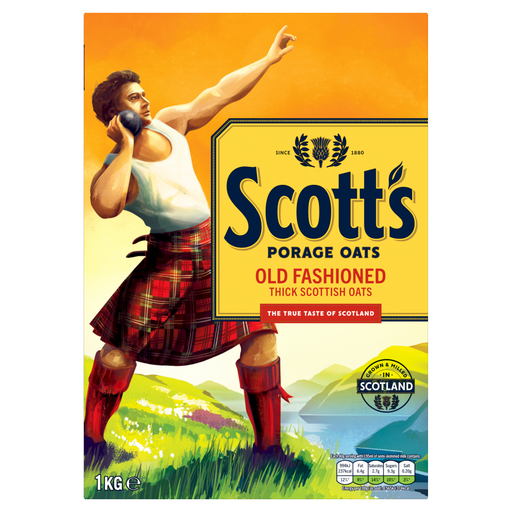 No image available
A home-cooked rolled-oat choice with stated microwave and stovetop preparation methods.
The ingredient list is 100% rolled oats and the nutrition panel lists 1.1g sugars per 100g. The product may contain wheat and barley and is not explicitly labelled gluten free.
 No image available
A flexible single-ingredient oat base for home breakfasts where milk and toppings are chosen separately.
The product states 100% organic wholegrain oat flakes and 0.9g sugars per 100g. Check the pack for cooking guidance, gluten-free suitability and school allergy requirements.
 No image available
A larger plain-oat pack for regular household breakfasts, with toppings and milk selected separately.
The pack contains two 1kg bags of 100% organic wholegrain oat flakes and lists 0.9g sugars per 100g. Check the pack for preparation instructions, gluten-free suitability and school allergy requirements.
Not automatically. Verified plain dry-oat examples list 0.9g sugars per 100g for Waitrose Essential Porridge Oats and 1.0g per 100g for Mornflake Organic Porridge Oats, despite oats-only ingredient lists. For a sugar-conscious routine, check both sugars per 100g and the ingredient list on the exact pack.
Check the individual school’s allergy safety policy first. Department for Education guidance for England says schools must publish an allergy safety policy and should set expectations for clearly labelled, safely prepared and stored lunchboxes and classroom ingredients. Schools elsewhere in the UK may follow different local arrangements.
Do not rely on “organic”, “pure” or “100% oats” wording alone. Coeliac UK explains that standard oats can be contaminated where they are produced alongside wheat, barley or rye; choose an explicitly gluten-free labelled oat product where required and follow the child’s clinical advice.
Quick oats are cut or processed to absorb liquid more quickly. Mornflake says its Superfast Oats use smaller flakes for faster water or milk absorption, while Waitrose Essential rolled oats have a stated 4–5-minute hob method. Choose based on the morning routine and preferred texture, then check the exact ingredients and allergen statement.
Follow the instructions on the individual pack. For the verified Waitrose dry oats, store in a cool, dry place and use an airtight container after opening. The verified Waitrose porridge pot is prepared with boiling water, should be consumed immediately after opening, is not suitable for microwave cooking and should not be reheated.