For everyday porridge bread, plain rolled oats in a larger pack are the practical starting point: compare unit prices between similar plain-oat packs rather than relying on the pack price alone. Choose jumbo oats where visible flakes matter, and use oats expressly labelled gluten free only when that requirement applies; Coeliac UK notes that organic, pure and 100%-oat wording does not establish gluten-free suitability. For yeast dough, use oats as part of a recipe that retains the flour structure it needs.
Who this is for
Value-led home bread bakers
For bakers who want a versatile oat ingredient for porridge bread or flapjacks and want to compare unit prices across plain packs before paying extra for a brand, organic certification or larger flakes. Waitrose & Partners and Tesco provide the relevant pack and product examples.
Bakers seeking a rustic, seeded oat loaf
For recipes where flakes should remain noticeable in the loaf or on top, and where jumbo oats and recipe-specific binders are more important than choosing the finest oat texture. Mornflake distinguishes thicker jumbo oats from thinner, faster-cooking oats.
Gluten-free household bakers
For households that need oats expressly labelled gluten free and also need to check every other ingredient in the recipe. Coeliac UK advises that ordinary, organic and 100%-oat packs do not by themselves show gluten-free suitability.
What to check before buying
| Priority |
What to check |
Your needs |
| Value per kilogram |
Compare unit prices on plain rolled oats of a similar pack size. Check the ingredient list if the recipe needs oats without added flavourings or sweeteners. |
I want an ingredient that is easy to measure into dough without paying for single-serve portions or flavourings that change the recipe. |
| Flake size |
Check whether the recipe expects ordinary porridge oats or thicker jumbo flakes. Jumbo oats take longer to absorb liquid, according to Mornflake. |
For a smoother, more integrated crumb, ordinary oats may suit the recipe. If I want recognisable flakes in a seeded loaf or topping, I would look for a recipe that accommodates thicker oats. |
| Recipe structure |
Choose a recipe formulated for oats, including its specified binder or flour. Oat-and-yoghurt soda bread and wheat-flour yeast dough use oats differently. |
I want to avoid treating oats as a gram-for-gram replacement for strong bread flour when the loaf needs flour structure or particular binding ingredients. |
| Gluten-free suitability |
Look for an explicit gluten-free label where required, then check the remaining recipe ingredients. The Food Standards Agency states that food labelled gluten free must contain no more than 20 mg/kg gluten when sold to the final consumer. |
If I am baking for a gluten-free requirement, I need the oat pack and the full recipe to match that requirement rather than relying on organic or 100%-oat wording. |
Common buying mistakes
-
Equating the lowest pack price with the best baking value
Small portioned or flavoured porridge products can cost more per kilogram than a comparable plain-oat pack and may add ingredients that are not useful in a bread recipe.
Compare unit prices across similar plain rolled oats before choosing sachets, pots or flavoured products.
-
Buying jumbo oats for every recipe
Jumbo oats are thicker and absorb liquid more slowly, so they can work well in a rustic or seeded loaf but may not give the texture expected by a recipe developed for ordinary oats.
Follow the oat type named in the recipe. When substituting jumbo oats, use a recipe that allows visible flakes and enough hydration and standing time.
A mismatch can leave a loaf with an unintended coarse texture or flakes that have not hydrated sufficiently.
-
Assuming organic, pure or 100%-oat packs are automatically gluten free
Coeliac UK explains that standard oats can be contaminated with wheat, barley or rye, and that these descriptions do not establish gluten-free status.
Where gluten-free oats are required, choose a pack expressly labelled gluten free and check the other ingredients in the recipe as well.
-
Treating oats as a universal wheat-flour substitute
Oat-based loaves depend on their recipe: Flahavan’s porridge bread uses yoghurt, egg and bread soda, while Mornflake’s seeded oat loaf includes oat bran, seeds and psyllium.
Choose the loaf style first, then buy the oats and supporting ingredients specified by a recipe developed for that method.
Changing the formula without the required binder or flour structure can lead to wasted ingredients and an unsuccessful batch.
Relevant oat brand references
Waitrose
Waitrose offers own-label plain rolled-oat options for value-led baking, including Essential Porridge Oats and Scottish Porridge Oats.
- Waitrose & Partners describes its plain Essential oats as rolled oat flakes suitable for porridge and flapjacks.
- Check the ingredients on each pack: Waitrose also sells an oat-and-wheat-bran product, so not every porridge-oat pack is oats only.
Quaker
A branded jumbo-oat option for recipes where thicker, whole rolled flakes are wanted.
- Waitrose & Partners describes Quaker Jumbo Porridge Oats as whole uncut oats milled to a thicker specification, with 100% rolled oats listed as the ingredient.
- The pack may contain wheat and barley, so it should not be treated as a gluten-free substitute.
Mornflake
An oat-format specialist offering superfast, jumbo, organic, gluten-free and Scottish oats, as well as oat bran and recipe guidance.
- Mornflake distinguishes thinner, faster-cooking oats from thicker jumbo oats and provides recipes for oat-based and wheat-containing breads.
- Its web-shop case-pack prices are not directly comparable with supermarket single-pack prices.
Flahavan’s
An oat specialist with porridge-bread recipes using Progress Oatlets or its gluten-free oats.
- Flahavan’s official porridge-bread recipe provides a formula for an oat-and-yoghurt soda-style loaf.
- Its organic oats are an organic route rather than a default value-led choice.
Jordans
A wholegrain rolled-oat porridge brand with chunky traditional and organic porridge lines.
- Jordans Chunky Traditional Porridge uses wholegrain rolled oat flakes.
- Jordans warns that this product may contain other gluten sources and nuts, so it is not one to assume is suitable for gluten-free or nut-allergy baking.
Dorset Cereals
A breakfast-cereal brand centred on muesli and granola rather than plain porridge oats for bread baking.
- Its oat-based cereals include combinations with fruit, nuts, seeds and other grains.
- These mixes are not like-for-like replacements for plain porridge oats unless a recipe specifically calls for their added ingredients.
Joybuy oat options
Joybuy product options for plain-oat bread baking, including an expressly gluten-free option and oats for recipes that call for ordinary rolled flakes.
 No image available
Morrisons Free From Gluten Free Oats 1kg
An option for oat-based baking where the recipe and household require gluten-free labelled oats.
1kg pack of 100% gluten-free oat flakes, stated as suitable for baking. Check all other recipe ingredients for the same requirement.
Joybuy
 No image available
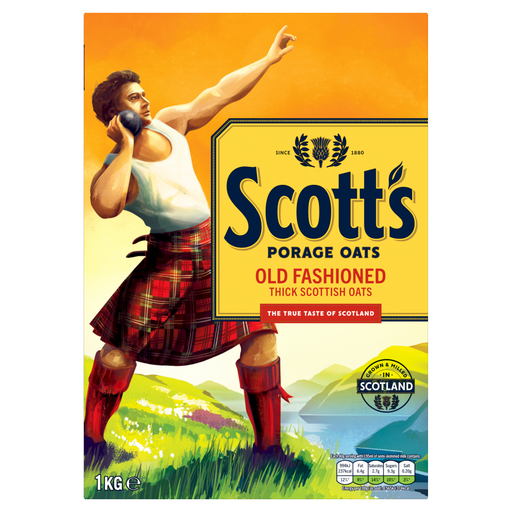
Scotts Porage Oats Old Fashioned Porridge Oats 1kg
Consider this for everyday oat baking or a rustic recipe that can accommodate a heartier rolled-oat texture.
1kg pack stated to contain 100% rolled oats, without flavourings, colours or preservatives. It may contain wheat and barley, so it is not a gluten-free substitute.
Joybuy
 No image available
Flahavan’s Organic Porridge Oats 2kg (2 x 1kg)
A plain-oat option for households following a recipe that provides its own binder or wheat-flour structure.
Two 1kg packs stated to contain 100% organic wholegrain oat flakes. The listing does not establish gluten-free labelling, so choose an expressly labelled product where that is required.
Joybuy
 No image available
Flahavan’s Organic Porridge Oats 1kg
A plain 1kg oat ingredient for soda-style oat bread or other recipes designed to bind oats.
The listing states 100% organic wholegrain oat flakes, with no added flavours or sweeteners. Use a recipe formulated for oats rather than treating the flakes as a direct replacement for strong bread flour.
Joybuy
Frequently asked questions
Are porridge oats a direct replacement for strong bread flour?
Not as a general rule. Use a recipe designed for oats: Flahavan’s porridge bread uses yoghurt, egg and bread soda, while Mornflake’s oat-flour naan retains strong white flour. These examples support using oats as a planned component of yeast dough rather than replacing wheat flour gram for gram.
Should I buy jumbo oats or regular porridge oats for bread baking?
Choose regular rolled porridge oats where the recipe simply calls for porridge oats and a uniform texture is wanted. Choose jumbo oats for visible flakes in a seeded loaf or topping; Mornflake says jumbo oats are thicker and take longer to absorb liquid.
Can I use ordinary oats for a gluten-free oat loaf?
Only when the finished bake does not need to be gluten free. Coeliac UK says standard oats may be contaminated with wheat, barley or rye, and that “100% oats”, “pure oats” and “organic” do not show whether oats are gluten free. For a gluten-free requirement, select oats expressly labelled gluten free and check all other ingredients.
What does a gluten-free oat label mean in the UK?
The Food Standards Agency states that food labelled “gluten-free” must contain no more than 20 mg/kg gluten as sold to the final consumer. Oats must still be emphasised as an allergen when present.


