Budget-focused new-parent households
You may prefer a repeatable breakfast staple with a modest upfront outlay, a clear pack size and an easy way to compare different formats.


For many budget-conscious new-parent households, a plain 1kg bag of rolled oats is a practical starting point when cupboard space is limited or you are still working out how often porridge is eaten. Choose a larger pack only when it will be used regularly and stored well; portioned oats suit rushed mornings, while jumbo oats are better chosen for their thicker texture and baking use rather than speed. Waitrose, Mornflake and Quaker product information also makes clear that pack labels and allergen statements need checking for each purchase.
You may prefer a repeatable breakfast staple with a modest upfront outlay, a clear pack size and an easy way to compare different formats.
Different mornings can call for standard rolled oats, thicker jumbo oats, or portioned formats when preparation time is the main concern.
Choose an explicitly gluten-free-labelled oat product where required, and check the individual pack’s allergen statement every time.
Start with the pack format and expected household use, then check storage, preparation instructions and the current label before deciding which option fits your mornings.
| Priority | What to check | Your needs |
|---|---|---|
| Pack size and household use | Compare pack weight and stated servings; check whether a larger direct-order pack has basket conditions; make sure you can store opened oats cool, dry and airtight. | A 1kg bag can suit a smaller cupboard or an uncertain routine. A larger supply makes more sense when porridge is used often and the pack can be kept in good condition. |
| Preparation time and texture | Check the cooking method on the actual pack; remember that jumbo oats are thicker and take longer to cook than thinner or chopped options; look for stated microwave instructions if speed matters. | On a rushed morning, I may want a straightforward microwave option. If texture or baking matters more, I may accept the longer cooking time of jumbo oats. |
| Plain ingredients and flexibility | Read the ingredient list rather than assuming every porridge product is plain; check serving guidance and whether the format leaves room for your preferred toppings. | I may want an unsweetened oat base that can be used with milk, fruit, yoghurt or savoury toppings instead of a pre-flavoured sachet. |
| Gluten-free and allergen suitability | Look for an explicit gluten-free label where needed; check ingredients and may-contain statements on the current pack; remember that oats remain an allergen. | If someone in the household requires gluten-free oats, wording such as “100% oats”, “pure” or “organic” is not enough on its own. |
Small packs and convenience formats can work differently from loose plain oats when you compare like-for-like pack sizes and servings.
Compare plain oat packs on the same basis, then decide whether the convenience of a pot or sachet is useful for your household routine.
A smaller pack or convenience format may need replacing more often than a larger loose-oat pack.
Direct-order requirements can make a bulk purchase impractical when the household only needs one bag of oats.
Check the final basket conditions and buy a larger pack only when you already need suitable cupboard items and can use the oats regularly.
Mornflake’s direct basket has a minimum-order requirement and delivery conditions, so these should be checked before placing an order.
Jumbo oats are thicker and take longer to cook, whereas thinner or portioned formats may better fit a short morning window.
Choose standard rolled oats for an everyday middle ground, jumbo oats for texture or baking, and quick portioned oats when their stated preparation method fits your routine.
Standard oats can be contaminated with wheat, barley or rye, and these descriptions do not establish gluten-free suitability.
For a gluten-free requirement, choose an explicitly gluten-free-labelled product and check the current ingredients and allergen information each time you buy.
Relevant for a plain 1kg rolled-oat format rather than an individually portioned convenience product.
Relevant for households comparing traditional, jumbo and larger-format porridge oats.
Relevant for comparing plain rolled oats in several pack sizes with individual microwaveable sachets.
Relevant for shoppers choosing between standard rolled oats, organic oats and larger, thicker jumbo oats.
Relevant as an organic jumbo-oat comparison within the Waitrose porridge-oat range.
Joybuy product options for plain loose oats, larger household packs, explicitly gluten-free oats and portioned breakfasts for this topic.
 No image available
A plain 1kg rolled-oat option for repeatable breakfasts with flexible toppings.
The listing states 100% rolled oats, a 40g serving and microwave or stovetop preparation.
It may contain wheat and barley, so check the current pack label if gluten-free suitability is required.
 No image available
An explicitly gluten-free 1kg oat-flake option for households that require this label.
The listing states 100% gluten-free oat flakes, 25 portions and resealable storage guidance.
Oats remain an allergen even in a gluten-free product, so this is not suitable for an oat allergy.
 No image available
A portioned plain-oat option for mornings when measuring oats is less convenient.
The pack contains six 38.5g sachets with a stated microwave preparation time of 2½ minutes.
The listing does not make an explicit gluten-free claim, so check the current label where this is required.
 No image available
A larger plain-oat supply for households expecting to use porridge regularly.
The listing specifies two separate 1kg packs of 100% organic wholegrain oat flakes and a 40g serving reference.
It does not establish gluten-free suitability; check the current label where gluten-free oats are required.
 No image available
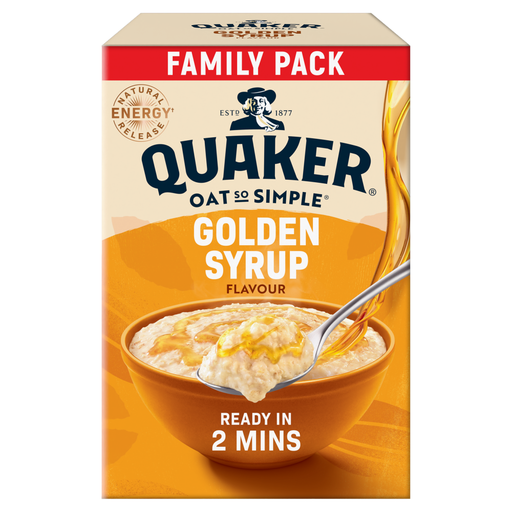
A larger ready-portioned breakfast format for households prioritising microwave preparation.
The listing specifies 20 x 36g sachets in a 720g pack and a stated two-minute microwave method.
This golden-syrup flavoured product contains sugar, so it is not a plain unsweetened oat base. It may contain barley, wheat and soy.
No. Check the pack size, delivery conditions and how quickly your household will use the oats before choosing a larger bag. Mornflake says its creamy porridge oats have a shelf life of around 12 months when stored sealed in a cool, dry place, but the best-before date remains product-specific.
Use the instructions on the pack you buy. Current plain-oat examples from Waitrose and Quaker use 40g oats with 300ml water or milk per serving, while individual Quaker sachets may use a smaller 27g portion.
They can be used, but they are not the fastest format. Mornflake says jumbo oats are thicker and take longer to cook than thinner or chopped oats, so choose them when texture or baking use matters more than speed.
No. Coeliac UK says that “100% oats”, “pure oats” and “organic” do not establish whether a product is gluten-free, and standard oats may be contaminated with wheat, barley or rye. Choose a pack explicitly labelled gluten-free where that requirement applies and check the current label.
Not necessarily. Food Standards Agency guidance states that oats remain an allergen even when a product is gluten-free. Gluten-free wording concerns gluten content rather than an allergy to oats.