
24/7 Customer Support

Free returns

Same-day & Next-day Delivery

Quality Guaranteed

Unlock Your Welcome Offers: FREE Delivery | Up to 80% OFF | Free 30-day JoyPlus trial
Download the APP
Porridge oats are a convenient, affordable choice for many UK households, but the product that looks most appealing on the front of the pack may not suit your everyday routine. Flavoured sachets can contain added sugar, “oat” drinks may include only a modest proportion of oat flakes, and large bags can lose freshness if they are not stored properly.
Before choosing between traditional oatmeal, rolled oats, instant porridge or ready-to-eat porridge, check what is actually inside the pack, how much preparation is required and whether the serving size suits your appetite.
Some instant oat flakes combine oats with wheat, maize, soya, malt extract, non-dairy creamer or milk powder. These products may offer a smooth texture and quick preparation, but they are different from a bag containing 100% wholegrain oats.
Read the ingredients list rather than relying on words such as “multigrain”, “natural” or “wholesome”. Ingredients are listed by weight, so the first item gives a useful indication of the main component.
Fruit flavours, golden syrup and sweetened oatmeal can make breakfast more convenient and enjoyable, but sugar levels vary considerably. A product may contain real fruit pieces while also including sugar or sweetened ingredients.
Compare the “of which sugars” figure per serving, and remember that adding milk, honey or the included glucose sachet will change the final nutritional profile. “No added sugar” also does not mean sugar-free, as naturally occurring sugars may still be present.
A 1kg bag can be economical for regular porridge eaters, but oats may become less appealing if the inner packaging is left open in a humid kitchen. Look for resealable packaging or transfer the contents to an airtight container. Store porridge oats in a cool, dry place and follow the pack’s best-before guidance.
Rolled oats, also called oat flakes, are steamed and flattened. They generally take longer to cook than instant porridge but provide a more noticeable texture. Jumbo rolled oats are larger and can work well for overnight oats, baking and a chewier bowl.
Traditional oatmeal, such as thicker Scottish oatmeal, may offer a fuller texture. Finer oat flour or smooth oatmeal is more suitable if you prefer a soft consistency or are preparing breakfast for someone who finds coarse textures difficult.
Instant porridge and microwave porridge are processed into smaller or thinner pieces, allowing them to cook quickly. Sachets and pots are useful at work, while travelling or on mornings when weighing oats is inconvenient.
For a simple bowl, look for an ingredients list containing only oats. Quaker Jumbo Rolled Oats, Scotts Porage Oats Original and Flahavan’s Organic Porridge Oats are examples in this range with oat-based ingredient lists; check each product’s packaging for the latest information.
Flavoured or composite oat products may contain wheat, barley, soya, milk, nuts or sesame. In the UK, allergens must be emphasised in the ingredients list, but you should still read the full label if you have an allergy or intolerance. Oats themselves are commonly listed alongside cereals containing gluten, and “may contain” statements indicate possible cross-contact rather than a guaranteed ingredient.
Serving sizes differ. A standard dry portion may be around 30–40g, while a filled pot or ready-to-eat can may contain considerably more. Compare nutrition per 100g for a fair comparison, then check the product’s stated serving size for practical planning.
For a balanced breakfast, consider fibre, protein, sugar and salt alongside calories. Plain wholegrain oats typically allow you to control sweetness and toppings yourself. Flavoured sachets can save time but may include sugar, milk powder or flavourings.
Also check the preparation method. Some microwave porridge takes around two minutes, whereas traditional oats may need several minutes on the hob. Ready-to-eat porridge and tinned grain products require no mixing, although they may include sweeteners, sugar, preservatives or a wider blend of grains.
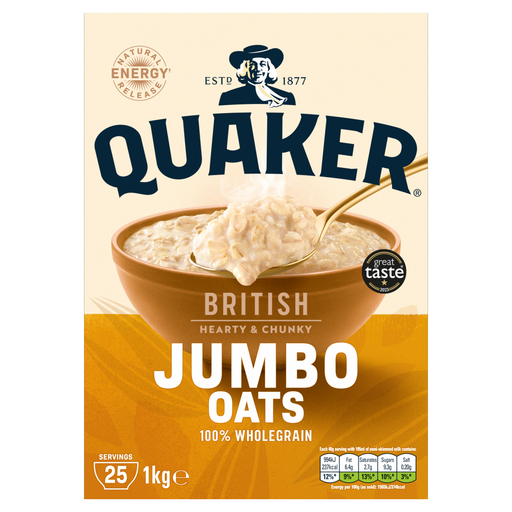
Why This Fits Their Persona: A large pack of plain rolled oats suits students, families and regular porridge eaters who want one versatile breakfast ingredient for a reasonable everyday shop.
The ingredient list is 100% wholegrain oat flakes, avoiding hidden creamer, flavouring and sweetener blends.
1kg quantity; suitable for porridge, overnight oats and baking; listed at 9g fibre and 11g protein per 100g.

Why This Fits Their Persona: Shoppers prioritising organic certification and a plain, traditional breakfast format may prefer this 1kg wholegrain oat flake pack.
The product is presented as 100% organic wholegrain oat flakes, making the ingredient choice clear rather than relying on broad wellness wording.
Organic wholegrain oat flakes; 1kg pack; listed at 8.3g fibre and 11g protein per 100g.

Why This Fits Their Persona: People who regularly cook breakfast or use oats in baking may value thicker rolled oats and the option to prepare them on the hob or in a microwave.
The pack states 100% rolled oats, with no artificial flavourings, colourings or preservatives listed.
1kg pack; thicker rolled oat format; stated hob method of 4–5 minutes and microwave method of 2–3 minutes.
We have compiled a complete, real-time list of products that fully satisfy these strict selection criteria and UK safety regulations.
Plain porridge oats often provide a flexible option because one bag can make multiple servings and can be combined with inexpensive toppings such as banana, apple or cinnamon. Compare the price per 100g rather than the ticket price, especially when comparing a 1kg bag with smaller flavoured porridge sachets or ready-to-eat cans.
Use a microwave-safe bowl larger than the dry ingredients and liquid combined. Follow the pack’s liquid measurement, stir before cooking and pause halfway through if instructed. Oats can foam as they heat, so avoid filling the bowl to the rim. Allow the porridge to stand briefly before eating, as it will continue to thicken.
Dry oats can generally be kept until the best-before date when stored correctly, but quality is better maintained in a sealed container in a cool, dry cupboard. Discard the product if it develops an unusual smell, visible mould, damp clumps or signs of insects. Prepared porridge should be eaten promptly and stored only according to the product’s instructions.