Who this suits

Low-FODMAP elimination-phase shoppers

A predictable porridge base can make it easier to add only ingredients and portions already included in a personal low-FODMAP plan. Plain single-ingredient oats simplify label checking, but the oat form and serving still need checking in the Monash FODMAP app.

People separating FODMAP and gluten needs

Low FODMAP is not the same as gluten free. If coeliac disease, non-coeliac gluten sensitivity or another clinician-directed gluten-free requirement applies, choose an explicitly gluten-free product and follow clinical advice for that condition.

Busy breakfast shoppers wanting portion control

Plain original sachets can offer a rapid breakfast, while loose oats provide more flexibility to weigh or measure the serving specified in a FODMAP plan. Monash FODMAP notes that serving guidance can vary by oat form.

Buying priorities

Choose the simplest suitable oat base first, then check the format, serving guidance and any separate gluten or allergen requirement.

Priority What to check Your needs
Ingredient simplicity Look for oats as the sole ingredient. Check the full label for rye, dried fruit, syrups, dairy, soya protein, flavourings or other additions. I want to choose milk and toppings separately, rather than assess a multi-ingredient cereal all at once.
Serving size and oat format Match rolled, jumbo or quick oats to the relevant Monash FODMAP app entry. Treat a pack serving as a preparation reference, not as FODMAP guidance. I need to measure the amount in my plan instead of assuming that a large bowl, overnight portion or sachet uses the same suitable serving.
Gluten and cross-contact Where gluten avoidance is separately required, look for an explicit gluten-free label. Read allergen and cross-contact statements on the current pack. If I need gluten-free oats for coeliac disease or another clinical reason, ordinary oats with possible wheat or barley contact are not an interchangeable option.

Common buying mistakes

  • Assuming any bowl of oats is low FODMAP

    Monash FODMAP explains that FODMAP ratings can change as serving size increases, and that groats, rolled oats and quick oats can differ in FODMAP content.

    Match the exact product form to the current Monash FODMAP app entry and measure the serving in your personal plan rather than relying on a generic bowl or pack serving.

  • Treating low FODMAP and gluten free as the same requirement

    A FODMAP diet concerns fermentable carbohydrates, while gluten is a protein. Ordinary oat products can also carry wheat or barley cross-contact statements.

    Choose gluten-free labelled oats when gluten avoidance is separately required; otherwise, check oat form, ingredients and serving guidance for the FODMAP plan.

  • Choosing flavoured or granola oats as if they were plain porridge oats

    Rye, dried fruit, syrups, dairy, soya protein, nuts and flavourings can change both FODMAP assessment and allergen suitability.

    During a controlled phase, compare every ingredient against your plan and only use multi-ingredient oat products once their additions and serving have been checked.

  • Relying on an old online label instead of the pack in hand

    Ingredient lists and allergen information can change, which matters when avoiding gluten, wheat, nuts or particular FODMAP-containing ingredients.

    Check the current pack’s ingredient list, allergen statement, best-before date and cooking instructions before eating or restocking.

Relevant oat brand references

Quaker

Traditional rolled and jumbo oats, alongside original microwave sachets, for shoppers choosing between loose oats and a rapid pre-portioned format.

  • Quaker Rolled Porridge Oats and Original sachets are listed as wholegrain oats with no added sugar; the sachets are ready in 2 minutes.
  • Reviewed rolled oats and original sachets state possible wheat and barley contact, while the original sachets also state possible soya.

Mornflake

A plain organic-oat option for shoppers seeking a 100% oat ingredient list and a 40 g on-pack portion reference.

  • Mornflake Organic Porridge Oats list 100% wholegrain organic oats and provide nutrition per 40 g portion.
  • Mornflake says its manufacturing methods make this product unsuitable for wheat or barley allergy sufferers; do not select it for a gluten-free requirement without product-specific confirmation.

Flahavan's

Organic plain rolled and jumbo oats for shoppers looking for a single-ingredient base in either regular or thicker-flake form.

  • The reviewed organic porridge and jumbo packs list 100% organic wholegrain rolled oats.
  • Regular oats and jumbo oats differ in texture and cooking time; a plain-oat ingredient list alone does not establish an appropriate low-FODMAP serving.

Jordans

Organic jumbo wholegrain oats for shoppers who prefer a thicker texture and an organic single-oat product.

  • Jordans Organic Jumbo Porridge Oats list organically produced wholegrain rolled oats and no artificial colours, flavours or preservatives.
  • The reviewed label states possible nuts and other gluten sources, which matters for shoppers managing those allergen or gluten-contact concerns.

Waitrose

Own-label choices include simple Scottish rolled oats and an explicitly gluten-free jumbo-oat product.

  • Waitrose Scottish Porridge Oats list wholegrain oat flakes only, while Waitrose Free From Gluten Porridge Oats list gluten-free oat flakes.
  • Gluten-free status addresses gluten cross-contact, but it does not replace checking FODMAP serving guidance for the specific oat form.

Dorset Cereals

Most relevant as a comparison point for oat-based granolas rather than as the simplest porridge-oat base during a tightly controlled FODMAP phase.

  • Dorset Oat Granola contains oat flakes alongside other cereal and flavouring ingredients.
  • The reviewed granola also contains golden syrup, vegetable oil, rye flakes, sunflower seeds and flavouring, so it should not be treated as equivalent to plain porridge oats.

Joybuy porridge oat options

Joybuy product options for a plain porridge-oat cupboard base, including choices with an explicit gluten-free claim where that is separately required.

Morrisons Free From Gluten Free Oats 1kg

Morrisons Free From Gluten Free Oats 1kg

A plain oat base for separately chosen milk and toppings, with an explicit gluten-free and wheat-free description.

The listing states 100% gluten-free oat flakes and gives a 40 g portion reference.

Confirm the oat-flake form and suitable serving in the Monash FODMAP app, and check the current pack’s ingredients and allergen statement where gluten avoidance is clinically required.

Joybuy

Flahavan's Organic Porridge Oats 2kg, 2 x 1kg

Flahavan's Organic Porridge Oats 2kg (2 x 1kg)

A loose, plain-oat option for planning milk and toppings separately during a controlled phase.

The listing states 100% organic wholegrain oat flakes and a 40 g serving reference; this is a 2 x 1 kg bundle.

The listing does not present this as an explicitly gluten-free option, and the Monash FODMAP app should be checked for the relevant oat form and serving.

Joybuy

Flahavan's Organic Porridge Oats 1kg

Flahavan's Organic Porridge Oats 1kg

A single-ingredient loose-oat choice for shoppers who want to select additions separately.

The listing gives 100% organic wholegrain oat flakes and a 40 g serving reference.

It is not presented as an explicitly gluten-free product; check the current allergen wording and the Monash FODMAP app guidance for the oat form and portion.

Joybuy
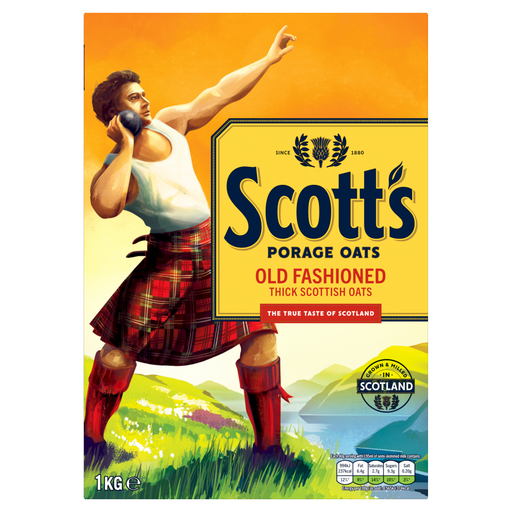
Scotts Porage Oats Old Fashioned Porridge Oats 1kg

Scotts Porage Oats Old Fashioned Porridge Oats 1kg

A plain rolled-oat option for home porridge preparation with separately chosen additions.

The listing states 100% rolled oats and includes 40 g stovetop and microwave preparation instructions.

The listing states possible gluten from wheat and barley, so it is not an interchangeable choice for an explicitly gluten-free product; check the Monash FODMAP app for the rolled-oat serving.

Joybuy

Frequently asked questions

Are porridge oats automatically low FODMAP?

No. Monash FODMAP says food FODMAP status should not be guessed, and that groats, rolled oats and quick oats can have different FODMAP content. Check the exact oat form and current serving guidance in the Monash FODMAP app before treating a portion as suitable.

Should I buy plain oats or flavoured porridge when starting a low-FODMAP diet?

Plain oats are generally simpler to assess because milk and toppings can be chosen within your own plan. Check every ingredient in flavoured, protein or granola products: processed cereals can include wheat-based ingredients or other additions, and oat granola may also contain rye, syrup or flavourings.

Does a low-FODMAP diet mean I need gluten-free oats?

Not necessarily. Monash FODMAP distinguishes a low-FODMAP diet from a gluten-free diet. Gluten-free oats are relevant when coeliac disease, non-coeliac gluten sensitivity or another clinician-directed gluten-free requirement also applies.

What does “gluten free” mean on UK oat packaging?

The Food Standards Agency definition for food sold to consumers sets “gluten-free” at no more than 20 mg/kg gluten. Check the current pack as well as the claim, particularly where cross-contact is important to your dietary requirement.

Should I follow a low-FODMAP diet without professional advice?

For IBS, the NHS says a dietitian may recommend a low-FODMAP diet. Cambridge University Hospitals describes it as a temporary restriction followed by gradual reintroduction, so seek medical advice for symptoms or a personalised dietary plan.