
24/7 Customer Support

Free returns

Same-day & Next-day Delivery

Quality Guaranteed

Unlock Your Welcome Offers: FREE Delivery | Up to 80% OFF | Free 30-day JoyPlus trial
Download the APP
Porridge oats are a practical cupboard staple for UK households, but the packaging can make simple comparisons surprisingly difficult. A low price may hide a smaller pack, while “instant” formats can include added sugar, flavourings or a higher cost per serving. Dietary claims also need careful checking, particularly if you are shopping for gluten-free oats.
Before choosing a bag or box, consider how you will use it, how quickly your household gets through breakfast oats and whether you need plain wholegrain oats, organic porridge oats or a convenient flavoured option.
Rolled oats, jumbo oats and oat flakes usually need cooking or soaking, whereas instant oatmeal is processed into a finer texture for faster preparation. “Jumbo” describes the flake size rather than a guaranteed nutritional difference. Larger flakes may provide a more noticeable bite, while finer oatmeal creates a smoother bowl.
Choose based on preparation habits rather than assuming one format suits every recipe:
Flavoured sachets can save time, but compare the ingredients and sugar content with plain porridge oats. For example, the Quaker Golden Syrup family pack contains wholegrain rolled oats alongside sugar, natural flavourings and salt. Plain oats allow you to add fruit, cinnamon, yoghurt or syrup in the quantity you prefer.
Oats are naturally free from wheat, but cross-contact during farming, transport or production can affect suitability. Check for a clear gluten-free statement, allergen information and any certification required for your household. A product that says “may contain wheat or barley” should not automatically be treated as gluten-free.
For everyday porridge, a short ingredients list is often easy to compare. Several plain products contain 100% oats, without artificial colours, flavours or preservatives. Flavoured products may contain sugar, salt or flavourings, so read the percentage of oats and the nutrition panel rather than relying on front-of-pack wording.
If you have coeliac disease or a medically diagnosed intolerance, follow current medical and packaging guidance. Product recipes and manufacturing arrangements can change, so check the label supplied with your order.
Cooking instructions give a more useful indication of convenience than the word “instant”. Scotts Old Fashioned Porridge Oats, for example, specify approximately four to five minutes on the hob or two to three minutes in a microwave, using 40g of oats with 200ml of liquid. By comparison, the Quaker sachets are designed for a two-minute microwave preparation, followed by standing time.
For overnight oats, baking and batch preparation, rolled oats or jumbo oats are generally more versatile than pre-flavoured sachets.
A 1kg porridge oats bag may offer around 25 portions when using 40g per serving, although household portions vary. A 2kg pack can reduce how often you need to reorder, but only if you can store it in a cool, dry place and seal it properly.
Compare the price per 100g or per serving, not just the shelf price. Sachets may be more convenient, while larger plain packs usually offer greater flexibility for cooking and baking.
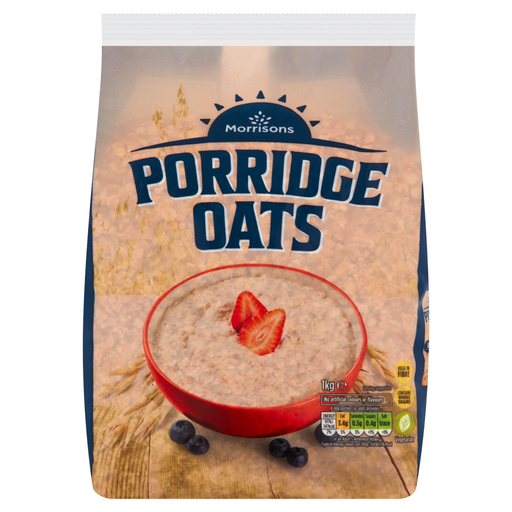
Why This Fits Their Persona: A plain 1kg option for households wanting straightforward porridge oats for regular breakfasts, baking and overnight oats without flavoured sachets.
The ingredients list identifies oat biscuits at 100%, helping shoppers avoid unnecessary flavourings and compare the pack directly with other plain oats.
The pack provides approximately 25 portions at 40g each, with 9.1g fibre and 12.1g protein per 100g as listed.

Why This Fits Their Persona: Designed for regular oat users who value organic wholegrain oat flakes and want a larger supply for breakfasts, baking and family recipes.
It lists 100% organic wholegrain oat flakes as the ingredient, with no listed added sugar, salt or flavouring.
The two 1kg bags provide a total of 2kg, while the listed fibre content is 8.3g per 100g.

Why This Fits Their Persona: A suitable choice for shoppers seeking Scottish porridge oats with a thicker texture for a traditional hob or microwave breakfast.
The stated ingredients are 100% rolled oats, and the preparation times are provided rather than relying only on broad convenience wording.
Made in Scotland and listed at 11g protein and 9g dietary fibre per 100g.

Why This Fits Their Persona: A practical option for customers specifically looking for gluten-free oat flakes for porridge or baking, subject to checking the current pack labelling.
The product is presented as gluten-free oat flakes with 100% oats, giving dietary shoppers a clearer starting point than an unqualified standard oat pack.
The 1kg pack contains approximately 25 portions and lists 8.6g fibre per 100g.
Keep porridge oats in a cool, dry, odour-free cupboard. Once opened, reseal the original packaging or transfer the oats to an airtight container. This helps protect the flakes from moisture and strong smells.
For a basic serving, start with around 40g of oats and add milk or water according to the packet instructions. Adjust the liquid for a thicker or looser texture. Instant oatmeal can be convenient, but plain rolled oats are often more adaptable for overnight oats, crumble toppings and homemade bars.
We have compiled a complete, real-time list of products that fully satisfy these strict selection criteria and UK safety regulations.
Yes. Rolled oats absorb liquid while resting in the fridge and are commonly used with milk, yoghurt, fruit or seeds. Jumbo oats can retain more texture, while finer oatmeal produces a softer mixture.
Follow the packet’s preferred consumption date and storage instructions. Some products recommend using opened oats within two months for best quality, provided they are stored in an airtight container. Discard them if they develop an unusual smell, dampness or signs of pests.
They can cost more per serving than a large plain pack because the product is portioned and may include flavourings. Work out the price per 100g and check the sugar and salt figures before choosing a family pack or individual sachets.