Who this may suit

Salt-conscious high-protein breakfast planners

Choose a plain oat base when you want to manage the salt contribution from the oats and select the protein accompaniment separately. Flavoured protein porridges need a label comparison for salt and ingredients.

Busy gym-goers and commuters

A sachet or pot can be useful when you need a quick breakfast with a stated protein amount per serving and can accommodate the ingredients and allergen information on the pack.

People following clinician-led nutrition advice

Protein targets and salt restrictions can be individual in a clinical diet. Use the label to compare products and follow the advice of your dietitian or clinician for the wider diet.

Buying priorities

Plain rolled oats with separate protein

Choose this when: Salt control comes first and you can prepare the oats and protein component separately.

Trade-off: You need to assess the salt, allergens and suitability of the added protein food as well as the oats.

Protein-enriched sachets

Choose this when: You want a quick, portioned breakfast with a stated protein amount.

Trade-off: Flavoured sachets can include sugar, salt and added protein ingredients such as soya.

Protein porridge pots or larger portions

Choose this when: Portability or a larger stated protein serving matters more than choosing the simplest oat base.

Trade-off: Ingredient lists, allergens and local availability can differ between products.

Priority What to check Your needs
Salt control Compare salt per 100g for dry products and salt per prepared serving where preparation is stated. Keep the comparison basis consistent, especially if milk is added. I want the oats to make as small a salt contribution as practical, while leaving room to choose the protein component separately.
Protein contribution Check protein grams per actual sachet, pot or serving as well as per 100g. Decide whether the product is a protein-containing base or one part of a wider breakfast. I need to know what one bowl contributes, rather than relying on a protein claim alone.
Allergens and dietary compatibility Read the current ingredient list and allergen statement for milk, soya, peanuts, nuts, wheat and barley. Where required, choose a product specifically labelled gluten-free. I need a pack that fits my dietary requirements, including any cross-contact information that matters to me.
Convenience and ingredient control Compare a plain bag of oats with sachets or pots for added sugar, flavourings, salt and protein concentrates. Check whether the format fits your preparation routine. I want a breakfast format that works on busy mornings without giving up more control over ingredients than I am comfortable with.

Common buying pitfalls

  • Treating high protein as the same as reduced salt

    Protein porridge can contain added salt, while the verified Quaker plain rolled oats listing shows 0g salt per 100g. A protein claim does not establish whether the product suits a lower-salt choice.

    Compare salt per 100g and per prepared serving before comparing protein grams. If salt is the leading consideration, start with a plain oat base and check the added protein source separately.

  • Comparing dry and prepared nutrition figures as though they match

    Preparation can change the figures for the finished bowl. The Quaker protein-sachet information distinguishes the dry sachet from a serving prepared with semi-skimmed milk.

    Compare products on one basis: dry per 100g, dry portion, or prepared serving made with the same type and volume of liquid.

  • Overlooking allergens introduced by protein enrichment

    Protein-enriched porridge may add milk or soya, while oat products can also carry warnings for wheat, barley, nuts or peanuts.

    Read the current ingredient list and allergen statement whenever you change flavour, format or brand. If gluten-free labelling is required, look for that specific statement on the product.

Relevant brand references

Quaker

Relevant for plain rolled oats and protein-enriched instant porridge formats in the UK market.

  • Waitrose lists Quaker Rolled Porridge Oats as 100% rolled oats with 0g salt and 11g protein per 100g.
  • Quaker Peanut Butter Protein Sachets include sugar, salt and soya, with may-contain warnings for milk, peanuts and nuts.

Mornflake

Relevant for traditional oats and protein porridge products sold for UK delivery.

  • Mornflake Protein Porridge+ Golden Syrup lists 22.2g protein and 0.38g salt per 100g.
  • The product contains milk protein, sugar and salt, with may-contain warnings for wheat, barley, tree nuts and peanuts.

Flahavan's

Relevant for traditional Irish oats, quick oats and protein porridge pots.

  • Flahavan's states that its High Protein Vanilla Porridge Pot provides 8.5g protein per 45g pot.
  • The manufacturer states that this pot is available only in Tesco Northern Ireland.

Jordans

Relevant for organic porridge oats and a separate protein-oats range.

  • Jordans Organic Porridge lists organically produced wholegrain rolled oats as its ingredient.
  • The organic oats may contain other gluten sources and nuts, while the protein-oats range uses wheat protein.

Waitrose

Relevant as a UK retailer and own-label source for plain oats, porridge pots and explicitly gluten-free oat options.

  • The Waitrose porridge category includes plain oats, protein porridge products, pots and dedicated gluten-free oat products.
  • Retail availability can vary by location and date.

Joybuy product options

Joybuy options for choosing a plain or portioned oat base, or a protein-enriched sachet, while comparing salt, protein and allergen information for a high-protein breakfast.

Scotts Porage Oats Old Fashioned Porridge Oats 1kg

Scotts Porage Old Fashioned Porridge Oats 1kg

A plain oat base for preparing breakfast with a separately chosen protein food.

Lists 100% rolled oats, 0g salt and 11g protein per 100g. Stovetop and microwave preparation are stated.

May contain wheat and barley and is not presented as gluten-free. The added protein food also needs its own salt and allergen check.

Joybuy

Quaker Oat So Simple Big Bowl Original 6 Pack 231g

Quaker Oat So Simple Big Bowl Original 6 Pack 231g

A portioned plain-oat option for a busy routine when you plan to add your own protein accompaniment.

Lists wholegrain rolled oats, 0g salt and 11g protein per 100g in the dry product. Individual sachets have stated microwave preparation.

The listing presents salt figures on different preparation bases; check the current pack's dry and prepared values. It is not presented as gluten-free.

Joybuy
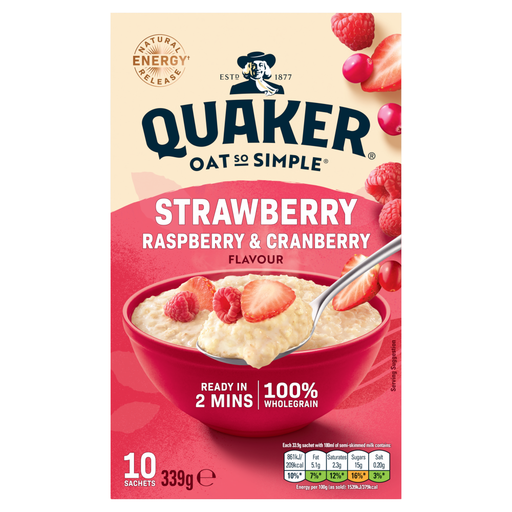
Quaker Oat So Simple Strawberry, Raspberry and Cranberry 10 Sachets 339g

Quaker Oat So Simple Strawberry, Raspberry & Cranberry 10 Sachets 339g

A flavoured, microwaveable oat option when you want a quick breakfast and will add protein separately.

The dry product lists 0g salt and 8.8g protein per 100g, with a stated two-minute microwave method.

Contains added sugar and flavouring. It contains cereals containing gluten and oats, and may contain barley, soya and wheat.

Joybuy
Quaker Oat So Simple Peanut Butter Protein Sachets 8 Pack 344g

Quaker Oat So Simple Peanut Butter Protein Sachets 8 Pack 344g

A protein-enriched sachet for a quick breakfast where a stated protein amount per portion matters.

Each 43g sachet is stated to provide about 9g protein; dry nutrition lists 22g protein and 0.58g salt per 100g. Microwave preparation takes 2½ minutes.

Contains oats and soya and may contain milk, peanuts and nuts. Compare dry and prepared values on the same basis if using water or milk.

Joybuy

Flahavan's Organic Porridge Oats 2kg, 2 x 1kg

Flahavan's Organic Porridge Oats 2kg (2 x 1kg)

A plain oat option for shoppers who prefer to control the protein accompaniment themselves.

Lists 100% organic wholegrain oat flakes, salt below 0.01g per 100g and 11g protein per 100g.

Contains oats and is not presented as gluten-free. Check cooking guidance and the accompanying protein food before buying.

Joybuy

Frequently asked questions

Are plain porridge oats a high-protein breakfast on their own?

Usually not. Waitrose lists Quaker plain oats at 11g protein per 100g, so an ordinary oat portion is a protein-containing cereal base rather than a complete high-protein meal. Choose the accompanying food according to your dietary needs and check its salt and allergen label too.

What should I compare first if I want less salt?

Compare salt per 100g for dry products, then check salt per portion on the exact preparation basis. The NHS advises adults to have no more than 6g of salt a day and recommends checking labels when choosing lower-salt foods.

Can a protein porridge sachet be lower in salt than plain oats?

Do not assume so. The verified Quaker plain oats listing shows 0g salt per 100g, compared with 0.58g per 100g for Quaker Protein Peanut Butter Sachets and 0.38g per 100g for Mornflake Protein Porridge+, according to their product labels.

Do I need gluten-free porridge oats if I avoid gluten?

Choose a product specifically labelled gluten-free rather than assuming all oats meet that standard. Food Standards Agency guidance states that food labelled gluten-free must contain no more than 20mg/kg gluten, and the product-specific allergen and cross-contact statement still matters.

Is high-protein porridge suitable with kidney disease or another medical condition?

Do not use a generic high-protein product as a substitute for individual dietary advice. Cambridge University Hospitals NHS Foundation Trust notes that protein needs vary with age, disease and activity, while University Hospitals Sussex NHS Foundation Trust states that protein requirements for kidney disease can differ from those of the general population.