For regular tea time at home, plain rolled oats are a flexible cupboard base for porridge, baked oats and flapjacks, while quick-cook oats or plain sachets suit occasions when speed and a smoother texture matter more. If food may be taken to school or a child has an allergy, check the exact pack allergen statement and the school’s policy first: ordinary oats are not automatically suitable for every gluten-free or allergy-managed diet.
Who these oats may suit
Parents making a quick warm tea-time option
For households using oats as a light after-school meal or snack and choosing between a versatile plain bag and a faster-cooking format. Mornflake explains that smaller cut flakes absorb liquid faster, while standard rolled oats need longer cooking.
Families building a simple storecupboard base
For shoppers who want plain oats that can be flavoured at home with fruit or other suitable toppings instead of relying on flavoured convenience formats. Waitrose and Flahavan’s list wholegrain oats as the ingredient base in their reviewed plain-oat products.
Families managing school or food-allergy requirements
For carers who may pack food for school or need to consider oat, gluten, milk, nut, wheat or barley warnings. Department for Education guidance for England requires schools to publish allergy safety policies, while allergen information differs between products.
What to check before buying
Choose the format first, then read the pack for preparation, ingredients and allergen information that fits how and where the oats will be served.
| Priority |
What to check |
Your needs |
| Speed and texture |
Check whether the oats are standard rolled, quick-cook or portioned; follow the stated hob or microwave method; allow hot porridge to stand and cool as directed. |
A warm snack needs to be ready quickly, and a smoother porridge may be easier for my child to accept. Quick-cook flakes and measured sachets can reduce preparation time. |
| Ingredient simplicity |
Read the ingredient list; distinguish plain oats from flavoured, protein or pot products; compare food as sold with any nutrition information for a milk-prepared serving. |
I want a plain oat base so I can choose suitable fruit or other additions at home rather than relying on extra ingredients already in the product. |
| Allergens and school rules |
Check the exact gluten-free claim where needed; read allergen and precautionary statements on every pack; confirm the receiving school’s allergy policy before sending food. |
If oats may be packed or shared outside home, I need the product label and serving plan to fit the child’s dietary requirements and the school’s arrangements. |
| Pack format |
Consider how often oats will be used; choose a bag when you are happy to measure portions; choose sachets when measured portions and short preparation are more useful. |
For frequent home use, I may prefer a larger plain bag for porridge and other recipes. Portion sachets can make sense when a quick, measured bowl matters most. |
Common buying mistakes
-
Treating all oats as suitable for gluten-free or allergy-managed diets
Oats can be an allergen in their own right, and standard oat products may carry gluten, wheat, barley, milk, nut or other cross-contact warnings. A gluten-free claim does not make a product oat-free.
For a child with coeliac disease, gluten intolerance or an allergy, check the front-of-pack claim and the full allergen statement on every purchase. Follow the child’s clinical advice and the school’s policy where relevant.
-
Choosing a flavour or protein product without checking added ingredients
Extra ingredients can change allergen suitability and the product’s overall composition. Jordans Protein Oats, for example, contains wheat protein, making it a different option from plain oats.
For a simple tea-time base, compare the ingredient list with plain 100% oat products and add suitable toppings at home. Do not treat “protein” or “wholegrain” wording as a substitute for label checking.
-
Using online product information as the final allergen check
Recipes and product information can change after a redesign, substitution or repeat purchase. Waitrose advises customers to check labels, particularly for allergen information.
Check the physical pack at home before serving or packing food, especially when the product or packaging has changed.
Relevant brand references
Quaker
A UK porridge range covering rolled oats, gluten-free options, protein products and Oat So Simple sachets. It is particularly relevant when a household wants portioned microwave preparation.
- Quaker states that Oat So Simple Original uses wholegrain rolled oats and has a two-minute microwave method.
- Its ingredient information says it may contain wheat, barley and soya, so the individual pack still needs checking for allergy requirements.
Mornflake
A specialist oat miller with traditional, jumbo, quick-cook, instant and gluten-free lines for households choosing between texture and cooking speed.
- Mornflake says its Superfast Oats use smaller cut and rolled flakes for faster liquid absorption and a smoother porridge.
- The manufacturer says this product is not suitable for wheat or barley allergy sufferers because of its manufacturing methods.
Flahavan’s
A porridge-focused brand with standard, organic, jumbo, sachet and pot formats for shoppers considering plain organic oats or portioned options.
- Flahavan’s Organic Oats list 100% organic wholegrain rolled porridge oats.
- Its Organic Porridge Oat Sachets provide eight 35 g portions and may contain traces of milk, so sachet allergen information should be checked separately.
Dorset Cereals
This is primarily a muesli and granola brand in the reviewed UK range, rather than a direct plain-porridge-oat route for this decision.
- Its muesli and granola ranges include wholegrain oats alongside fruits, nuts and seeds.
- Those products are different from plain oats for simple porridge, and nut and seed ingredients need individual label checks.
Jordans
Jordans offers organic porridge alongside oat-based cereal and protein-oat products for households considering organic rolled oats.
- Jordans Organic Porridge lists organically produced wholegrain rolled oats.
- Its product page says it may contain other gluten sources and nuts, while its protein-oat line contains wheat protein.
Waitrose
A UK retailer own-label route with plain oats, instant plain oats and gluten-free-labelled porridge oats for comparing pack formats within one range.
- Waitrose Essential Porridge Oats are listed as rolled wholegrain oat flakes, while its Original Instant Porridge Oats use wholegrain oat flakes in measured portions.
- Waitrose notes that recipes can change and advises customers to check the label, especially for allergen information.
Joybuy product options
Joybuy options covering plain rolled oats, portion sachets and a gluten-free-labelled oat route for children’s tea time at home.
 No image available
Quaker Oat So Simple Big Bowl Original 6 Pack 231g
A portioned option for a quick warm tea-time bowl when an adult wants measured sachets and a short microwave method.
Six 38.5 g sachets; listed ingredient: wholegrain rolled oats; stated 2½-minute microwave preparation.
Check the physical pack for allergen information and follow its preparation and cooling guidance before serving hot porridge to a child.
Joybuy
 No image available
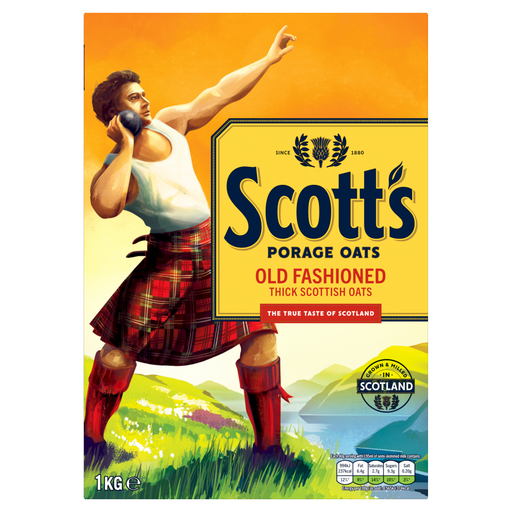
Scotts Porage Oats Old Fashioned Porridge Oats 1kg
A plain rolled-oat bag for households making measured portions at home and using oats in porridge or other recipes.
1 kg pack; listed ingredient: 100% rolled oats; stated 4–5-minute stovetop and 2–3-minute microwave methods.
The listing says it may contain gluten from wheat and barley, so it is not a confirmed gluten-free or wheat/barley-allergy option.
Joybuy
 No image available
Flahavan’s Organic Porridge Oats 2kg (2 x 1kg)
A larger plain-oat bundle for repeated household use when you are happy to measure and cook portions.
Two 1 kg packs; listed ingredient: 100% organic wholegrain oat flakes.
The listing identifies oats containing gluten; check the pack for cooking instructions, allergen information and any school requirements before use outside home.
Joybuy
 No image available
Flahavan’s Organic Porridge Oats 1kg
A plain home-recipe base for adults who want to choose toppings separately for a child’s tea time.
1 kg pack; listed ingredient: 100% organic wholegrain oat flakes.
The listing identifies oats containing gluten. Check the physical pack for cooking guidance, allergen information and school-policy requirements before packing or sharing.
Joybuy
 No image available
Morrisons Free From Gluten Free Oats 1kg
A gluten-free-labelled route for households that specifically need gluten avoidance and still want oats for porridge or baking.
1 kg pack; 25 portions; listed as 100% gluten-free oat flakes and wheat free.
Gluten-free does not mean oat-free: oats remain an allergen. Confirm the exact pack claim, the child’s dietary advice and the school’s policy where relevant.
Joybuy
Frequently asked questions
Are ordinary porridge oats gluten-free?
Do not assume that the word “oats” means gluten-free. The Food Standards Agency states that food labelled gluten-free must contain no more than 20 mg/kg gluten as sold, and it distinguishes oat allergy from gluten intolerance. A gluten-free oat product can still be unsuitable for someone allergic to oats.
Can I send porridge oats to school with my child?
Check the school’s allergy safety policy and the exact product label first. In England, schools must publish an allergy safety policy and manage known allergen risks; this is not a blanket national ban on oats. Follow the child’s healthcare plan and the school’s instructions where there is an allergy or medical dietary requirement.
Which oat format is most practical for a fast tea-time bowl?
Quick-cook oats are useful when speed and a smooth texture matter because Mornflake says smaller flakes absorb liquid faster. Plain sachets can also help with measured portions: Quaker and Waitrose give short microwave methods for their reviewed products. An adult should prepare or closely supervise hot food and allow it to stand and cool as directed.
How should opened oats be stored?
Keep oats cool and dry, then follow the instructions on the individual pack. Waitrose Essential advises an airtight container after opening, while Mornflake says its oats have around a 12-month shelf life when stored sealed in a dry, cool place. The pack’s best-before date remains the key reference.


