Buying priorities
Compare the dry oat product first, then choose the format that fits the time, texture and household requirements that matter to you.
| Priority |
What to check |
Your needs |
| Declared salt value |
Compare salt per 100g on dry products. Check whether the ingredient list is plain oats. Treat “reduced salt”, “no added salt” and a 0g declaration as different kinds of information. |
I want a simple porridge base with a clearly stated salt value, rather than relying only on wording on the front of the pack. |
| Cooking time and format |
Check whether oats are rolled, jumbo, superfast or portioned sachets. Look for the stated preparation method. Compare each flavour separately from an original plain version. |
A fast warm bowl may matter more to me than a coarse texture, or I may prefer slower-cooking oats for a more substantial bowl. |
| Allergen information |
Read the current allergen and may-contain statements. Check manufacturing warnings as well as the ingredient list. Confirm suitability for the individual who will eat the oats. |
A plain oat name alone is not enough if someone in my household avoids particular cereals or nuts. |
Joybuy product options
Joybuy options for plain porridge oats with declared dry-product salt values, including rolled and jumbo formats for home preparation.
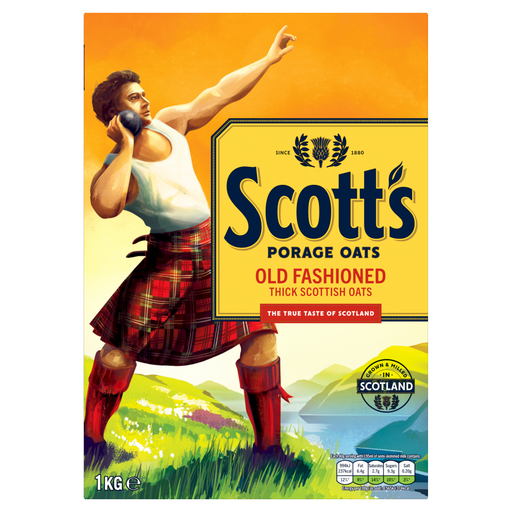 Image unavailable
Scotts Old Fashioned Porridge Oats 1kg
A plain rolled-oat option for a warm bowl prepared with your choice of water or milk.
The listing states 100% rolled oats and 0g salt per 100g, with stovetop and microwave preparation methods.
It may contain gluten from wheat and barley; the 0g figure applies to the dry oats, not added milk or toppings.
Joybuy
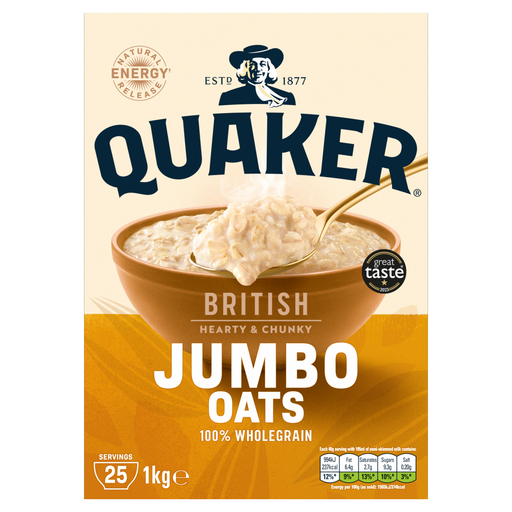 Image unavailable
Quaker Jumbo Rolled Oats 1kg
A jumbo oat base for shoppers planning porridge, overnight oats or baking.
The listing states 100% wholegrain oat flakes and 0.01g salt per 100g.
It may contain traces of wheat. Check the pack instructions if cooking time or a particular finished texture is important.
Joybuy
 Image unavailable
Flahavan's Organic Porridge Oats 2kg (2 x 1kg)
A two-pack plain-oat option for repeated home use and custom toppings.
The listing states 100% organic wholegrain oat flakes and less than 0.01g salt per 100g.
The listing identifies oats as gluten; check the current pack for individual gluten-related requirements.
Joybuy
 Image unavailable
Flahavan's Organic Porridge Oats 1kg
A plain single-pack oat base for home porridge made with chosen toppings.
The listing states 100% organic wholegrain oat flakes and less than 0.01g salt per 100g.
The listing identifies oats as gluten; check the current pack for individual gluten-related requirements.
Joybuy
Frequently asked questions
Does “reduced salt” mean that porridge oats contain no salt?
No. Retained UK rules on legislation.gov.uk state that a reduced-salt claim requires a 25% difference compared with a similar product. A nutrition-panel figure of 0g salt is not automatically a reduced-salt comparison claim, so compare the exact value per 100g and check the comparison product where relevant.
Which options provide a straightforward plain oat base with a low declared salt value?
Waitrose Essential Porridge Oats and Quaker Traditional Rolled Oats each declare 0g salt per 100g. Mornflake Superfast Oats declare 0.01g per 100g and Mornflake Original Sachets declare 0.03g per 100g; these are dry-product figures, so milk and toppings can change the finished bowl.
Are quick oats less suitable than traditional oats when checking salt?
Not necessarily. Mornflake Superfast Oats are listed as 100% oats with 0.01g salt per 100g, and their smaller flakes are designed to absorb liquid more quickly. Choose traditional or jumbo oats when texture is more important to you, and quick oats when preparation time is the deciding factor.
Should I check salt before or after adding milk?
Check both, but begin with the dry-product nutrition panel to compare oats fairly. Quaker UK lists 0g salt for its dry Traditional Rolled Oats, while its prepared-with-semi-skimmed-milk values list 0.30g salt, so your milk and toppings matter to the finished recipe.
Does Bonfire Night change the label checks for porridge oats?
No. Treat Bonfire Night as the shopping occasion and use the usual pack checks: ingredients, allergen statement, nutrition panel, best-before date and preparation instructions. Take care with hot liquid when preparing porridge.


