Lower-sugar biscuit bakers
Choose plain oats when you want to control sweetness in homemade biscuits or flapjacks rather than starting with flavoured sachets, granola or sweetened oat mixes.


For biscuits and flapjack-style bakes, start with plain oats whose ingredient list contains only oats, so the recipe controls any sweeteners. Choose jumbo oats for a more defined oat texture, standard rolled oats for flapjack-style baking, and a specifically gluten-free product only where that requirement applies; check both ingredients and the nutrition panel rather than treating “no added sugar” as meaning no naturally occurring sugars.
Choose plain oats when you want to control sweetness in homemade biscuits or flapjacks rather than starting with flavoured sachets, granola or sweetened oat mixes.
Consider whether you want a more distinct oat texture or a more uniform mixture: Quaker UK describes jumbo oats as suitable for baking, while Waitrose lists standard rolled oats for flapjacks.
Choose oats specifically labelled gluten-free when gluten cross-contamination control is needed, rather than assuming every plain oat product meets that requirement.
| Priority | What to check | Your needs |
|---|---|---|
| Added-sugar control | Read the ingredients first; choose an oats-only product when you do not want sweetening ingredients in the oats. Then check the “of which sugars” line per 100g. | I want the biscuit recipe, rather than the oat product, to determine whether sugar, syrup, fruit or chocolate is added. |
| Oat texture | Check whether the product is jumbo, standard rolled or quick oats. Quaker UK states that its jumbo oats are suitable for baking; Waitrose lists its rolled oat flakes for flapjacks. | I want the oat size to match the bake: a more defined oat texture calls for jumbo oats, while a standard rolled-oat base may suit flapjack-style recipes. |
| Gluten and allergens | Where required, choose a pack labelled gluten-free and read its allergen statement. The Food Standards Agency notes that oats remain an allergen even in gluten-free oat products. | If gluten cross-contamination control matters, I need a specifically labelled product. An oat or nut allergy needs separate pack-level checks. |
| Baking suitability | Look for a stated baking or flapjack use where available. Check the flake format against the recipe when a particular biscuit texture is important. | I want plain rolled oats that work for the intended bake, not simply a breakfast format chosen for convenience. |
A no-added-sugar claim concerns sweetening ingredients that have been added; it does not mean naturally occurring sugars are absent. Looking only at front-of-pack wording can miss the nutrition information and any sweet ingredients used elsewhere in the recipe.
Read the ingredient list first, then compare the “of which sugars” line on the nutrition panel. Use an oats-only product when you need full control over recipe sweeteners.
Some convenience oat products contain sugar, and Dorset Cereals says some of its granolas use honey or golden syrup for crunch. These ingredients can add sweetness before any recipe sugar, fruit or chocolate is included.
For lower-sugar biscuit baking, choose a product with oats as the sole ingredient unless the recipe deliberately calls for a sweetened cereal component.
Standard oats can carry wheat, barley or nut cross-contact warnings. Food labelled gluten-free must meet the relevant gluten threshold, but oats remain an allergen in their own right.
If gluten cross-contamination control is needed, buy a product specifically labelled gluten-free and check every pack’s allergen statement. Do not rely on a gluten-free or sugar-related claim where an oat or nut allergy is involved.
Relevant when choosing between standard rolled oats and thicker jumbo oats for baking.
Relevant for plain organic porridge oats when comparing whole-oat products with quicker or flavoured formats.
Relevant for a brand-labelled sugar-free plain-oat route and for quick oats intended for convenience.
Relevant for plain organic and chunky rolled oats, with careful allergen checking.
Relevant as a reminder to distinguish plain baking oats from sweetened cereal and granola.
Relevant for plain rolled oats for flapjacks and a separate gluten-free jumbo-oat route.
Joybuy options for plain oat biscuit baking, including a gluten-free route and jumbo oats for a more defined oat texture.
 No image available
A plain oat base for biscuit baking where a gluten-free product is required.
Listed ingredients: gluten-free oat flakes. Sugars are listed as 1.1g per 100g; oats remain an allergen.
 No image available
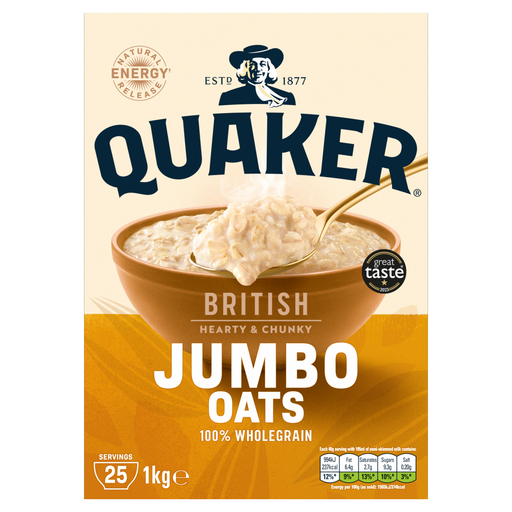
Jumbo rolled oats for biscuit or flapjack-style baking when a more defined oat texture is preferred.
Listed as 100% wholegrain oat flakes, with 1.0g sugars per 100g. May contain traces of wheat, so this is not a confirmed gluten-free route.
 No image available
A plain organic oat base that leaves the choice of sweetener to the biscuit recipe.
Listed ingredients: 100% organic wholegrain oat flakes; sugars are listed as 0.9g per 100g. Check the flake size against your recipe where texture matters.
 No image available
Two 1kg packs of plain organic oats for repeat biscuit baking where recipe sweeteners remain under your control.
Listed ingredients: 100% organic wholegrain oat flakes; sugars are listed as 0.9g per 100g. Check the flake size against the recipe before buying.
No. UK nutrition-claim rules state that a no-added-sugar claim means no sugars or other foods used for sweetening have been added; it does not mean naturally occurring sugars are absent. Quaker UK lists 1.1g sugars per 100g for its Traditional Jumbo Oats and identifies them as naturally occurring, so check both ingredients and the nutrition table.
Usually not when you want to control added sugar. Quaker Sweet Cinnamon sachets list sugar as an ingredient, while Quaker Traditional Jumbo Oats and Flahavan’s Organic Oats list oats only. Use plain oats, then choose the amount and type of sweetener in the recipe.
Only when gluten cross-contamination control is required. The Food Standards Agency states that food labelled gluten-free must contain no more than 20mg/kg gluten; standard plain oats can carry wheat or barley warnings, so choose a specifically labelled product where needed.
No. The Food Standards Agency notes that oat itself can cause an allergic reaction even when an oat product is gluten-free. Check the product’s allergen statement rather than choosing based on a sugar or gluten claim.
Choose jumbo oats when you want a more defined oat texture. Quaker UK describes its jumbo oats as whole, uncut oats milled to a thicker specification and suitable for baking; for flapjack-style bakes, Waitrose Essential Porridge Oats are explicitly described as suitable for flapjacks.