Who this may suit

Carers buying oats for someone following a diabetes plan

Choose plain or plain instant oats without honey, golden syrup or other added free sugars, while checking the preparation ingredients and the person's individual diabetes plan. Diabetes UK advises avoiding breakfast cereals with added free sugars such as honey and golden syrup.

People needing simple, supported breakfast preparation

Match the format to the available equipment and support: loose oats for carer-prepared bowls, quick oats for shorter cooking, or plain sachets where measuring is difficult.

Carers supporting poor appetite or eating difficulties

Reduced sugar is not the only consideration where food intake is low. NHS guidance notes that inadequate intake can lead to malnutrition and says swallowing difficulties should be discussed with a GP.

Buying priorities

Plain loose rolled oats

Choose this when: A carer can measure oats and prepare a hot bowl using the available equipment.

Consider: Cooking, portioning and hot-food handling are still needed, and prepared porridge may have product-specific storage instructions.

Plain quick-cook oats

Choose this when: A shorter cooking time or smoother texture is more useful than a traditional rolled-oat texture.

Consider: Water or milk, a bowl and safe handling are still required.

Plain portioned sachets

Choose this when: A fixed portion and microwave preparation can reduce the need to measure loose oats.

Consider: Compare the dry sachet with other dry products, not with a serving made using milk.

Priority What to check Your needs
Added free sugars Read the ingredients list for honey, golden syrup or sweetened flavourings. Compare sugars per 100g dry oats, or compare bowls made with the same liquid and portion size. I want a plain oat base rather than a sweetened porridge flavour. Diabetes UK says both porridge oats and instant porridge can fit a lower-free-sugar breakfast approach when versions with added free sugars are avoided.
Preparation support Check whether a hob, microwave, bowl, measuring support and safe handling of hot food are available. Review product instructions for storage and reheating limits. I need a format that can be prepared safely within the support available, whether that means loose oats, quicker-cooking flakes or a pre-measured sachet.
Nutrition support Confirm whether weight loss, poor appetite or a prescribed nutrition plan changes the priority. Swallowing difficulty needs clinical assessment rather than a change of oat type alone. When intake is poor, the aim may be a nutrient-dense bowl rather than simply reducing sugar. NHS guidance says inadequate food intake can lead to malnutrition.
Allergens and diet Check the current pack's ingredients and allergen panel, including cross-contact statements. Also check the liquid and toppings used to make the porridge. I need the exact product and preparation method to fit an allergy, coeliac requirement or prescribed diet; a plain-looking oat product does not establish suitability.

Common buying pitfalls

  • Choosing a sweetened flavour without checking the ingredients

    A product sold as porridge can still contain added free sugars from honey, golden syrup or flavouring ingredients. The oat base may be plain while the finished choice is not.

    Choose ingredients that list only oats or oat flakes where avoiding added free sugars is the aim, then check that any additions fit the recipient's care plan.

  • Treating a dry-oat sugar figure as the nutrition of the finished bowl

    Milk, toppings and serving size can change the sugars, energy and allergens in the prepared porridge. Quaker, for example, lists different figures for a dry sachet and for a serving made with semi-skimmed milk.

    Compare dry products per 100g, or prepare each option with the same liquid, portion size and toppings before comparing finished bowls.

  • Using reduced sugar as the only criterion when appetite is poor

    For someone at risk of malnutrition, a lower-sugar-only choice may not match a plan that prioritises energy, protein or fortified foods.

    Confirm the appropriate priority with the GP, dietitian or responsible care professional, and follow any specified fortification method.

  • Assuming plain oats suit every dietary requirement

    Products may carry oat, gluten-related cross-contact, milk-preparation or nut-handling information, and recipes or allergen statements can change.

    Check the current physical pack before a first purchase or substitution, and confirm the recipient's allergy and prescribed-diet requirements.

Relevant brand references

Waitrose

Relevant for own-label loose and instant plain porridge oats.

  • Waitrose Essential Porridge Oats lists wholegrain oat flakes only, with 0.9g sugars per 100g and under 0.5g sugars per 40g serving made with water.
  • Waitrose says recipes and allergen information can change, so the current pack remains the final check.

Mornflake

Relevant for a plain, faster-cooking oat format where a smooth porridge and shorter preparation time are useful.

  • Mornflake Superfast Oats lists 100% wholegrain oats and 0.4g sugars per 40g portion.
  • Its statements about faster cooking and smoother texture are manufacturer claims, and the oats still need preparation with water or milk.

Quaker

Relevant for plain portioned microwave sachets where measuring ability or preparation time is limited.

  • Quaker Oat So Simple Original lists wholegrain rolled oats and 0.3g sugars in a dry 27g sachet.
  • Its prepared-with-semi-skimmed-milk figure is 8.4g sugars and is not directly comparable with water-prepared loose oats. The manufacturer also flags possible wheat, barley and soya.

Flahavan's

Relevant for plain organic rolled oats where an organic option is required.

  • Flahavan's Organic Oats lists 100% organic wholegrain rolled porridge oats and is described as sugar free on the brand page.
  • Check the physical pack before comparing sugar values with other products.

Jordans

Relevant for plain organic rolled oats only after checking nut-allergy suitability and the exact pack.

  • Jordans Organic Porridge lists organically produced wholegrain rolled oats and 1.0g sugar per 100g.
  • Its product page says the product is made where tree nuts are handled and advises people with a nut allergy not to eat it.

Dorset Cereals

Named in the topic, but its reviewed UK range information relates to muesli and granola rather than a plain porridge-oat option.

  • The brand's range includes oat-based cereals.
  • Some granolas use honey or golden syrup for baking, so they are not interchangeable with plain porridge oats for this purpose.

Joybuy product options

Joybuy product options for plain loose oats and portioned instant sachets in this meals-on-wheels buying scenario.

Quaker Oat So Simple Big Bowl Original 6 Pack 231g

Quaker Oat So Simple Big Bowl Original 6 Pack 231g

A portioned option for situations where measuring support is limited and microwave preparation is available.

Six 38.5g sachets; wholegrain rolled oats listed as the ingredient; 0.4g sugars per dry sachet; stated preparation time of 2½ minutes.

Preparation liquid changes the finished bowl's sugars, energy and allergen profile. Check the current pack and whether hot microwave preparation is suitable for the recipient.

Joybuy
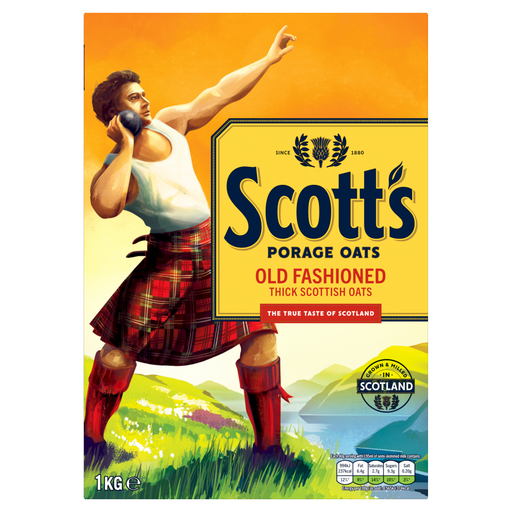
Scotts Porage Oats Old Fashioned Porridge Oats 1kg

Scotts Porage Oats Old Fashioned Porridge Oats 1kg

A plain loose-oat option where a carer or recipient can measure oats and prepare a hot bowl.

1kg pack; 100% rolled oats; 1.1g sugars per 100g; stated 4–5 minute stovetop method or 2–3 minute microwave method.

Requires measuring and cooking. The listing notes possible wheat and barley, so check the current pack for allergy, coeliac and prescribed-diet suitability.

Joybuy

Flahavan's Organic Porridge Oats 1kg

Flahavan's Organic Porridge Oats 1kg

A plain loose-oat choice for carer-prepared bowls where an organic oat base is preferred.

1kg pack; organic wholegrain oat flakes listed as the ingredient; 0.9g sugars per 100g and 0.4g per 40g serving.

Check the pack for cooking instructions, allergen information and whether the finished texture is appropriate for the recipient.

Joybuy

Flahavan's Organic Porridge Oats 2kg, 2 x 1kg

Flahavan's Organic Porridge Oats 2kg, 2 x 1kg

A larger plain-oat pack for repeated carer preparation where storage and ongoing use are suitable.

Two 1kg packs; organic wholegrain oat flakes listed as the ingredient; 0.9g sugars per 100g and 0.4g per 40g serving.

Check cooking instructions, allergen information, storage arrangements and the recipient's current dietary plan before choosing a larger quantity.

Joybuy

Frequently asked questions

What does reduced sugar mean when choosing plain porridge oats?

Treat it as a buying goal rather than assuming it is a regulated claim on every product. Choose an oat base without honey, golden syrup or similar added free sugars, then compare nutrition panels on the same basis; plain oats can still contain small amounts of naturally occurring sugars.

Can someone with diabetes have porridge oats?

Diabetes UK says porridge oats and instant porridge can both be suitable, while advising against versions with added free sugars such as honey and golden syrup. This is general guidance and does not replace an individual diabetes plan or clinical advice.

Why can a sachet show more sugars after preparation than in the dry oats?

The liquid may account for much of the difference. Quaker lists 0.3g sugars in a dry 27g Original sachet and 8.4g for a serving prepared with 180ml semi-skimmed milk, identifying the latter as naturally occurring sugars. Compare dry products per 100g, or compare bowls made with the same liquid and portion size.

Are lower-added-sugar oats suitable when the recipient is losing weight or has little appetite?

Not automatically. NHS guidance says inadequate intake can lead to malnutrition, so the GP, dietitian or care team should confirm whether the priority is a lower-added-sugar option, fortification or another nutrition approach.

What should happen if the person coughs, chokes or struggles to swallow porridge?

Contact a GP rather than trying to solve the issue solely by changing oat type or making the porridge thinner. NHS guidance says swallowing difficulties need assessment and may require speech-and-language therapy or dietetic input.