Parents making quick holiday lunches
Plain rolled oats suit families with time to cook and portion lunch, while plain instant oats can be more practical when a warm meal needs preparing quickly.


For a school-holiday lunch with less added sugar, start with plain oats whose ingredient list contains only oats, then choose toppings separately. “Sugar free” and total sugars are not the same thing: nutrition tables can include naturally occurring sugars, while flavoured oat products and granolas may contain sugar or syrups. Plain instant oats can be useful when time is short, but check the allergen statement and preparation instructions on the pack.
Plain rolled oats suit families with time to cook and portion lunch, while plain instant oats can be more practical when a warm meal needs preparing quickly.
Families looking to reduce free sugars need to distinguish added sugar and syrups from sugars naturally present in foods such as milk, fruit and oats. NHS guidance makes this distinction when explaining total sugars on food labels.
For a child with an allergy, intolerance or coeliac disease, the current pack allergen declaration matters. The Food Standards Agency notes that oats can themselves be an allergen, and products may carry wheat, barley, milk or nut warnings.
Choose this when: You can cook and portion a warm lunch and want control over the milk, fruit or savoury toppings.
Consider: Rolled oats take several minutes to prepare, and a plain ingredient list does not settle gluten or allergy suitability.
Choose this when: A quick hot lunch is needed and an adult can prepare it safely according to the packet directions.
Consider: Check each sachet or pot for milk, nuts, sweeteners and storage or reheating instructions.
Choose this when: The exact ingredients and sugar information fit the lunch you plan to serve.
Consider: These products are not interchangeable with plain oats when avoiding manufacturer-added sweeteners is the main aim.
| Priority | What to check | Your needs |
|---|---|---|
| Added-sugar control | Read the ingredients list first. Compare the “of which sugars” figure per 100g, and look for sugar, syrup, honey or sweetened chocolate in flavoured products. | I want to decide how sweet lunch is. Plain oats let me add fruit, yoghurt or savoury toppings separately. |
| Preparation time | Check the stated hob or microwave method, standing time and serving instructions. Use the current packet directions for the exact product. | I need a warm lunch that fits the time available without automatically choosing a sweetened flavour. |
| Allergens and gluten | Check the allergen declaration and any may-contain statement on every pack. Only rely on a gluten-free claim where that requirement applies. | I need a product whose current labelling works for my child’s specific allergy, oat allergy or gluten requirement. |
Naturally occurring sugars can appear in the total-sugars figure. NHS guidance distinguishes these from free sugars added to food and drink, including sugars in honey and syrups.
Compare the ingredients list with the sugars value per 100g. For an added-sugar-focused lunch, choose oats listing only oats and add toppings yourself.
Flavoured porridge, porridge pots and granola can contain sugar or golden syrup. Quaker Hazelnut Chocolate sachets list sugar and 19g sugars per 100g, while Dorset Oaty Granola lists golden syrup and 16.5g sugars per 100g.
Check each flavour and format separately rather than relying on the brand name or the presence of oats.
Plain oats can still carry cereal, milk or nut warnings. Some instant products also give specific instructions about serving, storage and reheating once prepared.
Check the physical pack before serving, particularly for a child with an allergy or coeliac disease, and cool hot porridge safely according to its instructions.
A broad UK porridge range spanning traditional rolled oats and flavoured microwaveable sachets.
A porridge-oat specialist offering traditional, superfast, organic and instant oat formats.
A porridge-oat brand with organic rolled oats, jumbo oats, quick oats and porridge-pot formats.
A breakfast-cereal brand that is mainly a comparison point here for oat-based granola rather than plain porridge oats.
A cereal brand offering organic and traditional porridge alongside granola products.
A UK retailer own-label option with large rolled-oat packs, instant sachets and porridge pots.
Joybuy options for plain porridge oats and plain instant oats for a school-holiday lunch where control over added sweeteners is important.
 No image available
A portioned plain-oat option for a quick hot lunch when toppings are chosen separately.
Listed ingredients are Quaker wholegrain rolled oats only; 1.0g sugars per 100g; stated microwave preparation is 2½ minutes.
Contains oats. Check the current pack for gluten-free suitability and prepared-food storage or reheating directions.
 No image available
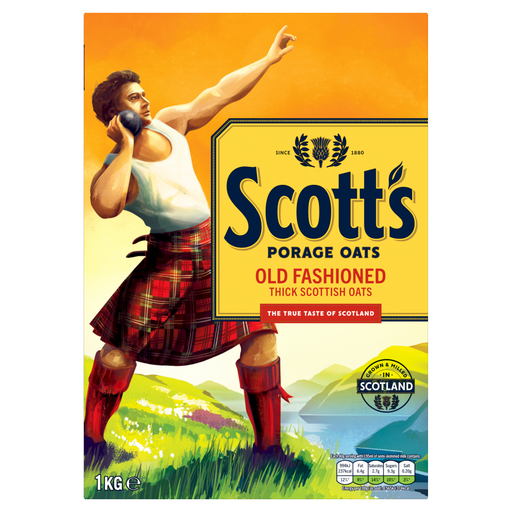
A plain rolled-oat choice for households able to cook and portion a warm lunch.
Lists 100% rolled oats and 1.1g sugars per 100g; stated preparation is 4–5 minutes on the hob or 2–3 minutes in a microwave.
May contain wheat and barley, so do not treat it as a confirmed gluten-free choice.
 No image available
A larger plain-oat bundle for repeated home-prepared lunches where toppings are controlled separately.
Lists 100% organic wholegrain oat flakes and 0.9g sugars per 100g.
Declared as containing oats (gluten). Check cooking directions and consider whether the pack size suits available storage and household use.
 No image available
A plain organic rolled-oat option for a warm lunch with separately chosen toppings.
Lists 100% organic wholegrain oat flakes and 0.9g sugars per 100g. Matching product information gives microwave preparation of about 2½–3 minutes at 900W.
Declared as containing oats (gluten); check the current pack and supervise hot food, as microwave timings depend on wattage.
 No image available
A plain-oat option to consider where a gluten-free labelled product is required.
Lists 100% gluten-free oat flakes, 1.1g sugars per 100g, and gluten-free and wheat-free claims.
Oats remain a declared allergen. Check the physical pack for current gluten-free and allergen information before serving someone with coeliac disease or an allergy.
No. Total sugars on a nutrition label can include naturally occurring sugars. NHS guidance distinguishes free sugars, including sugars added to food and drinks and sugars in honey or syrups, from sugars naturally present in milk, fruit and vegetables. Check both the ingredient list and the “of which sugars” line.
Only if the exact flavour fits your plan. The reviewed Quaker Hazelnut Chocolate sachet includes sugar and lists 19g sugars per 100g; the reviewed Dorset Oaty Granola includes golden syrup and lists 16.5g sugars per 100g. Plain oats give more control over added toppings.
Do not assume so. The Food Standards Agency states that foods labelled gluten-free must contain no more than 20 mg/kg gluten as sold, and notes that oats can themselves be an allergen. Check the current pack for gluten-free labelling and for wheat, barley, milk, nut and may-contain warnings.
Prepare plain oats with water or milk according to the pack, then add suitable unsweetened toppings such as fruit, yoghurt, seeds or savoury ingredients. Milk and fruit can contribute naturally occurring sugars to the total-sugars figure, so follow the packet’s preparation, storage and reheating instructions as well.
School-food guidance from the Department for Education concerns food and drink provided in state-funded schools in England. For porridge prepared at home during school holidays, use the product’s food-label, allergen and safe-preparation information.