What to check before buying
Start with the pack size and unit price, then choose the format, ingredients and label details that fit how the oats will actually be used.
| Priority |
What to check |
Your needs |
| Household value |
Compare £/kg across similar products; check pack size and stated serving guidance; choose plain rolled oats if you want one ingredient for porridge, baking and overnight oats. |
I want a dependable breakfast ingredient at home without routinely paying a large premium for individual portions. |
| Speed and effort |
Check whether flakes are quick-cook or jumbo; look at sachet portion size; follow the exact microwave instructions and wattage guidance on the pack. |
On disrupted mornings, I may value a pre-measured portion or a shorter cooking time more than the lowest unit price. |
| Baby feeding |
Use porridge only once a baby is ready for solids; cook and soften it to an appropriate texture; do not add salt or sugar. |
I want porridge to be one adaptable food in complementary feeding, not a substitute for breast milk or first infant formula. |
| Gluten-free and allergy needs |
Look for an explicit gluten-free label where required; read the exact ingredient list; check every pack for wheat, barley, nuts and cross-contact statements. |
I need the label to meet a specific dietary or allergy requirement rather than assuming plain or organic oats are suitable. |
Joybuy porridge oat options
Joybuy product options for plain household oats, gluten-free-labelled oats, quick sachets and organic oat packs.
 No image available
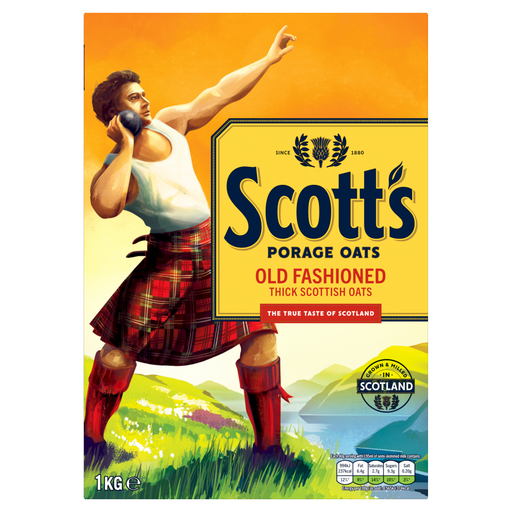
Scotts Porage Old Fashioned Porridge Oats 1kg
A plain 1kg option for routine household breakfasts and adjustable home-made porridge.
Thicker rolled oats; 40g portion guidance; hob and microwave directions; may contain wheat and barley. Check the displayed price per kilogram before comparing value.
Joybuy
 No image available
Morrisons Free From Gluten Free Oats 1kg
A plain oat-flake option for porridge and baking where gluten-free positioning is central to the purchase.
1kg pack; 25 portions; 100% gluten-free oat flakes and wheat-free positioning. Check the physical pack for the allergen and certification details relevant to your requirement.
Joybuy
 No image available
Quaker Oat So Simple Big Bowl Original 6 Pack 231g
Pre-portioned sachets for adult breakfasts when measuring and preparation time matter most.
Six 38.5g sachets; about 2½ minutes in a microwave; stated for use with water or milk. Check the pack label if gluten-free suitability is required.
Joybuy
 No image available
Flahavan's Organic Porridge Oats 2kg (2 x 1kg)
An organic plain-oat two-pack for repeat household breakfasts and cooking.
Two 1kg packs of 100% organic wholegrain oat flakes. Contains oats identified as gluten; check the displayed price per kilogram and preparation instructions before buying.
Joybuy
 No image available
Flahavan's Organic Porridge Oats 1kg
A 1kg organic plain-oat choice for households that prefer to prepare portions at home.
100% organic wholegrain oat flakes; 40g serving information; cool, dry storage guidance. Organic wording does not establish gluten-free suitability.
Joybuy
Frequently asked questions
Are porridge oats a replacement for infant formula or breast milk when starting weaning?
No. NHS guidance says solids should start when a baby is around 6 months old and that breast milk or first infant formula provides most energy and nutrients at the beginning. Porridge can be one food within a varied diet, not a replacement for milk feeds.
Can I make porridge for a baby from ordinary porridge oats?
Yes, once a baby is ready for solids, oats can be cooked and softened as part of an age-appropriate recipe. The NHS porridge recipe for ages 10 to 12 months cooks oats until thickened and allows extra liquid for a runnier consistency; cool food before serving and adapt texture to the child's stage.
Should I choose flavoured porridge sachets for a baby?
Choose a simple product and avoid adding salt or sugar to baby food. NHS guidance says babies should not eat much salt and do not need sugar, so check the exact ingredients and nutrition label of flavoured sachets rather than assuming they are suitable.
Are organic oats automatically gluten free?
No. Coeliac UK states that terms such as “100% oats”, “pure oats” and “organic” do not establish that a product is gluten free. For a gluten-free requirement, look for an explicit gluten-free label and check the individual pack.
How should opened oats be stored?
Keep oats cool and dry and follow the instructions on the exact pack. Waitrose & Partners advises storing opened Essential Porridge Oats in an airtight container, while the checked Mornflake listing advises a cool, dry place and use within two months of opening.


