Buying priorities
Choose the pack size after deciding on the cooked texture, preparation routine and any individual dietary or clinical requirements.
| Priority |
What to check |
Your needs |
| Pack size and storage |
Compare pack weight with breakfast frequency; choose bulk formats only with adequate dry storage; consider plain oats where toppings and portions need to vary. |
I want enough oats for regular shared breakfasts without committing the household to a large supply that may go unused. |
| Texture and cooking routine |
Superfast flakes are intended by Mornflake to cook quickly into a smooth, creamy porridge; jumbo oats make a thicker result. For prescribed textures, test food under intended serving conditions using the applicable IDDSI approach. |
A quick, smooth bowl may suit our morning routine, but I need to confirm that the person eating it is comfortable with the finished texture. |
| Prepared breakfast |
Check whether nutrition information is for dry oats or a prepared serving; consider the milk and suitable accompaniments used in the bowl; do not treat a plain oat bag as a complete nutritional solution. |
I need a flexible porridge base that can be prepared in a way that suits the individual meal. |
| Allergen and clinical checks |
Read the current allergen statement and any gluten-free claim; select a specifically labelled gluten-free product when required; follow Speech and Language Therapy advice for dysphagia. |
I need to avoid assumptions about oats when an allergy, coeliac requirement or prescribed food texture applies. |
Joybuy product options
Joybuy product options for family-size porridge breakfasts, including plain 1kg packs and a larger two-pack supply for households with predictable use.
 No image available
Morrisons Free From Gluten Free Oats 1kg
A 1kg plain-oat option for shared breakfasts where a gluten-free product is required.
Check the current pack label and individual suitability before serving, as oats remain an allergen. A prepared bowl must not be assumed to meet an IDDSI texture prescription.
Joybuy
 No image available
Flahavan's Organic Porridge Oats 1kg
A 1kg wholegrain oat pack for repeat shared breakfasts with flexible portions and toppings.
Flahavan's describes its organic oats as 100% wholegrain. Check the current label if gluten-free food is required, and do not use creamy marketing language as an IDDSI classification.
Joybuy
 No image available
Scotts Porage Oats Original 1kg
A 1kg plain-oat format for regular household porridge breakfasts.
The product is listed as 100% oatmeal and 25 portions. Its ordinary thicker texture should be checked for comfort before regular use; verify the pack label for allergy or gluten-free requirements.
Joybuy
 No image available
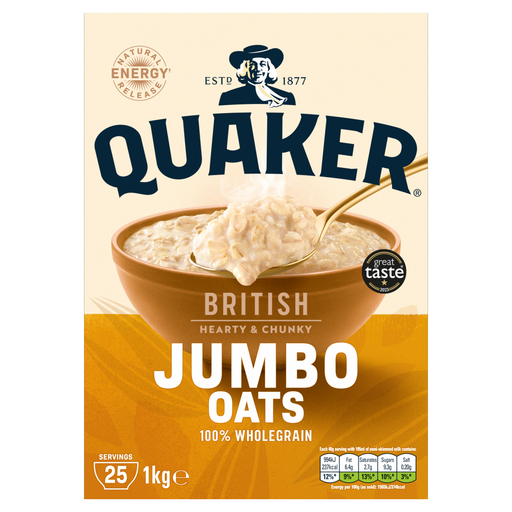
Quaker Jumbo Rolled Oats 1kg
A 1kg plain jumbo-oat option for households that want a more distinct oat texture.
The product lists 100% wholegrain oats. Trial the cooked texture before repeat purchasing where chewing comfort is uncertain, and do not assume it meets a prescribed IDDSI level.
Joybuy
 No image available
Flahavan's Organic Porridge Oats 2kg, 2 x 1kg
A larger supply for frequent shared breakfasts with reliable dry storage.
The total 2kg is supplied as two 1kg packs and is listed as 100% organic wholegrain oat flakes. A single 1kg pack is a lower-commitment choice when use or texture acceptance is uncertain.
Joybuy
Frequently asked questions
Is a larger bag of porridge oats automatically better for an older person?
No. A larger pack is mainly a household-use decision: choose it when porridge is eaten regularly and the person accepts the oat texture. Where appetite is poor, weight is falling or meals are often unfinished, the priority is suitable nutrition assessment and dietetic or clinical advice rather than simply buying more plain oats.
Are superfast oats suitable for someone who finds breakfast difficult to eat?
They can be quicker to prepare as a smooth, creamy porridge because the flakes are smaller and absorb liquid faster, according to Mornflake. This does not establish that the prepared meal is safe for someone with dysphagia; follow the individual Speech and Language Therapy advice and prescribed IDDSI level.
Can porridge oats be used to manage high cholesterol?
Oats contain beta-glucans, but do not assume that every oat product qualifies for an authorised cholesterol claim. GOV.UK nutrition-and-health-claim materials set conditions, including at least 1g of beta-glucans from the specified cereal sources per quantified portion. Porridge is not a substitute for medical treatment or an individual cardiovascular-risk assessment.
What should a UK shopper check if gluten-free food is required?
Choose a product specifically labelled gluten-free rather than assuming all oats qualify. The Food Standards Agency states that food labelled gluten-free must contain no more than 20mg/kg gluten, while oats still need to be emphasised because oat allergy and gluten intolerance are separate issues.
When should the family seek professional advice instead of changing the porridge brand or pack size?
Seek clinical advice where there is ongoing unintentional weight loss, reduced appetite that prevents adequate eating, suspected malnutrition or swallowing difficulty. NHS guidance says that malnutrition treatment depends on the cause and severity and may involve dietitian or other qualified healthcare-professional support.


