Buying priorities
Plain wholegrain oats
Choose this route: for a normal appetite and no gluten-free requirement, when a simple porridge base is wanted.
Keep in mind: oats prepared with water alone may not provide the extra protein or nutrient density needed when appetite is poor.
Protein-enriched sachets
Choose this route: when a more protein-focused breakfast is useful and the ingredients are tolerated.
Keep in mind: enriched products can contain allergens or gluten-containing cereals and do not replace nutrition assessment where intake is poor.
Gluten-free oats
Choose this route: when gluten-free oats are required, including for many people with coeliac disease.
Keep in mind: organic, pure or 100% oat wording does not itself establish gluten-free status.
Texture-managed porridge
Choose this route: only after confirming the person’s prescribed IDDSI food and drink level where swallowing is difficult.
Keep in mind: liquid quantity, cooking and toppings can change the finished texture.
Start with dietary safety and texture requirements, then consider whether the breakfast needs extra protein or simply a straightforward oat base.
| Priority |
What to check |
Your needs |
| Fibre in the wider diet |
Choose wholegrain oats where suitable; compare fibre using the stated serving basis; consider fluids when increasing fibre. |
I want porridge to contribute fibre as part of a balanced diet, rather than treating one bowl as a complete nutritional solution. NHS guidance identifies oats as a source of fibre. |
| Protein and nutrient density |
Check protein per prepared serving; note whether milk or water is used; compare enriched formulations with a plain oat breakfast. |
When appetite is reduced, I need breakfast choices that do not displace protein and other nutrients needed across the day. Royal United Hospitals Bath NHS Foundation Trust highlights the importance of a nutrient-rich diet for people over 65. |
| Pack practicality |
Compare pack size and stated portions; consider whether it is manageable to store; choose a format that fits the preparation routine. |
I want a breakfast product that can be used regularly without creating unnecessary waste or making preparation difficult. |
| Dietary and texture safety |
Look for an explicit gluten-free label where required; read ingredients and may-contain statements; confirm finished texture against any prescribed IDDSI level. |
If I have coeliac disease, an allergy or swallowing difficulty, the product and its preparation must fit that specific requirement before ordinary value considerations. |
Joybuy porridge oat options
Joybuy product options for plain, gluten-free and protein-focused porridge breakfasts, with dietary and texture checks kept separate from ordinary everyday use.
 No image available
Morrisons Free From Gluten Free Oats 1kg
A gluten-free oat option for a person who requires oats explicitly labelled gluten-free.
The listing states 100% gluten-free oat flakes, a 1kg pack, 25 portions, 3.4g fibre and 4.5g protein per 40g portion.
For dysphagia, confirm that the finished porridge meets the prescribed IDDSI texture level before serving.
Joybuy
 No image available
Scotts Porage Oats Original 1kg
A plain oat base for regular home preparation where a normal texture is suitable.
The listing states 100% oatmeal, 25 portions per 1kg pack, 3.6g fibre and 4.4g protein per 40g dry portion.
It may contain wheat and barley, so it is not a confirmed gluten-free choice; check prepared texture where IDDSI guidance applies.
Joybuy
 No image available
Quaker Oat So Simple Big Bowl Original 6 Pack 231g
A portioned plain-oat option for someone who values microwave preparation.
The listing states individual 38.5g sachets, wholegrain rolled oats, 3.5g fibre and 4.2g protein per sachet, with a stated 2½-minute microwave preparation time.
The listing does not establish gluten-free status, and the finished texture should be checked where dysphagia guidance applies.
Joybuy
 No image available
Flahavan’s Organic Porridge Oats 1kg
A simple organic oat base for everyday porridge where no specialist adaptation is required.
The listing states 100% organic wholegrain oat flakes, with 3.3g fibre and 4.5g protein per 40g serving; it also declares iron and thiamine per serving.
It contains oats containing gluten, so it is not a confirmed gluten-free choice; check texture requirements before serving to someone with dysphagia.
Joybuy
 No image available
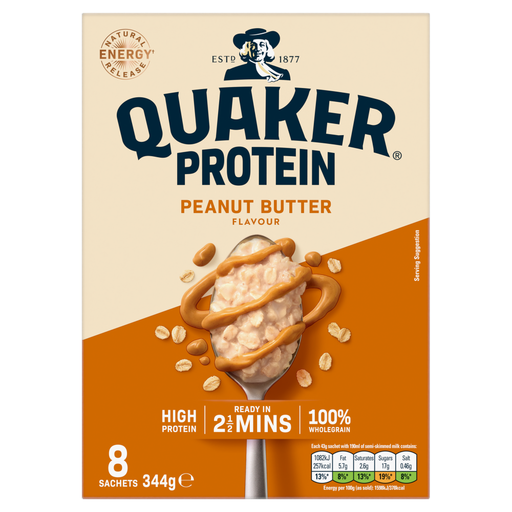
Quaker Oat So Simple Peanut Butter Protein Sachets 8 Pack 344g
A protein-focused porridge sachet option when extra breakfast protein is useful and the ingredients are suitable.
The listing states 9g plant protein per sachet, 22g protein per 100g dry mix, and microwave or hob preparation with water or milk.
It contains oats and soya and may contain milk, peanuts and nuts; it is not a confirmed gluten-free option and needs a texture check for dysphagia.
Joybuy
Questions about porridge oats
Are plain porridge oats suitable for an older adult?
They can be suitable when the person eats a normal diet and does not need a gluten-free, texture-modified or protein-enriched product. Plain oats provide a flexible base, but preparing them with milk or other additions creates a different meal from oats made with water.
Should an older adult choose high-protein porridge instead of ordinary oats?
Choose it when extra protein is useful and the ingredients are suitable. Quaker Oat So Simple Protein Original lists 15g protein per prepared serving with 190ml semi-skimmed milk, but it contains soya and may contain wheat and barley; poor appetite, low body weight or unintentional weight loss should be discussed with an appropriate clinician or dietitian.
Can a person with coeliac disease buy organic or 100% oats?
No. Coeliac UK says that organic, pure and 100% oat wording does not show whether an oat product is gluten-free, because standard oats can be contaminated with wheat, barley or rye. UK food rules set a maximum of 20mg/kg gluten for foods labelled gluten-free.
Is porridge suitable for someone with swallowing difficulties?
Not automatically. The finished porridge must meet the person’s prescribed IDDSI level, including any requirements for food texture and drink thickness. Follow the clinician’s and speech-and-language therapist’s guidance rather than relying on ordinary cooking instructions.
How should prepared porridge be stored and handled?
Follow the instructions on the exact pack. Waitrose & Partners states that prepared Essential Porridge Oats should not be stored or reheated, and allergen information should be checked on the current product pack before serving someone with an allergy or intolerance.


