Buying priorities
Start with the person’s preparation ability and dietary requirements, then compare the exact pack’s ingredients, serving information and storage directions.
| Priority |
What to check |
Your needs |
| Small, manageable meals |
Check whether the oats can be made with milk or another suitable accompaniment. If appetite is poor or weight loss is unplanned, follow Food First or clinical advice rather than relying on a protein label. |
A smaller bowl may be easier to manage when appetite is limited. NHS Food First guidance includes porridge among foods that can be fortified when this is appropriate. |
| Wholegrain and fibre information |
Read the exact nutrition panel and ingredient list. Compare fibre per stated serving, noting that serving sizes can differ between loose oats and sachets. |
I want a regular breakfast with clearly stated wholegrain ingredients and fibre information, without treating one label value as a complete measure of diet quality. |
| Low-effort preparation |
Check hob or microwave instructions, liquid quantity, bowl size, stirring and standing directions. Consider whether handling a hot bowl or liquid is manageable for the person or carer. |
Pre-portioned sachets can remove measuring, while loose oats allow more flexible portions. The useful option is the one that can be prepared safely and consistently. |
| Texture and allergens |
Read allergen and cross-contact wording on every exact pack. For dysphagia, assess the prepared porridge at its intended serving temperature against the prescribed IDDSI level. |
I need a breakfast that fits the person’s allergy requirements and chewing or swallowing needs. A creamy, smooth or quick-cook description does not itself confirm texture suitability. |
Product comparison excerpt
This composite comparison is ordered by the supplied storecupboard scenarios: plain everyday oats, low-effort preparation, oatbran and protein-positioned oats. It is not a market-sales ranking or an independent product test.
| Rank |
SKU name |
Main specifications |
Recommendation reasons |
Supplier or platform |
| 1 |
Waitrose Essential Porridge Oats 1kg |
1kg plain wholegrain oat flakes; cool, dry storage guidance. |
Choose as an everyday plain-oat staple when a larger pack and clear preparation instructions matter more than individual portions. Waitrose notes that product information can change, so check the pack. |
Waitrose |
| 2 |
Mornflake Original Superfast Oats Sachets |
100% wholegrain oat flakes; 27g individual sachets. |
Choose when minimal measuring, individual portions and a smooth preparation are the main practical needs. Mornflake provides allergy warnings that should be reviewed on the exact pack. |
Mornflake |
| 3 |
Mornflake Mighty Oats Original Oatbran 800g |
800g oatbran; 19.4g fibre per 100g; 3g beta-glucans per 45g portion. |
Consider only when oatbran is specifically wanted. Joybuy’s product information describes a different format from rolled oats and advises that it is not suitable for wheat or barley allergy sufferers. |
Joybuy |
| 4 |
Jordans Protein Oats |
Wholegrain oats blended with wheat protein. |
Consider when a protein-positioned oat product is specifically wanted and wheat protein is acceptable. Jordans presents this as a blended format rather than plain oats. |
Jordans |
Joybuy porridge oat options
Joybuy product options for plain oats, pre-portioned sachets, protein-positioned porridge and oatbran within this storecupboard topic.
 No image available
Quaker Oat So Simple Big Bowl Original, 6 Pack 231g
A pre-portioned option where measuring oats is a barrier and a larger sachet serving is wanted.
38.5g wholegrain-oat sachets with a stated 2½-minute microwave method. Check the pack for allergen information and assess prepared texture separately where an IDDSI prescription applies.
Joybuy
 No image available
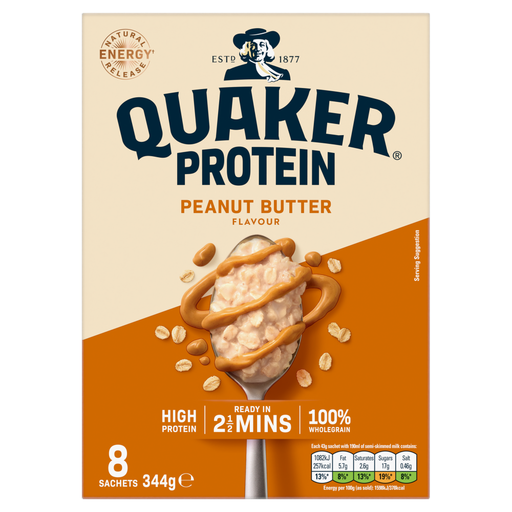
Quaker Oat So Simple Peanut Butter Protein Sachets, 8 Pack 344g
A measured, protein-positioned breakfast option for someone who accepts the listed ingredients and wants quick preparation.
43g sachets with stated water or milk preparation, a 2½-minute microwave method and 9g plant protein per serving. Check the exact pack for oats, soya, milk-derived ingredients, peanuts and nuts.
Joybuy
 No image available
Flahavan’s Organic Porridge Oats 1kg
A simple plain-oat base for regular storecupboard use where the person or carer can measure and cook oats.
Listed as 100% organic wholegrain oat flakes in a 1kg pack, with 3.3g fibre and 4.5g protein per 40g serving. Confirm the cooking method and allergen information on the physical pack.
Joybuy
 No image available
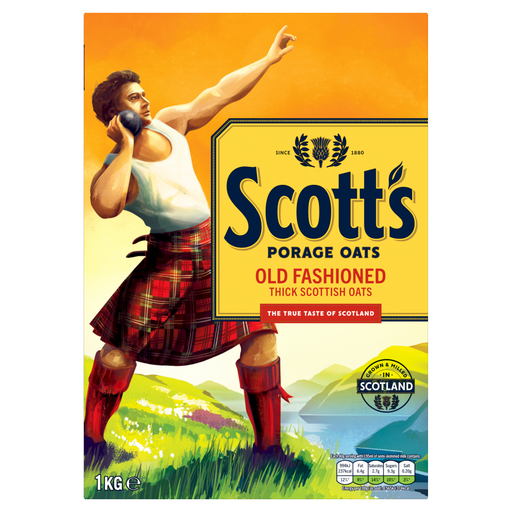
Scotts Porage Oats Old Fashioned Porridge Oats 1kg
A plain rolled-oat choice for people or carers who want a clearly stated hob or microwave routine.
100% rolled oats in a 1kg pack, with stated 40g-to-200ml preparation guidance and stirring instructions. The listing may contain wheat and barley gluten; check the current pack if fibre comparison matters.
Joybuy
 No image available
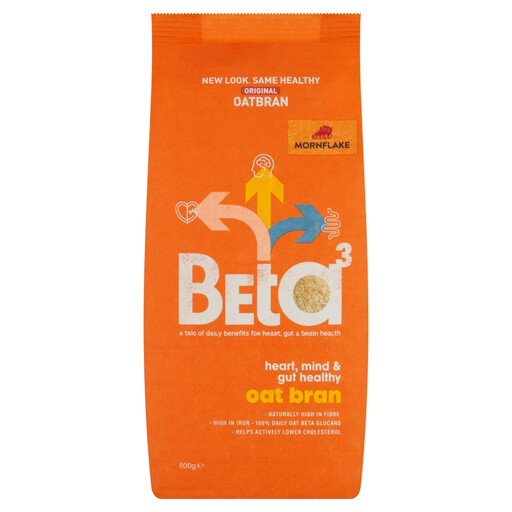
Mornflake Mighty Oats Original Oatbran 800g
An oatbran alternative for someone specifically considering this format rather than standard rolled porridge oats.
Listed as 100% oatbran with 19.4g fibre and 16g protein per 100g, plus 3g beta-glucans per 45g portion. Check preparation directions and note the stated wheat and barley allergy warning.
Joybuy
Frequently asked questions
Are porridge oats enough for an older person with poor appetite or weight loss?
No. Porridge can be a useful base, particularly when made with milk or fortified as advised, but poor appetite or unplanned weight loss needs a broader Food First approach and may need GP, dietitian or community nutrition support. BAPEN’s MUST is an adult screening tool for identifying malnutrition risk.
Can someone with dysphagia choose any smooth or quick-cook porridge?
No. In the UK, IDDSI is used for texture-modified food and drink. The prepared porridge should be checked under its intended serving conditions, and an individual clinician makes the dietary recommendation after assessment.
What should be checked on the packet before buying plain oats?
Check the ingredient list, allergen statement, fibre and protein per stated serving, cooking method, best-before date and storage instructions. Waitrose advises cool, dry storage and an airtight container after opening for its Essential Porridge Oats, but the physical pack remains the final check.
Can plain oats support a cholesterol-conscious diet?
Oat beta-glucan has an authorised Great Britain health-claim framework when its qualifying conditions are met, but not every serving necessarily reaches the relevant amount. Check the exact product’s beta-glucan information and use it as part of a varied, balanced diet rather than as treatment for high cholesterol.
Are flavoured oat sachets interchangeable with plain porridge oats?
No. Flavoured sachets can differ in sugars, salt, serving size and ingredients. For a storecupboard staple, compare the exact nutrition panel and allergen information rather than relying on the brand name or oat percentage alone.


