Families having porridge most mornings
You need enough plain oats for several shared breakfasts without relying on individual portions or keeping an oversized pack that will not be used.


For most households sharing porridge breakfasts, a plain 1kg bag is a practical starting point because it is manageable to store and easy to use for both porridge and baking. Move to larger packs when oats are used regularly and can be kept dry and sealed; choose sachets when quick, measured portions matter more than a plain-oat routine, and check the exact allergen statement for every pack.
You need enough plain oats for several shared breakfasts without relying on individual portions or keeping an oversized pack that will not be used.
You may want to compare like-for-like rolled oats first, then decide whether a jumbo texture or a particular brand is worth choosing for your household.
Measured sachets can suit mornings when short microwave preparation and clear portions make the breakfast routine easier.
Choose this when: You want a cupboard-friendly pack for regular porridge, baking or both.
Consider: Frequent porridge eaters may need to replace a 1kg bag more often than a bulk pack.
Choose this when: The household reliably gets through oats and has dry, sealed storage space.
Consider: A larger pack creates more waste if the texture is not popular at home.
Choose this when: Fast microwave preparation and pre-measured portions are important on busy mornings.
Consider: These products are not interchangeable with plain rolled oats, so check the ingredients and preparation method.
| Priority | What to check | Your needs |
|---|---|---|
| Pack value and use | Compare oats of a similar type; check net weight, retailer conditions and the serving information on the exact pack. | A pack should suit our normal breakfast routine rather than look convenient but be used only occasionally. |
| Pack size and storage | Choose between 1kg, 2kg, 3kg and 4kg formats where available; read the storage instructions and best-before date on the pack. | I want enough oats to avoid constant replenishing, but not so much that an opened pack becomes difficult to manage. |
| Texture and preparation | Check whether the oats are jumbo, whole rolled, quick-cook or sachets; follow the stated preparation method for the chosen product. | Some mornings call for a thicker porridge, while others need a quicker microwave breakfast. |
| Allergen and gluten-free suitability | Read the exact ingredient list and allergen statement; where gluten-free status is required, choose a pack specifically labelled gluten-free. | If someone eating the oats has a dietary requirement, I need the pack label to match that requirement rather than relying on the product category. |
A large pack may be inconvenient if it does not meet a retailer's order conditions or if the household does not use oats often enough.
Check the full order requirements before choosing a direct-order bulk pack, and only combine it with other items that are genuinely needed.
Jumbo oats are thicker flakes, while quick and superfast oats are processed for faster preparation. A family may leave a large pack unused if its texture does not suit them.
Try a 500g or 1kg pack of the preferred oat style before moving to a 2kg–4kg format, especially if children have strong texture preferences.
Gluten-free labelling and allergen information vary by product, and a gluten-free oat product is not suitable for someone with an oat allergy.
Check the ingredient list, allergen statement and any gluten-free label on every exact pack rather than relying on a previous purchase.
Plain rolled porridge oats in a straightforward 1kg format for households looking for a familiar family staple.
An oat-focused range covering traditional, jumbo, quick-cook, gluten-free and larger pack formats.
A mainstream choice with plain rolled and jumbo oats alongside quick microwave sachets.
Irish oat products including standard, organic, jumbo and quick-oat formats for different textures and preparation times.
Traditional and organic porridge choices for shoppers who prefer chunky wholegrain rolled flakes.
Joybuy product options for shared porridge breakfasts, including 1kg plain oats, a larger household bundle, gluten-free labelled oats and individually portioned sachets.
 No image available
A 1kg plain-oat option for shared breakfasts with a manageable replenishment cycle.
The listing states 100% oats, 25 portions and cool, dry storage guidance.
It may contain wheat and barley, so check the exact allergen statement where gluten-free suitability is required.
 No image available
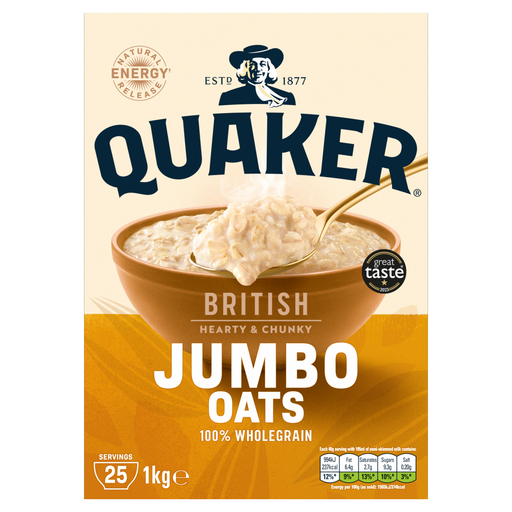
This 1kg pack suits families choosing a jumbo rolled texture for porridge, overnight oats or baking.
The listing states 100% wholegrain oat flakes and provides resealing guidance.
It may contain traces of wheat and is not presented as a gluten-free product.
 No image available
A 1kg option when an explicitly gluten-free labelled oat product is needed for porridge or baking.
The listing identifies 100% gluten-free oat flakes and states 25 portions.
Gluten-free status does not make oats suitable for an oat allergy; check the exact pack label for the intended eater.
 No image available
A larger household supply for regular porridge eaters who prefer two separate 1kg packs.
The listing states 100% organic wholegrain oat flakes and a 40g serving reference.
Keep unopened and opened packs dry, and check the exact allergen statement if gluten-free suitability is required.
 No image available
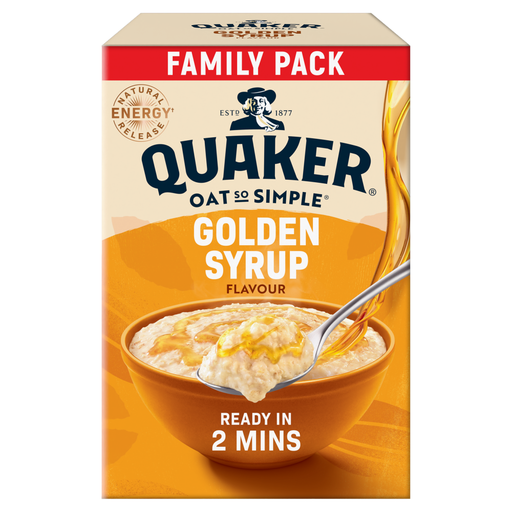
Individually portioned sachets for busy shared mornings when a quick microwave method is useful.
The pack contains 20 x 36g sachets and gives a two-minute 900W microwave method using approximately 180ml milk per sachet.
This is a flavoured porridge product containing sugar and salt in addition to oats; check the allergen statement before serving.
Use the serving size on the exact pack to estimate demand. Where a 40g portion is stated, 1kg is roughly 25 portions and 3kg is roughly 75 portions; a 1kg pack is often a lower-risk first purchase, while 2kg–4kg packs suit households that regularly finish oats and can store them dry.
No. A larger pack makes sense when your household will use it regularly, has room to keep it dry and sealed, and already knows it likes that oat texture. Starting with a smaller pack can reduce the chance of leaving an unsuitable product unused.
Choose a product specifically labelled gluten-free when gluten-free status is required. The Food Standards Agency states that food labelled gluten-free must contain no more than 20 mg/kg gluten as sold; this does not make it suitable for an oat allergy, because oats must still be identified as an allergen.
Read the exact pack label for its best-before date and any storage instructions. GOV.UK states that packaged-food labelling includes relevant net quantity, ingredient, date-marking and storage information; a best-before date relates to quality rather than the same safety function as a use-by date.
They can be useful when pre-measured portions and short microwave preparation solve a genuine morning-routine problem. They are a different product format from plain oats, so check the flavour, ingredients, allergen statement and preparation instructions before treating them as a household staple.