Parents preparing oat-based lunches each week
For households making repeated portions of overnight oats, oat bakes or flapjacks, where a versatile plain ingredient and home portioning matter more than individual packaging.


For regular packed-lunch preparation, plain rolled oats are usually the practical starting point when gluten-free oats are not required. Pay for organic, jumbo or portioned formats when they solve a specific recipe, texture or preparation need, and check both the pack allergen statement and the school’s current allergy arrangements before packing.
For households making repeated portions of overnight oats, oat bakes or flapjacks, where a versatile plain ingredient and home portioning matter more than individual packaging.
For a pupil with coeliac disease or a need for gluten-free oats. Select oats labelled gluten free rather than relying on organic, pure or 100% oats wording, and follow individual clinical advice where oats remain problematic.
For occasional use when individual portions and very short preparation time matter more than buying a larger pack for home portioning.
Start with the planned recipe and any dietary requirement, then compare pack information on a like-for-like basis.
| Priority | What to check | Your needs |
|---|---|---|
| Value for repeated use | Compare the unit label for the same type of oats; check pack size; consider whether you will portion the oats at home. | A plain oat base lets me make several lunch portions without paying mainly for single-serve packaging. |
| Fibre information | Read fibre figures on the exact pack; compare values on the stated basis; plan additions separately rather than treating oats as a complete lunch. | I want a wholegrain cereal ingredient that can contribute fibre as part of a varied packed lunch. |
| Allergen suitability | Check the current allergen statement; choose oats explicitly labelled gluten free when required; check the school’s latest allergy policy. | The label needs to match the pupil’s confirmed dietary requirement and the school’s current arrangements. |
| Preparation and texture | Match flake size to the recipe; confirm available equipment; check whether the intended texture is smooth or chunkier. | I need oats that work with the time, facilities and texture planned for the lunch. |
A smaller or promoted pack can appear cheaper on the shelf while costing more for the same quantity of oats.
Use the unit-price label to compare like-for-like products, then decide whether organic certification, gluten-free labelling, texture or convenience is worth the difference.
Standard oats can be contaminated with gluten-containing cereals, so these descriptions do not establish gluten-free suitability.
Where gluten-free oats are required, choose a product explicitly labelled gluten free and check the current pack. Follow the pupil’s own healthcare advice if oat tolerance is uncertain.
A school may have an allergy safety policy and local packed-lunch practices that affect what may be brought on site.
Check the individual school’s latest policy and any pupil healthcare plan before sending oats or an oat-based bake.
Flake size affects liquid absorption, cooking speed and texture, so the wrong style can make a planned recipe less suitable.
Choose faster-cooking flakes for smoother, quicker preparation and jumbo oats only when a chunkier texture is wanted. Test a new recipe at home before relying on it for school lunches.
A widely listed UK porridge-oat range including rolled oats, jumbo oats and Oat So Simple sachets.
An oat specialist offering standard, faster-cooking, organic and gluten-free porridge-oat options.
An Irish oat brand with plain, organic, jumbo, quick, sachet and pot formats.
An organic jumbo-oat option for shoppers seeking a chunkier traditional flake texture.
A retailer own-label route with basic, Scottish and gluten-free porridge-oat options in its checked UK catalogue.
Joybuy product options for home-prepared packed lunches, including gluten-free, jumbo, organic and plain rolled oats.
 No image available
Choose this option where oats explicitly labelled gluten free are required for home-prepared portions.
1kg pack of 100% gluten-free oat flakes; stated fibre is 8.6g per 100g.
Check the pupil’s individual dietary advice and the school’s current allergy policy before packing.
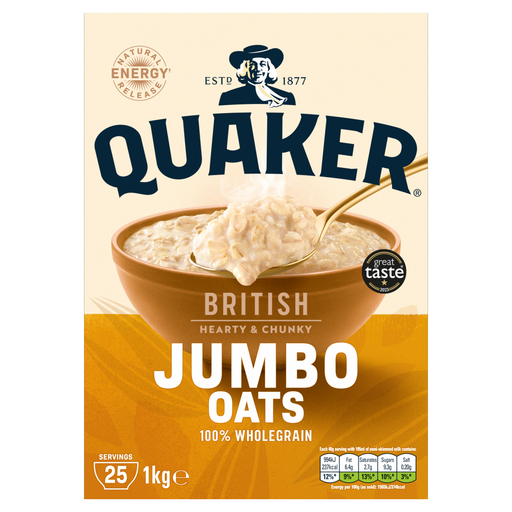 No image available
A jumbo-oat option for recipes where a more substantial flake texture is wanted.
1kg pack of 100% wholegrain oat flakes; stated fibre is 9g per 100g.
May contain traces of wheat and is not presented as gluten free, so do not use it where gluten-free oats are required.
 No image available
Two 1kg packs may suit households preparing oat-based lunches regularly and able to portion oats at home.
Contains 100% organic wholegrain oat flakes; the stated 40g serving provides 3.3g fibre.
The listing identifies oats as containing gluten and does not state gluten-free certification.
 No image available
A plain organic-oat option for home-prepared porridge, overnight oats or oat-based baking.
1kg pack of 100% organic wholegrain oat flakes; stated fibre is 8.3g per 100g.
The listing identifies oats as containing gluten and does not state gluten-free certification.
 No image available
A plain rolled-oat option for households preparing portions at home for several recipes.
1kg pack of 100% rolled oats, with stated stovetop or microwave preparation taking 2–5 minutes.
May contain gluten from wheat and barley, so it is unsuitable where gluten-free oats are required.
Not automatically. Coeliac UK explains that standard oats can be contaminated with wheat, barley or rye, and that terms such as 100% oats, pure oats and organic do not establish gluten-free suitability. Choose oats labelled gluten free where gluten-free oats are required, while recognising that some people with coeliac disease may also need individual advice about oat tolerance.
No. School food standards apply to food provided by schools rather than acting as a universal approval list for home-packed lunches. Department for Education statutory guidance for England, issued in July 2026, requires maintained schools and academies to have allergy-safety arrangements, and individual schools may have their own packed-lunch rules or allergen restrictions.
They are mainly useful when individual portions and very short preparation time matter more than home portioning from a larger pack. Check whether hot water or a microwave is genuinely available and permitted, because a sachet is not automatically ready to eat.
Yes, as one part of a varied diet. NHS guidance identifies porridge oats as a good fibre source and gives an approximate daily fibre target of 25g for 11 to 16-year-olds. Include fruit, vegetables and other wholegrain foods across the day rather than relying on one oat product alone.