Picnic hosts baking ahead
Choose a versatile dry oat for food made before travelling. Mornflake positions jumbo oats for flapjacks, while Waitrose describes its rolled oats as suitable for flapjacks.


For the most flexible picnic cupboard staple, choose plain rolled or jumbo oats when you plan to make flapjacks, baked oats or other food before leaving. Choose quick-cook oats or sachets only when hot water or a microwave will be available, and choose explicitly labelled gluten-free oats when that requirement applies; prepared dishes containing chilled ingredients need cool packing.
Choose a versatile dry oat for food made before travelling. Mornflake positions jumbo oats for flapjacks, while Waitrose describes its rolled oats as suitable for flapjacks.
Quick oats or individual sachets suit a plan with a microwave or hot water. Eat prepared porridge promptly rather than treating it as ambient picnic food.
Check the current pack claim, ingredients and allergen statement. A gluten-free oat product is not automatically suitable for someone with an oat allergy.
Start with how the oats will be used: baking before travel, making porridge with heat available, or meeting a specific dietary requirement. Then check storage, preparation and allergen information on the pack.
| Priority | What to check | Your needs |
|---|---|---|
| Make-ahead versatility | Check whether the oats are plain rolled flakes and whether the product information identifies baking or flapjack use. Jumbo flakes are chosen for a more textured result. | I want one dry ingredient for porridge at home and flapjacks or baked oats prepared before the journey. |
| Speed and portions | Check the heating method, liquid required and preparation time. Sachets reduce measuring but still need suitable preparation shortly before eating. | A quick breakfast only works for my day out if I have a microwave, hot water and time to prepare it. |
| Gluten and allergens | Look for an explicit gluten-free claim where needed, then read the current ingredient and allergen statement. Oats remain an allergen even when labelled gluten free. | I need the pack label to match a gluten-free requirement without confusing it with an oat allergy. |
| Prepared-food chilling | Separate dry oats from finished dishes containing milk, yoghurt or cut fruit. Pack foods normally kept refrigerated in a cool box or bag with ice or frozen gel packs. | If I make overnight oats or milk-based porridge in advance, I need a plan for keeping the finished food cool outdoors. |
Milk-based porridge, overnight oats, yoghurt toppings and pre-cut fruit are foods normally kept chilled. Food Standards Scotland advises eating ready-to-eat food within four hours of taking it out of the fridge; Food Standards Agency guidance for England, Northern Ireland and Wales advises two hours in extremely hot weather.
Keep chilled components in a cool box or bag with ice or frozen gel packs, take portions out only when needed, and plan when they will be eaten.
Ordinary oats may have gluten cross-contact concerns, while gluten-free oats still contain oats. Some standard oat products also carry wheat or barley allergy warnings.
Check the exact current pack claim, ingredients and allergen statement. Use explicitly labelled gluten-free oats only for the relevant gluten-free requirement, not as a substitute for advice on an oat allergy.
Quick oats and sachets shorten preparation, but they still require liquid and safe heating. Waitrose instructions for instant oats state that prepared product should not be stored or reheated once cooled.
Choose this format only when the itinerary includes a microwave, hot-water arrangement or immediate preparation. Otherwise, use dry oats for later cooking or make a chilled ready-to-eat dish before leaving.
Portioned and specialist formats can solve practical needs such as easier measuring or an explicit gluten-free requirement, while a larger plain pack may be more useful for baking.
Compare pack size, preparation method, allergen statement and intended picnic use before choosing.
A UK oat-milling brand offering plain jumbo oats and superfast oats in different flake formats.
An oat specialist with traditional wholegrain rolled oats and lighter-milled quick oats.
A retailer own-label range including standard rolled oats, instant oat sachets and a clearly labelled gluten-free oat option.
A cereal brand with organic wholegrain rolled-oat porridge in its porridge range.
A porridge-oat range with rolled oats, jumbo oats, sachets and porridge pots.
Its oat-containing breakfast range is centred on muesli and granola with baked wholegrain oats, nuts, fruit and seeds.
Joybuy product options for plain, jumbo, quick-cook and explicitly labelled gluten-free oats for summer-picnic planning.
 No image available
For picnic baking or porridge where an explicitly labelled gluten-free oat option is required.
The listing identifies 100% gluten-free oat flakes, breakfast and baking use, and cool, dry storage with resealing after opening. Oats remain an allergen, so check the current pack statement.
 No image available
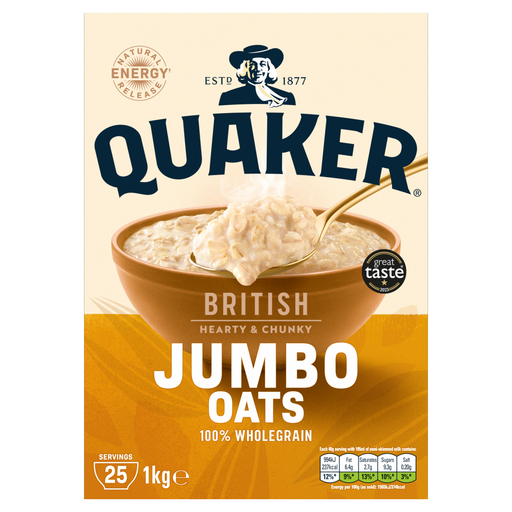
For make-ahead flapjacks or baking when a jumbo rolled-oat texture is wanted.
The listing states 100% wholegrain oat flakes, porridge and baking use, plus cool, dry storage with resealing after opening. It may contain traces of wheat.
 No image available
A plain cupboard oat base for porridge and make-ahead oat recipes.
The listing specifies 100% organic wholegrain oat flakes and cool, dry storage. It is not presented as an explicitly gluten-free product.
 No image available
A single-ingredient oat option for standard porridge and flexible home use before a picnic.
The listing states 100% oatmeal, thicker oatmeal texture, cool and dry storage, and use of an airtight container after opening. It may contain wheat and barley.
 No image available
For a day trip with microwave access and a plan to prepare porridge shortly before eating.
The listing specifies six 38.5 g sachets, wholegrain rolled oats and a 2½-minute microwave preparation time. It requires water or milk and is not an ambient ready-to-eat picnic food.
Yes. Dry oats are a cupboard ingredient when kept as directed on the pack. Once made into porridge or mixed with milk, yoghurt or pre-cut fruit, pack the finished food cool in a cool box or bag with ice or frozen gel packs, as advised by the Food Standards Agency and Food Standards Scotland.
Food Standards Scotland advises eating ready-to-eat food within four hours of taking it out of the fridge. In extremely hot weather, Food Standards Agency guidance for England, Northern Ireland and Wales advises using food that has been out of the fridge within two hours.
Do not assume so. Choose a product explicitly labelled gluten free when that is your requirement and check the current package. Food Standards Agency material states that food labelled gluten free must contain no more than 20 mg/kg gluten as sold, while oats remain an allergen in their own right.
Not necessarily. The Food Standards Agency distinguishes gluten intolerance from an oat allergy: gluten-free oats still contain oats and must be treated as an oat allergen.
Choose plain rolled oats for an all-purpose option, or jumbo oats when you want a more textured result. Waitrose describes its Essential Porridge Oats for flapjacks, and Mornflake describes Jumbo Oats as an ingredient for flapjacks.