Commuters with kettle access but no bowl
A self-contained pot is the most direct option when you need to carry one breakfast and can add boiling water at your desk or destination. Allow for the stated preparation time as well as access to hot water.


Choose a self-contained porridge pot if you will have boiling water but no bowl: it provides a one-portion format designed to be prepared in its own container. Sachets suit places where you can bring a bowl and use a microwave or hob, while larger oats packs are more practical for breakfast prepared at home. Check the current pack for ingredients, allergen statements and the exact preparation method before relying on any format away from home.
A self-contained pot is the most direct option when you need to carry one breakfast and can add boiling water at your desk or destination. Allow for the stated preparation time as well as access to hot water.
Sachets can work well when you have a bowl and a microwave or hob available. They allow you to choose the liquid, toppings and serving setup rather than using a pre-filled pot.
Compare the current ingredients list and allergen statement for each product. Portable pots and sachets may contain milk or carry may-contain warnings, while specialist oats can include ingredients such as wheat protein.
Choose it when: You have access to a kettle or boiling water but do not want to carry a separate bowl.
Consider: Pots still need hot water, and microwave suitability varies by product.
Choose them when: You can provide a bowl or pan and want pre-measured dry portions.
Consider: Preparation can require liquid and a microwave or hob, so the sachet is not an eating container.
Choose it when: You usually make breakfast at home and want to customise portions or toppings.
Consider: A larger pack does not provide a ready portion or container for an immediate breakfast away from home.
| Priority | What to check | Your needs |
|---|---|---|
| Preparation away from home | Check whether the product includes an eating container, needs boiling water, and states a standing or cooking time. Confirm microwave suitability on the exact pack. | I need breakfast that can be made with the equipment available where I will eat it, rather than just a portable packet. |
| Portion format | Compare a self-contained pot, a pre-measured sachet and a larger oats pack. Check whether you will need to carry a bowl, pan or liquid. | I want to carry a measured portion without taking more packaging or equipment than my journey allows. |
| Ingredients and allergens | Read the current ingredients list and allergen statement. Check milk, wheat, barley, soya, nuts and precautionary wording where relevant to you. | I need to avoid a convenient option that contains an ingredient or allergen warning unsuitable for me. |
| Plain or flavoured recipe | Compare ingredients and nutrition information on the stated serving basis. Check whether a protein-focused or flavoured option adds ingredients you do not want. | I prefer an oat base that fits how I plan to flavour or prepare breakfast. |
Sachets are portable but do not include an eating vessel, while pots still need hot water. Without a kettle, bowl or suitable cooking method, neither format is immediately ready to eat.
Match the format to the equipment at your destination: use a pot for kettle-only situations, sachets where you can provide a bowl and cooking method, and larger packs mainly for home preparation.
Preparation instructions differ between products. Waitrose Original Porridge Pot is not suitable for microwave cooking, while Flahavan's Original Quick Oats Pot has microwave instructions.
Follow the exact on-pack method and check whether the pot requires boiling water, microwave heating, or either option.
Plain-oat recipes can still include milk or carry nut, wheat, barley and other precautionary statements depending on the product and its manufacturing process.
For an allergy or intolerance, inspect the current physical pack's ingredients and allergen statement each time rather than relying on the product name or an earlier recipe.
Portable pots and specialist oat products may contain milk powder, sugar, flavourings or wheat protein, which can change their suitability and nutrition information per serving.
Compare the exact ingredient list and nutrition panel on the same serving basis before changing from a plain product to a flavoured or protein-focused option.
Quaker has an Original Porridge Pot format for a single serving prepared with boiling water.
Mornflake offers both self-contained Original Instant Porridge Pots and Original Superfast Oats sachets, giving a choice between an included pot and dry portions.
Flahavan's Original Quick Oats Pot is a 44g one-pot option prepared with boiling water or in a microwave.
Waitrose offers an Original Porridge Pot and Original Instant Porridge Oats sachets through its UK grocery range.
Jordans is more relevant to home-prepared organic and Protein Oats than to a self-contained instant porridge pot.
These Joybuy options cover a self-contained porridge pot and individually portioned sachets for a quick breakfast when the required preparation equipment is available.
 No image available
A self-contained 57g porridge pot for a kettle-only breakfast where you do not want to carry a bowl.
Add hot water and allow two minutes. It contains rolled oats, skimmed milk powder, sugar and salt; check the current pack for microwave instructions and allergen information.
 No image available
Six individually portioned 38.5g sachets for an office or campus breakfast when you can provide a bowl and heating method.
The ingredient list names wholegrain rolled oats only. The stated microwave preparation time is 2½ minutes; check the current pack for the required liquid and full preparation method.
 No image available
An eight-sachet flavoured option for a portioned breakfast where a microwave or hob and a separate bowl or saucepan are available.
Each 43g sachet is stated to provide 9g plant protein from soya protein and needs 180ml water or milk. It contains oats and soya and may contain milk, peanuts and nuts.
 No image available
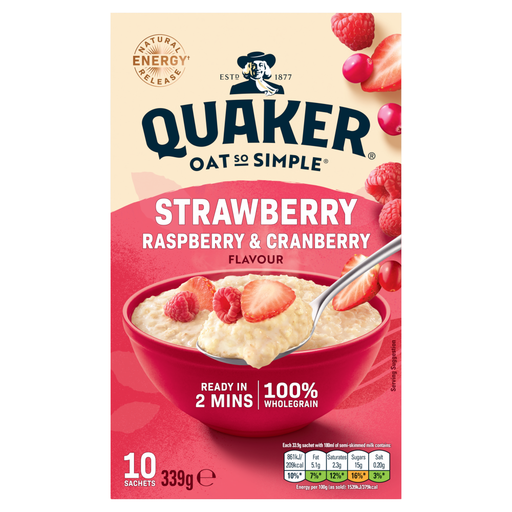
Ten individually portioned 33.9g sachets for a microwave breakfast when you can bring a bowl and milk.
The stated method takes two minutes with milk. This flavoured option contains sugar and cereals containing gluten, and may contain barley, soya and wheat.
 No image available
A 20-sachet pack for keeping multiple measured breakfasts at home, work or in a shared kitchen.
Each 36g sachet needs a microwaveable bowl and about 180ml milk, with two minutes of cooking plus a one-minute stand. It contains sugar and may contain barley, wheat and soya.
Usually not. A porridge pot is portable dry breakfast rather than fully ready-to-eat food: Waitrose & Partners states that its Original Porridge Pot needs 170ml of boiling water and three minutes, while its Quaker Original Porridge Pot listing states a two-minute wait after boiling water is added.
No. Check the instructions for the specific product. Waitrose Original Porridge Pot is not suitable for microwave cooking, whereas Flahavan's Original Quick Oats Pot has a two-minute microwave method.
No. Ingredients and cross-contact statements vary by product: Waitrose Original Instant Sachets may contain milk and nuts, while Mornflake states that its Original Superfast sachets are not suitable for nut, milk, wheat or barley allergy sufferers because of manufacturing methods. Use the current package label for the exact product you are buying.
Choose based on the ingredients and preparation that suit you, rather than treating the formats as equivalent. Flavoured and protein-focused sachets can add sugar, flavourings, milk or protein ingredients, so compare the current ingredients list, allergen information and nutrition panel on the stated serving basis.